
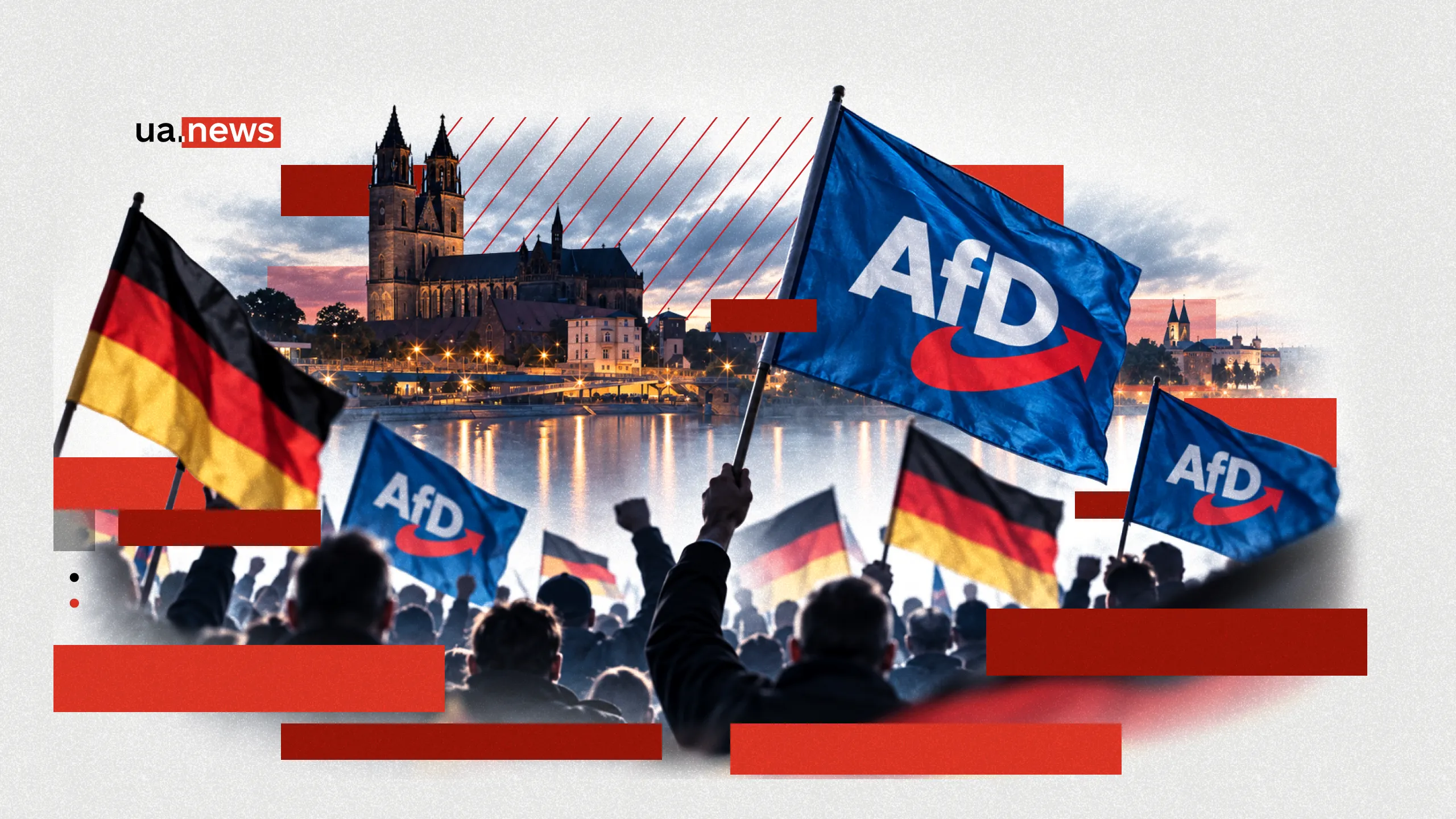
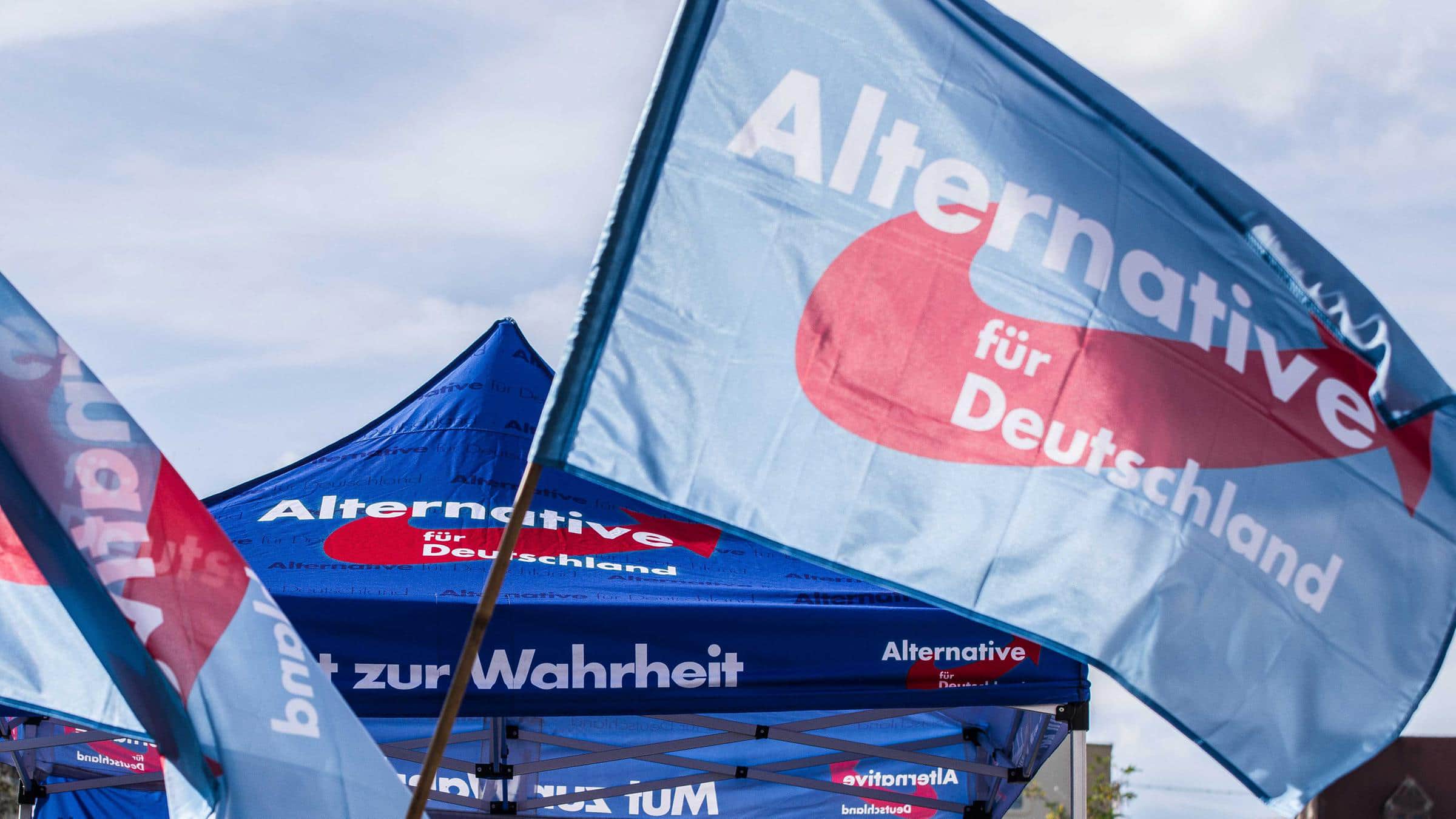
While Ukrainians’ attention is focused on news about the front lines, corruption, and the coming cold winter, an event has taken place in the very heart of Europe that can, without exaggeration, be called a tectonic shift in politics. Elections were held in the German federal state of Saxony-Anhalt, and the results are undermining all of the postwar foundations of the Federal Republic of Germany. The far-right party “Alternative for Germany” (AfD), which its opponents openly call neo-Nazi, scored an unprecedented victory, winning nearly 44% of the vote. This is not just a regional sensation—it is, in fact, a revolution in German politics. A revolution that went almost unnoticed in Ukraine amid daily anxieties, but whose consequences could be extremely painful: for Kyiv, for Berlin, and for all of Europe.
So what happened in Saxony-Anhalt? What kind of party is the AfD, and why is it so dangerous? Why is its success not a coincidence, but a predictable verdict on the old political system? UA.News political analyst Mykyta Trachuk examined the issue.
A Political Earthquake in Eastern Germany: The Numbers and Context Behind the AfD’s Victory
Saxony-Anhalt is a state in eastern Germany that, until recently, was considered the stronghold of the Christian Democratic Union (CDU)—the ruling party that had led the local government for many years. This time, however, “Alternative for Germany” (AfD) received a record 43.8% of the vote, which translated into 39 seats in the state parliament—the Landtag—out of a possible 83. The far right fell just three seats short of an absolute majority. This is a stunning result, although pollsters had warned of the likelihood of such figures at least a week ago.
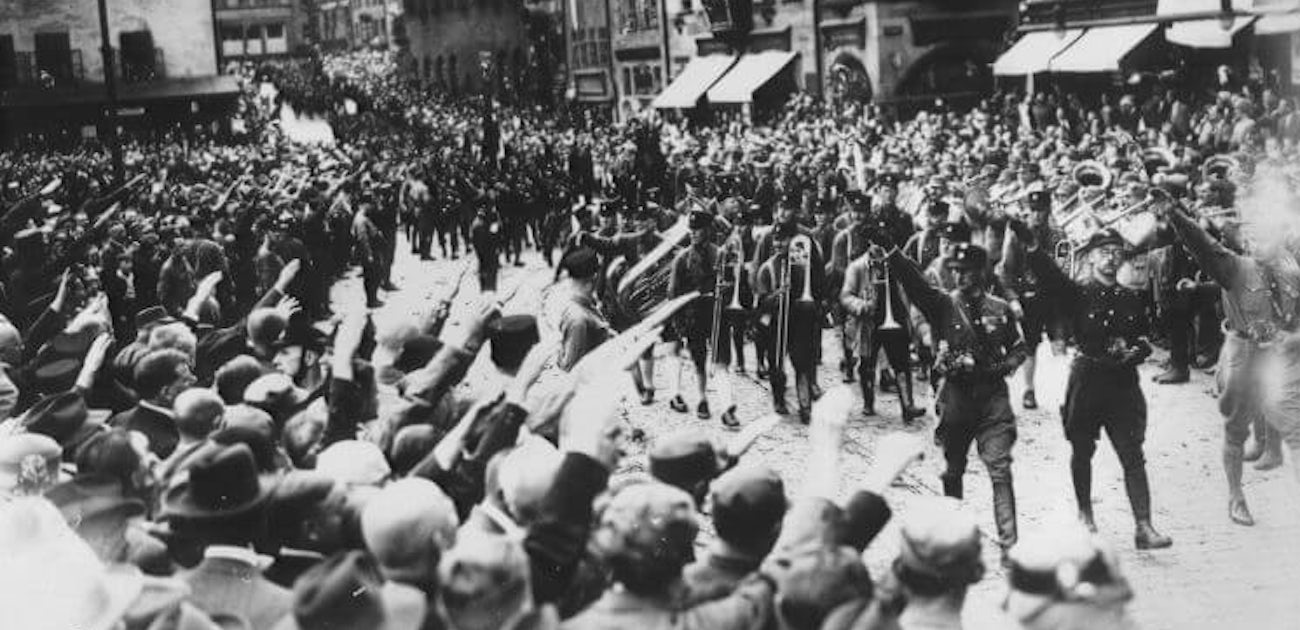
The 43.8% support figure carries a truly chilling symbolism. It is literally almost exactly the same—43.9%—as the Nazi party, the NSDAP, received in the Reichstag elections in March 1933. Of course, direct comparisons between the AfD and the NSDAP are more a matter of political hyperbole, since modern Germany is a robust institutional democracy with a developed civil society. However, such a coincidence is too interesting and telling to ignore. This is one of those cases where statistics seem like a cruel joke of history.
It is also
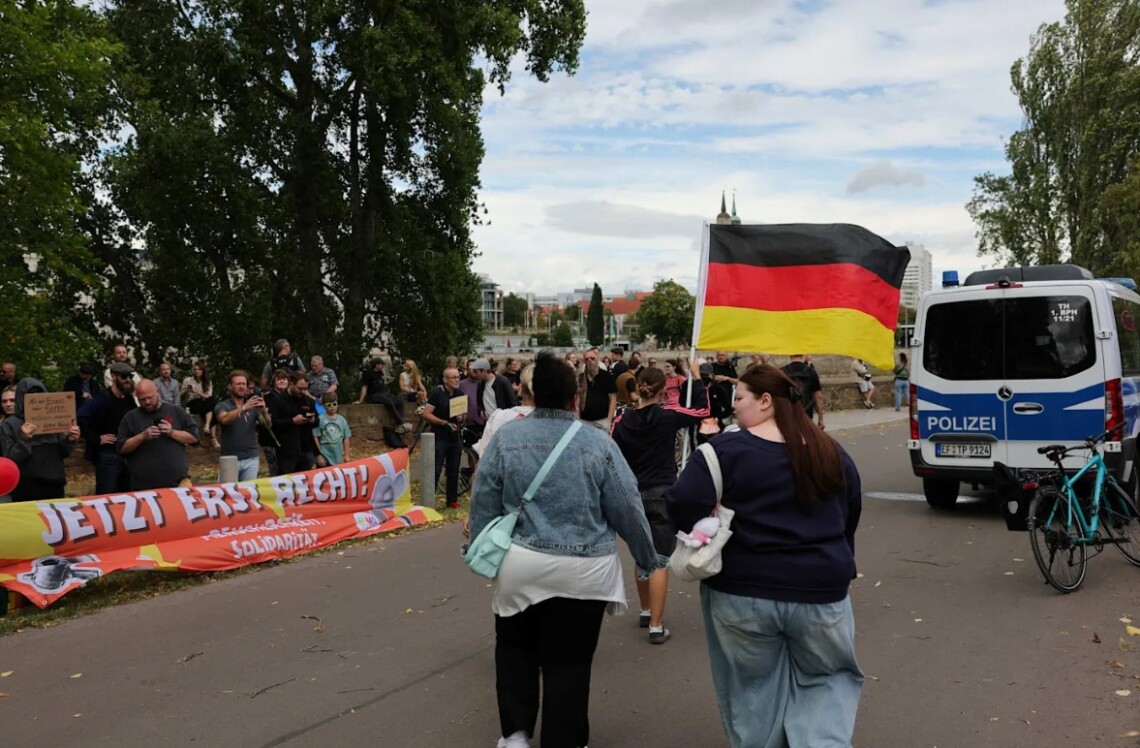
important to understand the regional context. Saxony-Anhalt is in eastern Germany, the former GDR and the Soviet occupation zone. The mentality of the “Ossis”—East Germans—differs significantly from that of the “Wessis” from the western states. People who grew up under a socialist dictatorship and the absolute power of the Stasi secret police often feel social injustice more acutely and and are more skeptical of globalism and liberal values associated with official Berlin. It is on this fertile ground of distrust toward the “Western elites” that the poisonous flowers of far-right populism have bloomed. The CDU, which until recently dominated here, received a paltry 17.2%, losing 25 seats. This is a complete collapse. Incumbent State Premier Sven Schulze lost to the AfD candidate even in his own district in Magdeburg! This is an indication of a total loss of trust among local Germans in traditional politicians.
Now the state faces a difficult coalition equation. Without the AfD, it will be extremely difficult to form a government in Saxony-Anhalt. The CDU, the Social Democrats (SPD), and the Greens together hold only 31 seats. Even with all eight members of the Left Party, that amounts to only 39 votes—exactly the same number as the AfD has.
Unexpectedly, the “Sara Wagenknecht Alliance” (BSW)—a new party that received 5.3% of the vote and five seats—has emerged as a key player. The BSW consists of left-wing conservatives who, like the AfD, are categorically opposed to military aid for Ukraine and advocate for lifting sanctions against Russia. It is the BSW’s votes that could prove to be the “golden shares” in forming a majority. And although the BSW is still hesitant about a direct coalition with the AfD, the very fact that such an alliance is theoretically possible (44 seats between the two parties) represents an unprecedented breach of an unspoken taboo that has existed in Germany throughout its modern history: never to cooperate with the far right.
Why This Is a Revolution in German and European Politics
Just 10–15 years ago, the very idea that a far-right party could not only win an election in a federal state but even come close to such a result would have elicited nothing but nervous laughter in German society. After 1945, Germany built its statehood on the principles of “never again.” The entire political system of the Federal Republic of Germany was designed to prevent a repetition of the mistakes of the past. For decades, centrist parties—Christian Democrats, Social Democrats, Liberals, Greens, and others—took turns in power. Radicals on both flanks were marginalized, and the far right was effectively pushed outside the bounds of the legitimate political arena.
Today, this paradigm is cracking at the seams. The AfD’s victory in Saxony-Anhalt marks the first time in the history of modern Germany that the far right has become the largest political force in an entire region. This marks the collapse of a fundamental consensus. And it is, without exaggeration, a revolution not only for Germany but for all of Europe.
Yes, we have grown accustomed to the successes of right-wing populists in many EU countries. But when you hear news of a far-right victory somewhere in Slovakia or the Netherlands—it’s perceived, though with concern, as part of the political landscape there. But when you read “the far right has won in Germany,” completely different, far more terrifying historical parallels immediately come to mind.
Germany is the country that gave birth to Nazism. A country that unleashed the bloodiest war in human history and perpetrated the Holocaust. That is precisely why the political success of forces that flirt with this legacy or attempt to revise it is perceived with particular intensity. For German society, which has spent decades atoning for its historical guilt, this is a cultural shock. It is a rupture in national identity, which was built on the denial of its own bloody past.
The European project—which, let’s be honest!—rests on the German-French axis is also under threat. The AfD is a party that de facto opposes the EU, advocates for the total domination of nation-states, and opposes further integration. Its success inspires similar forces across the continent, legitimizing their agenda. If even in Germany—the richest and most stable country in Europe—people are voting en masse for radicals with a reputation as neo-fascists, what can be said about countries with weaker economies and less robust democratic institutions? This is yet another sign that the liberal-democratic consensus in Europe is in a phase of deep crisis.
An
“Alternative” to Common Sense: Why This Party Is Both Disliked and Feared
What kind of political force is “Alternative for Germany”? Why is there such a wall of alienation surrounding it (the “firewall” strategy), and why does its success inspire such fear?
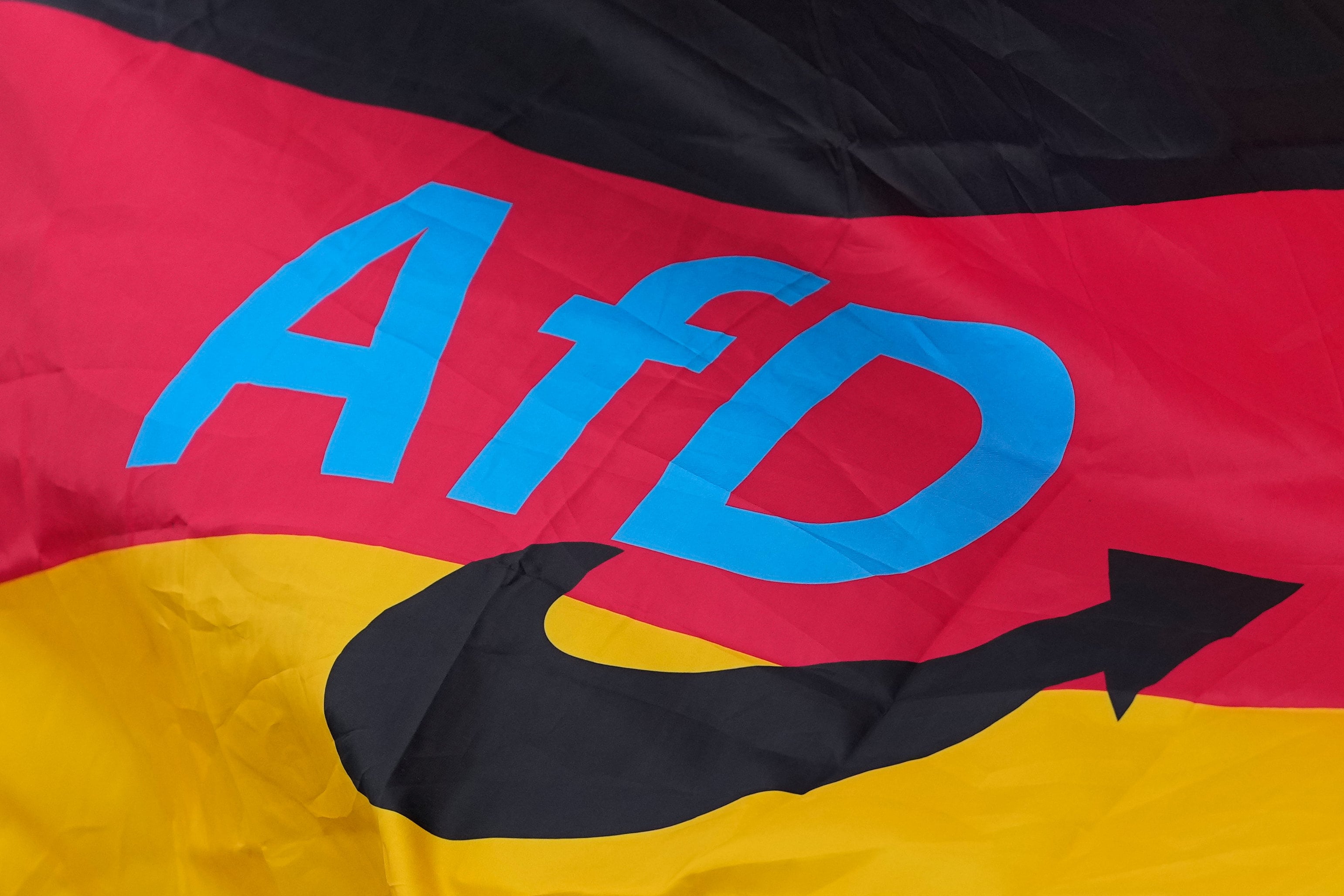
The AfD was founded in 2013 as a party of Euroskeptics who opposed the euro rescue policies. But very quickly, especially after the 2015 migration crisis, it transformed into a much more radical force. Today, it is a far-right, nationalist, anti-immigrant, anti-Islamic, and anti-Semitic political force. And crucially, it makes no secret of this; on the contrary, it flaunts its “uncompromising” stance.
The party is constantly causing scandals. Its representatives have repeatedly made statements justifying the Nazi past. They advocate for closing the borders, deporting migrants (including even those with German citizenship), leaving the EU, abolishing “green” policies and gender equality, and so on. German intelligence agencies officially classify the party’s youth wing and some of its state branches as “confirmed right-wing extremist.” This means that the state recognizes that the activities of these organizations are directed against the constitutional order of the Federal Republic of Germany.
Other parties keep their distance from the AfD. The famous “German firewall”—an unspoken ban on any cooperation with the far right—remained inviolable for a long time. But that is precisely why the AfD’s success presents Germany with an existential dilemma. The problem is that democracy is vulnerable. It allows its enemies to participate in elections and win. That is its weakness. Free and fair elections can bring to power forces that, once in power, will dismantle democracy.
German history already offers an example of this, when the Nazis came to power—albeit, to put it mildly, not entirely by honest means—but by using entirely legal mechanisms of the parliamentary system. Today’s situation, of course, is different: Germany has strong institutions, independent courts, and freedom of speech. However, the very fact that nearly one in two voters in Saxony-Anhalt is willing to cast a vote for a far-right party is a symptom of a deep-seated problem.
And here it is important to be fair and see the problem from all sides. The AfD’s success is not just a story about some “brainwashed” voters. It is the inevitable result of the failures of the traditional parties. The CDU, SPD, and other established political forces have for years ignored the problems of the eastern states, issues of migration, the energy crisis, the rising cost of living, and so on. They have demonstrated a lack of political will, engaging instead in self-complacency and bureaucratic games.
“We are all deeply shocked. We didn’t expect this… Something has changed not only in Saxony-Anhalt but throughout Germany. And the results of these elections will have consequences—including for me personally,” said German Chancellor Friedrich Merz.
While people felt that their problems were being ignored, the AfD offered simple answers and pointed the finger at the “culprits”: migrants, Brussels, Berlin, “liberal elites,” Ukrainians, and so on. The Christian Democrats can talk all they want about the AfD’s ties to the Kremlin and about how the “Alternative” are fascists (and that might even be true). But if those in power don’t offer real solutions to pressing issues, voters will follow those who seem more decisive. To stop the AfD, it’s not enough to say “they’re bad.” We must become better and more effective ourselves. Otherwise, in the next election, the “firewall” will finally come crashing down.
What This Means for Ukraine
For Ukraine at the moment, if we assess the situation soberly, this news means very little. Saxony-Anhalt is just one of 16 federal states. The AfD won the election but has not yet formed a government. Despite the pressure, other parties are unlikely to enter into a direct coalition with the far right at the state level—although the situation with “Sara Wagenknecht’s Alliance” does add an element of intrigue. The most that can be expected locally are certain symbolic measures: the state might make it more difficult to accept Ukrainian refugees, reduce benefits, attempt to impose certain restrictions, and issue harsh calls for Ukrainians to return home, among other things. This will be unpleasant, but it will not affect the federal government’s nationwide policy of supporting Kyiv.
However, the strategic threat runs much deeper. The AdN is a quasi-fascist party that openly sympathizes with the Kremlin. It advocates for an immediate end to military aid to Ukraine, the lifting of all sanctions against Russia, the recognition of Russia’s territorial gains, and so on. Its representatives visit the occupied territories, and Russian propaganda actively uses the AfD’s rhetoric to divide German society. If we imagine a scenario in which, in 5–10 years, the AfD becomes part of the federal government in Berlin (and its current approval ratings of 25–28% nationwide mean this is no longer a fantasy), it would be a disaster for the Ukrainian government in Kyiv for obvious reasons.
In
summary, the victory of the far-right “Alternative for Germany” in Saxony-Anhalt is not merely a regional sensation. It is a historic moment that marks a profound transformation of the German and pan-European political landscape. What was once considered impossible has become a reality: a party openly labeled as neo-Nazi and extremist has legally and democratically won nearly half the votes in the state where the Reformation once began. This is a verdict on the policies of traditional parties that have lost touch with voters, and at the same time a huge challenge for democracy, which must find a way to protect itself from its internal enemies without betraying its own principles.
For Ukraine, this event may seem distant, with no direct impact on the current situation. But it clearly shows the direction Germany could take if the old elites do not change. The era of stability in Europe is coming to an end, and the future of the entire continent—including Ukraine—depends on how Berlin deals with the demons of the past, which are rearing their heads once again under new banners.
History has given us a chilling reminder: 43.8% for the AfD today and 43.9% for the NSDAP in 1933. We shouldn’t overestimate such coincidences. But to ignore such signs would be criminally negligent.




