
Garbage problem becomes one of the issues in Berlin elections
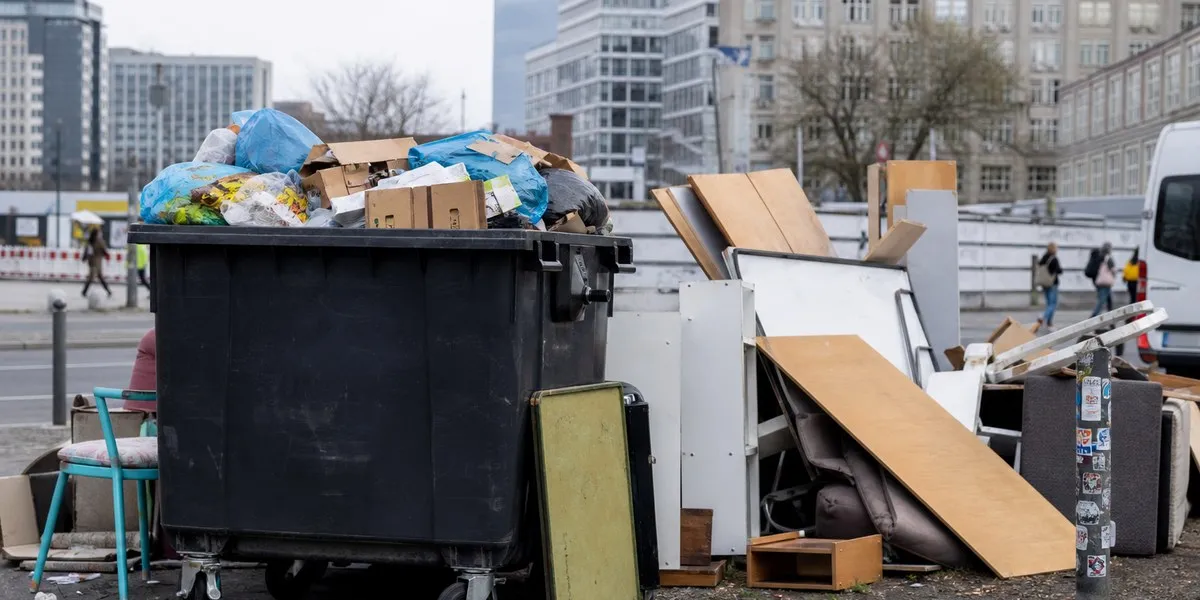
In Berlin, Germany, the problem of illegally dumped waste has become one of the most discussed issues ahead of the state elections on September 20. Parties are proposing different ways to deal with overflowing containers, abandoned furniture, mattresses and other rubbish on the city’s streets.
As The Local Germany reports, 73% of capital residents in a Berliner Morgenpost survey described Berlin as “extremely dirty.” Another survey by the Berlin Senate showed that about 58% of respondents are dissatisfied with the city’s cleanliness.
Volume of illegally dumped waste has increased
Over two decades, the volume of illegally dumped waste in Berlin has more than doubled. In 2006, the city’s waste collection service BSR collected 24,500 cubic metres of such waste, while in 2024 it collected 54,000 cubic metres. Cleanup costs the city more than €13 million per year.
Part of the increase is linked to the expansion of BSR’s powers: since 2023, the service has also been responsible for cleaning parks and playgrounds. At the same time, experts point to the spread of illegal dumping of bulky waste, including furniture, in public places.
More current news is available on the UA.News Telegram channel Telegram.
Henning Wilts, a circular economy expert at the Wuppertal Institute for Climate, Environment and Energy, noted that people often leave items near their homes hoping to give them to others. However, such items can turn into piles of waste that are ultimately removed by municipal services. According to him, residents’ high mobility and the anonymity of a large city also weaken the sense of responsibility for the neighbourhood.
What the parties propose
The Left Party, the Greens and the Social Democratic Party of Germany advocate more affordable disposal services, including more free collections of bulky waste. The Christian Democratic Union proposes stepping up monitoring at problem locations, using surveillance cameras and artificial intelligence technologies to identify offenders, and involving job seekers in cleanup work.
Alternative for Germany proposes involving asylum seekers and refugees in cleanup work, strengthening surveillance and regular inspections by the public order service. The SPD and the Greens also support the idea of a packaging tax to make businesses responsible for waste, while several parties propose employing rubbish inspectors.
Berlin already has free recycling points and district collection days for bulky items. Fines for littering have also been increased: a cigarette butt thrown onto the street carries a fine of €3,000. Wilts believes that stricter sanctions alone will have a limited effect if offenders do not expect real oversight.


