
Putin and Trump have lost control of their conflicts – Financial Times
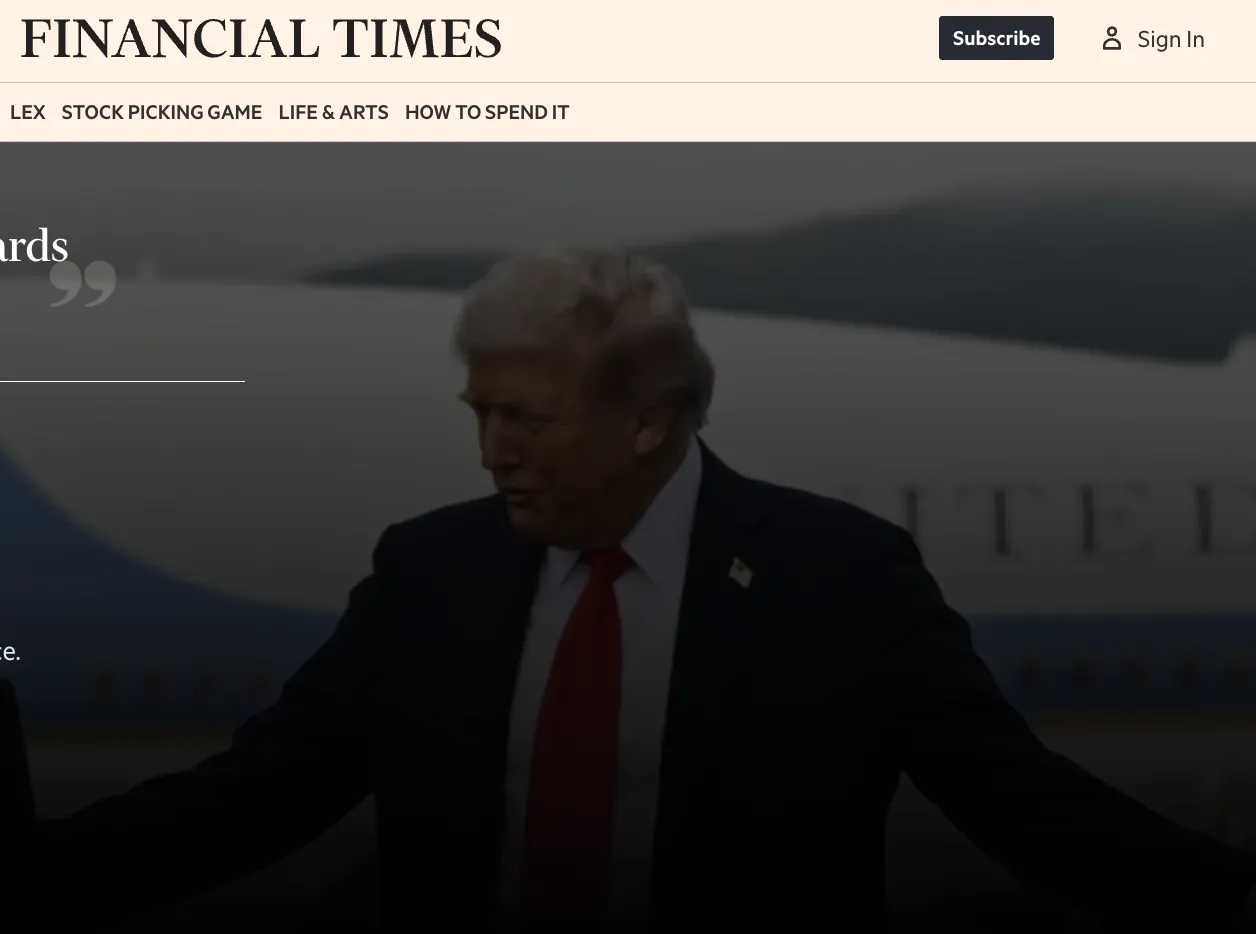
The Financial Times highlights the strategic miscalculations of Putin and Trump. According to the publication, both leaders had counted on quick victories over weaker opponents, but instead dragged their countries into protracted and costly conflicts. The FT estimates that China has emerged as the main beneficiary of the situation.
Russia’s war against Ukraine and the U.S. operation “Epic Fury” against Iran have become examples of strategic errors by Moscow and Washington. The author recalls that after Russia’s invasion of Ukraine in 2022, Donald Trump called the Kremlin’s actions “brilliant.”
However, as the columnist notes, both Putin and Trump counted on quick victories over weak opponents, but both conflicts dragged on and resulted in heavy losses. “Neither Putin nor Trump can now easily extricate themselves from the situation they created,” writes Luce.
According to him, for Putin, the failure of the “military operation” has become a matter of political survival. At the same time, Trump, the author argues, finds himself in a situation where he is forced to negotiate with Iran, even though he had previously promised to completely destroy its regime.
Ukraine has changed the rules of modern warfare
The analyst believes that some of the advantages in the war have shifted to Ukraine. In particular, Kyiv has turned the front into an exhausting trap for the Russian army, and Ukrainian drones have learned to strike targets deep within Russian territory.
“Trump previously told Zelenskyy that Ukraine ‘has no cards,’ but now Kyiv has its own technologies and military solutions that are of great interest to the Pentagon,” notes Luce.
The author also points out that Ukraine is changing the modern model of warfare thanks to cheap missile interception technologies and the widespread use of drones. In his view, this calls into question the effectiveness of traditional, expensive military equipment.
The Financial Times also writes that the geopolitical consequences of Putin and Trump’s decisions are already working against them. In particular, Russia’s invasion of Ukraine led to NATO’s expansion and Finland’s accession to the Alliance, effectively doubling Russia’s border with NATO.
At the same time, the situation surrounding Iran, according to the author, has weakened U.S. influence in the Middle East. The columnist believes that Tehran has gained a strong negotiating position due to its ability to influence the situation in the Strait of Hormuz, through which a significant portion of the world’s oil exports passes.
The FT notes that the closure of the Strait of Hormuz has already put pressure on the global economy and triggered a rise in energy prices.
Against this backdrop, the publication writes, medium-sized states are increasingly coming out on top, having learned to stand up to stronger countries through asymmetric technologies and new approaches to warfare.
As a reminder, in Russia, a moment was edited out of the broadcast where Putin was unable to say “Hurrah!”
In Russia, Central Bank employees will be allowed to carry weapons for protection against drones.


