
Gaokao reforms reduce history choices among students in China — academic
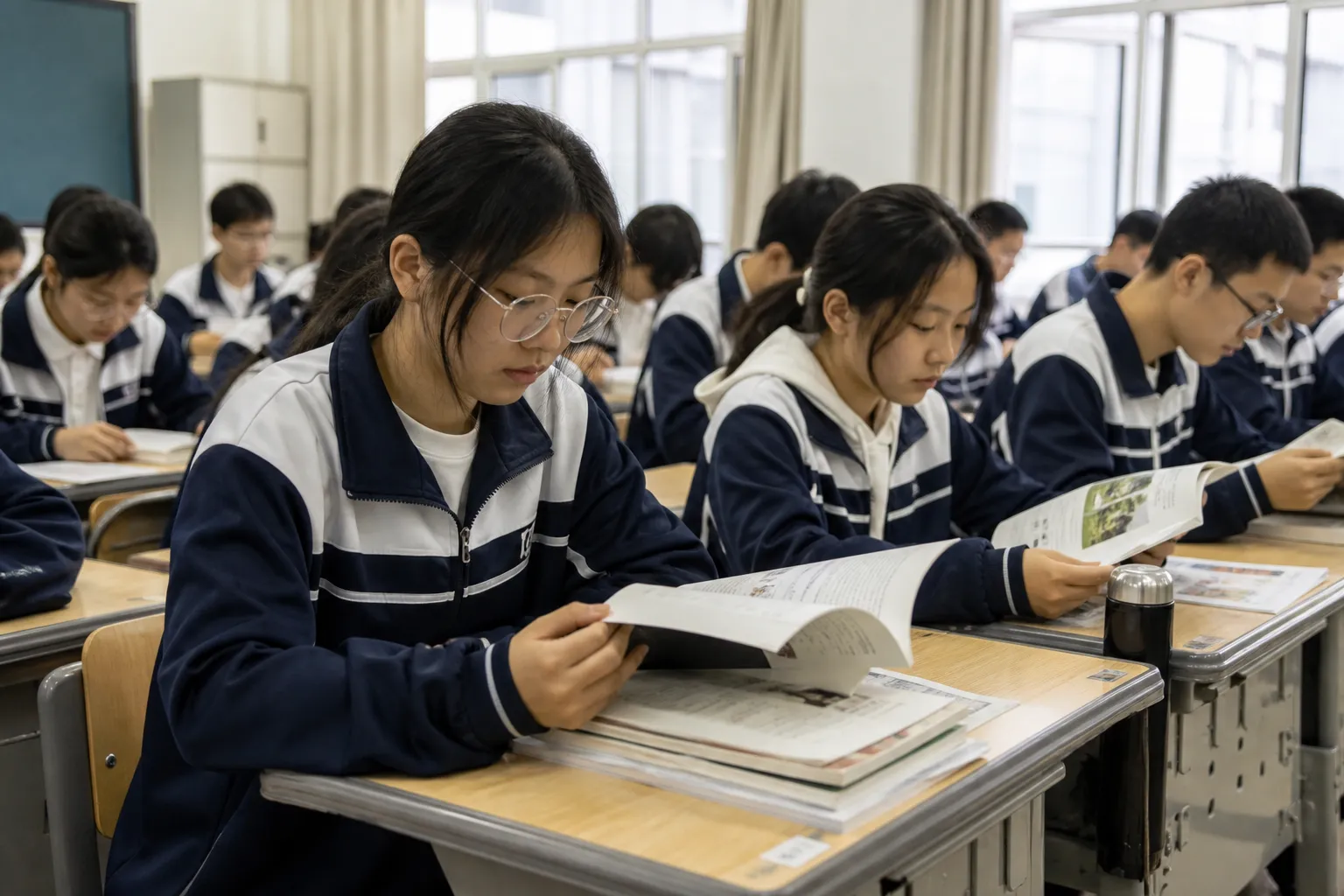
High school students in China are increasingly choosing history less often among the subjects whose results are considered for university admission. According to Liu Linhai, dean of the School of History at Beijing Normal University, this could make society more vulnerable to distorted historical narratives, the South China Morning Post reports.
Liu Linhai said that history education in secondary school is important for preserving historical, cultural, ethnic and national identity. He called on policymakers to take coordinated action to address structural problems that, in his assessment, weaken the role of this subject.
Impact of the gaokao reform
The academic linked the situation to reforms of China's gaokao university entrance examination, which began in 2014. The reforms were intended to give school students more freedom to choose subjects according to their interests and abilities and to move away from the traditional division between science and humanities tracks.
Chinese language, mathematics and English remained compulsory subjects, while students can choose other disciplines. At the same time, Liu Linhai noted that this choice is limited by the requirements of the zhongkao entrance examination for senior secondary school and university admission rules.
More current news is available on the UA.News Telegram channel Telegram.
According to him, the share of school students choosing history has fallen sharply in most provinces and continues to decline. This, in particular, leads to a reduction in the number of teaching hours for history teachers. In some provinces, students must choose between history and physics, while physics is required for admission to a much larger number of university programs.
According to Southern Weekly, in nearly half of such provinces, the ratio of physics to history choices was approximately 7:3 in favor of physics, and in some cases 8:2.
Countering pseudo-history
At the same time, Chinese authorities are strengthening efforts against what they officially call “historical nihilism” — narratives that contradict or undermine the state's official historical line. Chinese Social Sciences Today, published by the Chinese Academy of Social Sciences, called pseudo-history a new variety of this phenomenon.
One of its reports concerned the spread on social media of claims that the Tang dynasty, which ruled from 618 to 907, never existed. Liu Linhai also noted that the internet, social media and artificial intelligence have changed the ways historical knowledge is created and consumed, while amateur research has contributed to the spread of inaccurate historical narratives.


