

It seemed that February 2022 marked a point of no return not only for Ukraine, but for all of Eastern Europe. When Russia launched a full-scale invasion and Belarus allowed its territory to be used for tank columns and missile strikes, the history of all previous relations with neighbors was, as it were, “reset.” All neighboring states then faced a choice. And they made it: Moldova, Romania, Poland, Slovakia, Hungary, Bulgaria, and Turkey expressed their full support for Ukraine’s sovereignty and independence. They opened their doors to millions of refugees and provided humanitarian, financial, and later military aid. It seemed that old feuds had been buried, and the time for a new unity had come.
But—for better or worse—no one will ever return to 2022. More than four years have passed since then. The fervor of the early months has long since faded, giving way to the harsh reality of international politics. Economic competition, historical memory, domestic political games, and differing visions of the future among the states in our region have once again come to the forefront.
What are Kyiv’s relations with its neighbors like in the spring of 2026? Who still shares common interests with Ukraine, and with whom do we now face nothing but a wall of misunderstanding? UA.News political analyst Mykyta Trachuk explores the issue.
Poland: From Unity and Brotherhood to Playing Its Own Game
With the start of Russia’s invasion, Poland became a second home for over a million Ukrainians and nearly Kyiv’s chief advocate in the EU. Military and financial aid, humanitarian corridors, and political support made Warsaw Ukraine’s foremost champion. It seemed that complex historical issues had receded into the background in the face of a common threat from the east.
However, 2026 reveals a far more complex picture. Although Poland remains a strategic partner (allocating, in particular, hundreds of millions of euros to Ukrainian air defense and participating in the “drone wall” project), the old problems have not gone away. The situation of refugees on Polish territory is gradually deteriorating. Economic competition and the concerns of Polish businesses are hindering Ukraine’s integration into the EU. Moreover, support for Ukraine among Poles has dropped significantly due to public fatigue and Russian disinformation.
Today, bilateral relations are built not on emotions, but on a rigorous calculation of national interests, where there is room for both cooperation and competition.

Hungary: From “Reset” to Open Confrontation
In 2022, Hungary, a long-standing Ukraine skeptic since at least 2014, found itself in a somewhat isolated position. But at that time, it did not openly block aid to Ukraine. Furthermore, Budapest provided large amounts of humanitarian aid and took in hundreds of thousands of refugees, a fact that should not be forgotten.
Today, in the spring of 2026, relations between Ukraine and Hungary have finally entered a phase of open conflict. Prime Minister Viktor Orbán has effectively held European aid hostage by blocking a critically important loan of 90 billion euros. The reason: the halt of Russian oil transit through the Druzhba pipeline. Against the backdrop of the election campaign in Hungary, Orbán’s rhetoric and the overall confrontation are only intensifying. You can learn more about the long-standing history of the conflict between Budapest and Kyiv in a separate article by UA.News.
Slovakia: A Quiet Satellite of Hungary’s Course
Slovakia remained a “safe haven” for a long time. Despite all his controversial rhetoric, Prime Minister Robert Fico did not block Ukraine’s accession to the EU and even provided humanitarian aid. In addition, Bratislava took in a significant number of refugees in 2022.
However, as of 2026, Fico has fully aligned his policy toward Ukraine with that of Viktor Orbán. Slovakia, together with Hungary, blocked the 20th package of EU sanctions against Russia, imposed a unilateral ban on the sale of diesel fuel to Ukraine, and halted emergency electricity supplies. Fico is threatening to reconsider support for Ukraine’s EU membership if Kyiv does not resume oil transit. This position is clearly driven not only by energy interests but also by a desire to maintain power domestically by relying on a Euro- and Ukraine-skeptical electorate, as well as on Budapest’s support.

Romania: From Mistrust to Strategic Partnership
Unlike the countries mentioned above, Romania is showing the opposite trend. Historically, there has been a certain mistrust between Bucharest and Kyiv, particularly regarding issues of national minorities and the maritime shelf (a very long-standing problem that was finally resolved by an international court back in 2009). But the war changed everything. Since 2022, Romania has become a reliable partner, and this situation persists to this day.
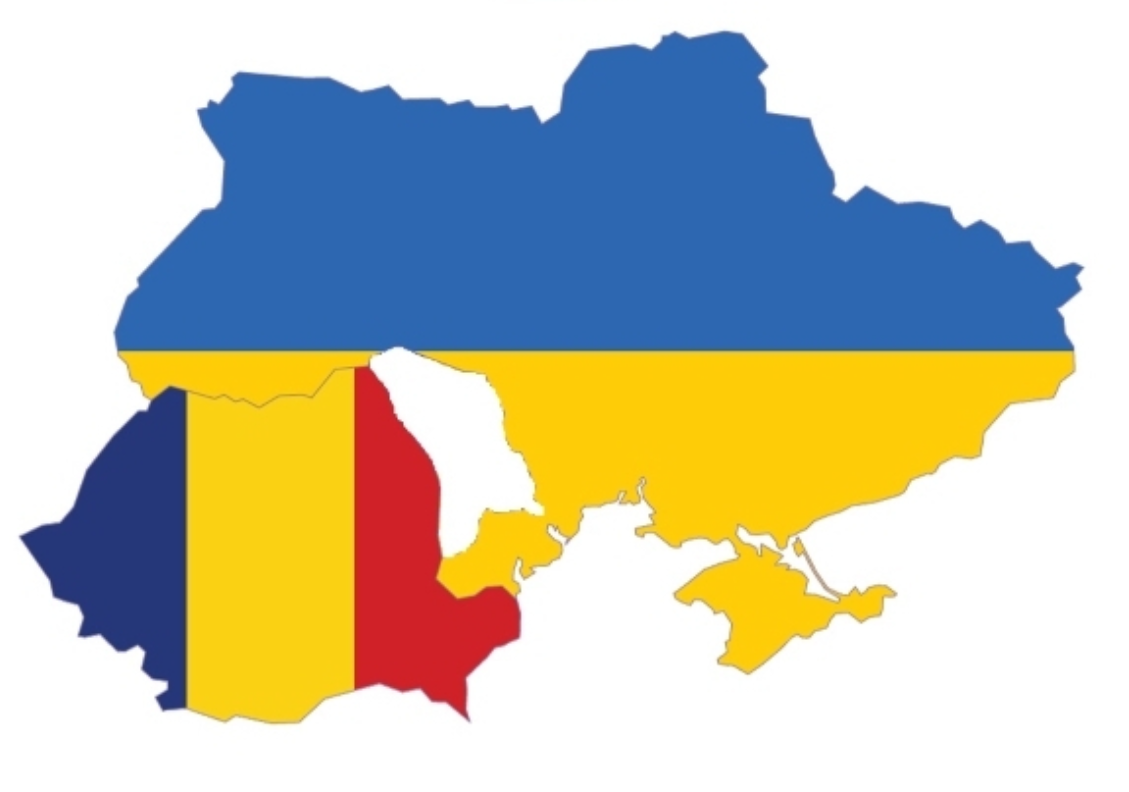
In March 2026, Presidents Volodymyr Zelenskyy and Nicușor Dan signed a declaration in Bucharest establishing a strategic partnership. In addition to the political declaration, the parties agreed on the joint production of defense equipment, including drones, on Romanian territory, as well as on cooperation in the energy sector. Today, Romania is one of Ukraine’s most reliable partners, through which a significant portion of exports and military aid passes.
“Historically, there was… mistrust between our countries, but that mistrust was dispelled when the war began in 2022, and today is the moment when our countries will trust one another,” President Dan stated after a recent meeting with Zelenskyy, and this quote fully describes the state of relations between Kyiv and Bucharest in the spring of 2026.
Moldova: A Friendship Tested by Time
Moldova is a unique case on this list. Despite its own colossal problems (a weak state, pressure from Russia, an energy crisis, the Transnistrian issue, etc.), Chisinau remains not just a good neighbor, but a true ally. Since 2022, Moldova has accepted the largest number of refugees relative to its population after the Czech Republic, and Maia Sandu’s government has consistently supported Ukraine.
As of 2026, relations between the countries can be described as unprecedentedly warm, friendly, and constructive. Joint leadership in customs matters, coordination of efforts toward European integration, and mutual assistance in the energy sector are the norm in Ukrainian-Moldovan cooperation. Chisinau clearly understands that Ukraine’s security is Moldova’s security. There are no serious conflicts between the countries, and this is a case where the interests of the two states coincide completely.
Bulgaria: A Safe Haven in the Black Sea Region
Since 2022, Bulgaria has maintained a cautious yet consistently pro-Ukrainian stance. A significant portion of humanitarian aid passed through the ports of Varna and Burgas, and Sofia supported sanctions pressure on Russia, despite the traditional sympathies of a fairly large segment of the population toward Moscow. Of course, the Bulgarian government also accepted a number of Ukrainian refugees.
In 2026, Bulgaria remains an important transport hub and logistics partner. Political upheavals within the country (such as frequent elections and government crises, all too familiar to Ukrainians from the past) do not affect Sofia’s overall direction: the Black Sea must be a zone of security, and Kyiv must remain an important partner. Bulgarian ports continue to serve Ukrainian exports, and military-technical cooperation, though not publicly touted, assists Ukraine. Bulgarian-Ukrainian relations exemplify healthy pragmatism in the neighborhood, albeit without grandiose declarations of “shared values” and “unbreakable friendship.”
Turkey: The Glorious Traditions of Byzantine Politics
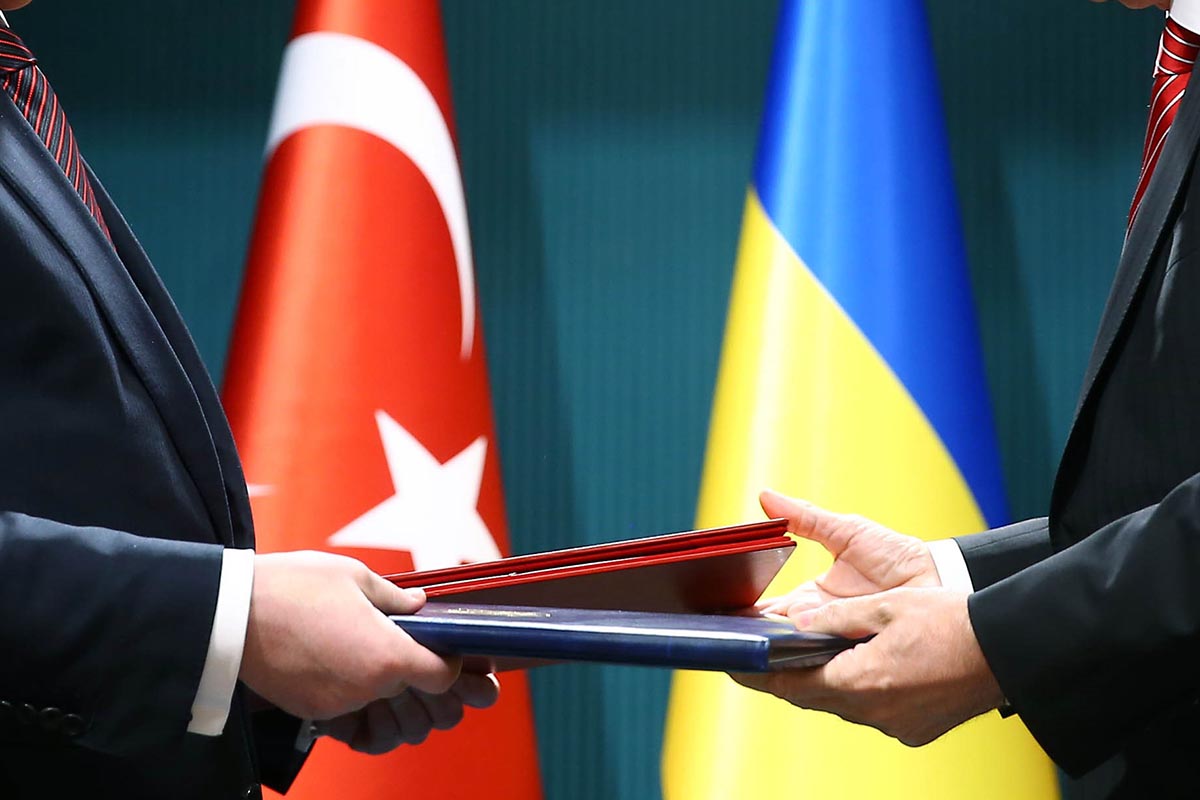
In 2022, Turkey supported Ukraine’s territorial integrity and independence, while assuming the role of a global mediator. The grain deal, prisoner exchanges, the organization of the negotiation process, and the supply of “Bayraktars” at the start of the war—Ankara demonstrated a unique ability to speak with all sides simultaneously.
As of 2026, this role, with certain caveats, remains intact. On the one hand, Turkey is developing military and economic partnerships with Ukraine. On the other hand, Ankara is not joining sanctions against Russia and is simultaneously expanding energy cooperation with it. For Ukraine, Turkey is not just a neighbor across the sea, but a powerful regional player whose interests sometimes align with ours and sometimes diverge. This is a very pragmatic relationship with a mature and experienced player, where everyone stands to gain. Ankara acts in the spirit of the glorious traditions of Byzantine politics, always looking out for its own interests and never engaging in direct conflict.
Belarus: From a Good Neighbor to a Hostile Foothold
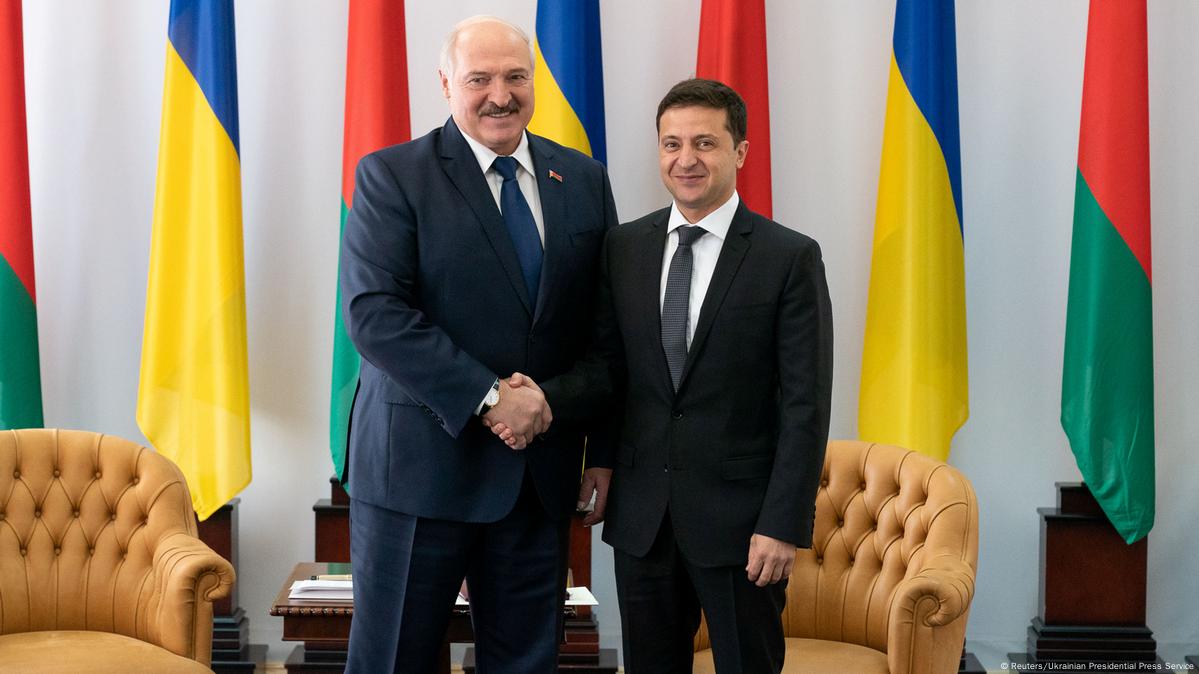
Belarus deserves a separate mention, which is why it is placed at the end of the list. The territory from which tanks moved toward Kyiv and Chernihiv on February 24, 2022, has become a symbol of betrayal by the “brotherly people.” And on the eve of the invasion, the Belarusian defense minister with the telling surname Khrenin did not merely promise his Ukrainian counterpart that Belarus would not serve as a springboard for an attack—he even gave his word as an officer. Within just a few weeks, the world learned what a Belarusian officer’s word is worth.
As of 2026, Minsk had long since relinquished its sovereignty in favor of Moscow, handing over its entire infrastructure to the latter for the purposes of aggression. Kyiv has suspended over 100 agreements with Minsk, though relations have not yet been officially severed (and this is a very wise move). Diplomatic relations have been reduced to a minimum, the border is heavily mined and fortified—yet the prospect of a thaw in relations remains. Ukraine is waiting for Lukashenko’s regime to cease to exist and for a new leader to emerge in the neighboring state. Then it will be possible to gradually resume cooperation.
In summary, four years of a major war have taught a simple yet harsh lesson: Ukraine has no “close friends” in the everyday sense of the word. Just as it has no “eternal enemies,” although it may seem otherwise at the moment. All a state has are its national interests. Sometimes they align so closely that a genuine strategic partnership emerges, as with Romania or Moldova. Sometimes they remain within the realm of cold pragmatism, as with Turkey or Bulgaria. Sometimes they come into conflict, as with Hungary or Slovakia. And in some cases, unfortunately, they escalate into full-scale war, as happened with Russia and Belarus.
However, the key point in this situation is that neighbors remain neighbors. They are not chosen or changed. International politics is always about balancing interests. Ukraine’s task is to ensure that this balance tilts as much as possible in favor of peace, security, and mutual benefit.


