
A rare full moon will light up the sky in late May
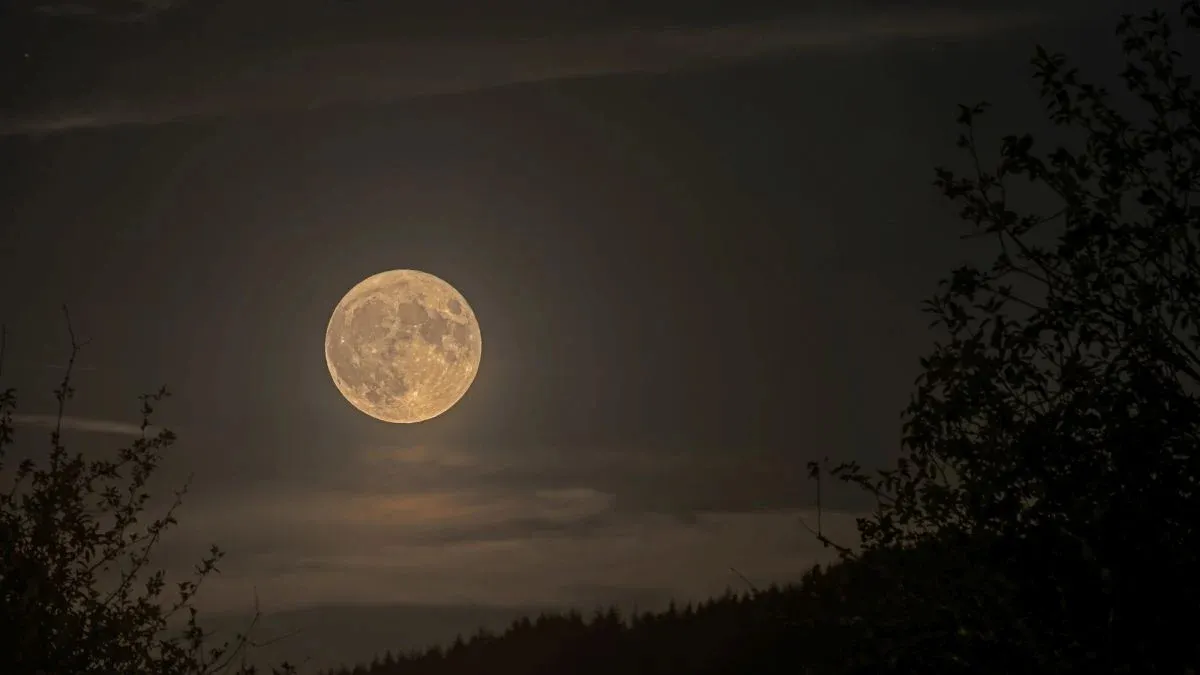
At the end of May, a rare astronomical phenomenon—the “blue micro-moon”—will be visible in the sky, combining two rare characteristics of a full moon. The next time this phenomenon occurs will be in 2053, according to ScienceAlert.
On May 30 and 31, the sky will offer a rare spectacle—a full moon that astronomers call a “blue micro-moon.” Despite its beautiful name, it has nothing to do with the moon’s color; rather, it is the result of a coincidence of two phenomena that do not occur very often. A “Blue Moon” is the moment when a second full moon occurs within a single calendar month, and it is this second lunar phase that has been given this conventional name, which has long been established in astronomical tradition.
A micro-moon, in turn, occurs when the full moon is near the farthest point of its orbit from Earth, which makes it appear slightly smaller and less bright than usual, although the difference is almost imperceptible to the naked eye.
In this case, the Moon will be about 406,135 kilometers from Earth, making it the most distant full micro-moon among the three expected in 2026, and it is this combination with the “blue” full moon that makes the event particularly rare.
Experts explain that both micro-moons and “blue moons” occur periodically on their own, but their simultaneous occurrence is exceptional, so the next time a “blue micro-moon” can be seen will not be until July 2053 at the earliest.
The upcoming June full moon in 2026 will be one of the smallest. Despite this, it may appear larger to observers due to an optical illusion. The astronomical phenomenon has been named the “Half-Moon” and will be visible during a specific period in June.
Beneath the Pacific Ocean, scientists have recorded a sudden change in the movement of currents in the Earth’s outer core, which is responsible for generating the planet’s magnetic field.


