
Russia is stepping up pressure due to a shortage of soldiers on the front lines
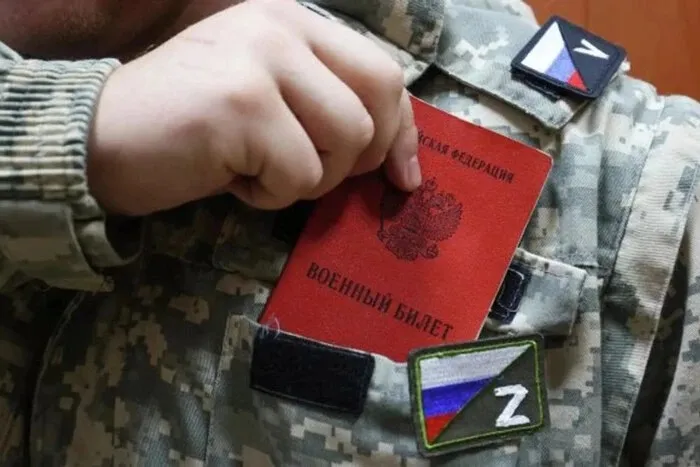
Russia is increasingly feeling the shortage of manpower for its war against Ukraine. Even sign-up bonuses of up to 4.5 million rubles are not providing the Kremlin with the necessary number of recruits, so Russian authorities are stepping up pressure on men and seeking new ways to recruit them.
Russia is facing a problem replenishing its army amid heavy losses in the war against Ukraine. According to the Financial Times, the Russian army needs an ever-increasing number of new soldiers. The publication estimates that losses exceed 30,000 people per month.
At the same time, the Kremlin is not abandoning its strategy, under which the Russian command is prepared to expend large numbers of soldiers to advance on the front lines. Grigory Sverdlin, director of Get Lost—an organization that helps Russian soldiers leave the military—believes it is becoming increasingly difficult for Russia to find new recruits. “Year after year and month after month, it is getting harder and harder for the Russian military to find people. Putin is apparently postponing a new wave of mobilization, so the Ministry of Defense has to put more pressure on everyone to sign contracts,” he said.
There aren’t even enough new soldiers for the reserves
According to military analysts, the Kremlin’s ambitious plans have led to Russian forces in Ukraine being spread too thin. New recruits are primarily being sent to reinforce existing units and support offensive operations. There are practically no personnel left to build a full-fledged reserve.
Michael Kofman, a senior fellow at the Carnegie Endowment, pointed out another problem. “The more the Russian army’s numbers grew, the fewer troops they were able to deploy on the battlefield at any given moment. The scale of Russian offensive operations decreased as the number of troops deployed in Ukraine increased,” he noted.
According to him, the Russian army was also slow to adapt to Ukrainian defenses. This led to additional casualties. Western governments estimate that nearly 500,000 Russian soldiers have been killed in combat. Ukraine claims to have eliminated 131,000 Russian occupiers this year alone.
Kofman warns that if Russia fails to increase its recruitment of new soldiers or carry out a mobilization, its units may begin to become even more depleted. “They have become complacent with their achievements and have failed to adapt. If they fail to increase the pace of recruitment or carry out a mobilization, Russian units will once again begin to be depleted, which will make them vulnerable. Not only will offensive operations come to a halt, but over time they will also suffer significant defeats on the battlefield,” the expert believes.
The Kremlin Pays Millions for Contracts
To maintain the current recruitment pace, Russian authorities continue to increase financial incentives. According to the FT, in some regions, recruits are offered up to 4.5 million rubles for signing a contract. That’s approximately $56,000. But even such sums no longer guarantee the result the Kremlin needs.
The Russian Ministry of Defense and local authorities have set an annual quota for the regions of 409,000 new soldiers. In addition, Russians are offered money for recruiting others into the army. As a result, an entire network of so-called “remote recruiters” has effectively formed in the country. They call potential recruits, persuade them to sign a contract, and seek out people even among segments of the population that were not previously the primary targets of recruitment.
The pressure on Russians is growing
In recent months, the pressure on potential recruits has intensified. Activists believe that the Kremlin is attempting to avoid a new wave of mobilization in this way. Following the mobilization in the fall of 2022, hundreds of thousands of Russians left the country in an effort to avoid being drafted into the army.
Artem Kliga, a military law expert at the organization Connection e.V., stated that Russian authorities are trying to use virtually every means available to find new soldiers. “They’re trying to squeeze as many as possible out of every category of men,” he said.
According to Kliga, Russian officials are using different methods of pressure on different groups of men. “For each group, there are traps designed to deceive them or force them to sign a contract,” the expert noted.
In the regions, they are targeting debtors and former conscripts
According to the FT, examples of such pressure have already been documented in various regions of Russia. In the Belgorod region, potential recruits are summoned for so-called “conversations.” In some cases, officials may visit people at home or at work. Among those of particular interest to Russian authorities are debtors, men who have recently completed their mandatory military service, and people serving suspended sentences.
In Khabarovsk, police reported that they conducted about 2,500 such “conversations” over the past year. As a result, according to Russian police, 32 people agreed to join the military. All but four of them were subjects of criminal investigations.
The Russian Army Is Facing Desertion
Problems with recruiting new soldiers are occurring alongside a rise in the number of desertion cases in the Russian army. According to the human rights organization Peace Plea, at least 28,000 people in Russia have already been sentenced for deserting their posts.
At the same time, Frontelligence Insight, citing leaked internal documents, claims that the actual number of such cases could be at least twice as high. In other words, Russia is facing two problems at once: it is having a harder time recruiting new soldiers, and some of those who have already been sent to the army are trying to leave the service.
Russians Fear a New Mobilization
Against this backdrop, fears of a new mobilization are growing again in Russia. According to the FT, some Russians link the possibility of such a mobilization to the September State Duma elections.
Some people are already checking prices for international flights, while others are considering leaving Russia before the vote. However, a new mobilization would also pose a serious risk to the Kremlin itself.
A source close to the Russian Ministry of Defense told the FT that the authorities are concerned about the potential consequences. “The political fallout from significant losses among the mobilized, combined with likely mass desertions, could be very negative domestically,” he noted.
The Kremlin faces a difficult choice
On the one hand, Russia needs to constantly replenish its army due to heavy losses on the front lines. On the other hand, the authorities are trying to avoid a new large-scale mobilization, which could spark discontent within the country. Therefore, the Kremlin is relying on contract soldiers, large payments, and increasingly harsh recruitment methods.
However, even bonuses in the millions are no longer providing Russia with the necessary number of recruits. If this trend continues, the Russian military command will have to either intensify pressure on the population even further or revisit the issue of a new mobilization, according to The Financial Times.
Russian authorities may tighten control over the internet and impose restrictions similar to those that have long been in place in North Korea. According to forecasts, Russians could lose access to the open internet as they know it within the next two years.


