
Russia has resumed work on a large-scale railway project to China
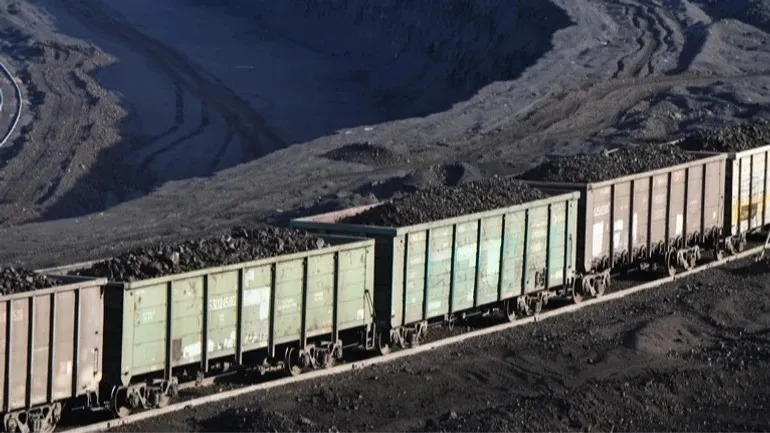
Russia has once again revived the idea of building the Trans-Altai Railway, which is intended to connect the country with China via a new route. The Russian portion of the project could cost up to 2.2 trillion rubles, and the main reason cited for pushing it forward is the desire to increase exports of coal and other resources to China.
Discussions about the construction of the Trans-Altai Railway have resumed in Russia. The project is being developed at the direction of Russian leader Vladimir Putin. The railway is intended to provide Russia with a new rail link to China’s Xinjiang Uyghur Autonomous Region. The route is planned to run through a small section of the Russian-Chinese border located between Kazakhstan and Mongolia.
For Moscow, this is important primarily from an economic standpoint. Russia has lost a significant portion of its Western markets due to sanctions and is now increasingly turning to China as one of the main buyers of its raw materials. The new railway could create another route for transporting cargo to China. Specifically, this refers to coal from the Kemerovo Region.
The idea has been around for over 20 years
The route itself is not new. It was considered as early as the early 2000s, when Russia was looking for an option to build the “Altai” gas pipeline. Later, the Russian company RZD revisited the idea of the railroad. This happened even before Russia’s full-scale invasion of Ukraine.
However, the project was effectively shelved at that time. The reason was simple: construction proved too expensive, and the terrain itself posed serious technical challenges. Now Moscow has decided to revisit this plan. One of the main arguments is the desire to increase Russian coal exports to China.
Why Does Russia Need Another Railroad?
Currently, the Russians transport a significant portion of the coal from the Kemerovo Region to China via the Far East. To do this, they use the Baikal-Amur Mainline and the Trans-Siberian Railway. These railways are already operating under heavy load. Huge volumes of cargo pass through them, including Russian raw materials, which, since the start of the full-scale war, Russia has been increasingly trying to sell to Asian countries.
A new route could partially relieve the existing network and shorten the journey to the Chinese market. For Russian exporters, this would mean another option for delivering their products. However, the mere existence of a new railroad does not guarantee that the project will be profitable. And this is where the key question arises: how much will construction cost, and will it be possible to recoup that investment?
Billions of Dollars for Construction
There is currently no official estimate of the cost of the Trans-Altai Railway. But Russian estimates for other similar projects provide a rough idea of the scale of future expenditures. For comparison, The Moscow Times cites the Kyzyl–Kuragino railway. It is approximately 410 kilometers long, and in 2024, the preliminary construction estimate reached 1 trillion rubles.
That works out to about 2.4 billion rubles per kilometer. If we apply the same estimated cost to the Trans-Altai Railway, the Russian section of the new route could cost approximately 1.5–2.2 trillion rubles. In dollar terms, that’s about $17–25 billion. However, this is only a rough estimate. The actual cost may vary depending on the route’s length, the complexity of construction, the terrain, bridges, tunnels, and other infrastructure.
Will Russia be able to recoup this money?
It is the project’s profitability that raises the most questions. Russia is counting on an increase in coal exports to China, but global demand for this fuel is changing. The International Energy Agency forecasts that coal consumption in China will gradually decline by 2030. Chinese coal imports are also expected to decline. According to the IEA’s forecast, they could decrease by an average of about 2.5% annually.
In other words, Moscow may spend tens of billions of dollars on a new transport corridor at the very moment when the main potential market for Russian coal is gradually seeing a decline in demand. This makes large-scale investments even riskier. Especially given that the Russian coal industry has been facing serious financial problems for several years now.
Russian coal producers have lost Western markets
After Russia launched its full-scale invasion of Ukraine, Western countries imposed sanctions on Russian coal. Moscow was forced to redirect its exports to China, India, and other Asian markets. But sales to Asia have not been able to fully offset the losses. Russian companies are having to compete for buyers, offer large discounts, and spend more money on shipping raw materials.
Russian coal companies have been suffering multibillion-dollar losses for the third year in a row. Against this backdrop, the construction of a railroad costing up to $25 billion looks like a very ambitious gamble. For the Kremlin, the new route could be more than just a way to profit from exports. It would also reduce dependence on the already overburdened transportation routes in the Far East and strengthen economic ties with China.
However, no final decision on construction or the official cost of the project has been made yet. Therefore, for now, the discussion centers on exploring a long-standing idea rather than a guaranteed start to construction work. This is reported by the Russian publication The Moscow Times.
The Russian project “Arctic LNG 2,” which is subject to sanctions and operated by Novatek, has filed a lawsuit against the South Korean shipbuilding company Hanwha Ocean. The Russian side is seeking approximately $1.02 billion in compensation due to the cancellation of a contract for the construction of gas carriers.


