
US Army unveils biodefense strategy through 2035
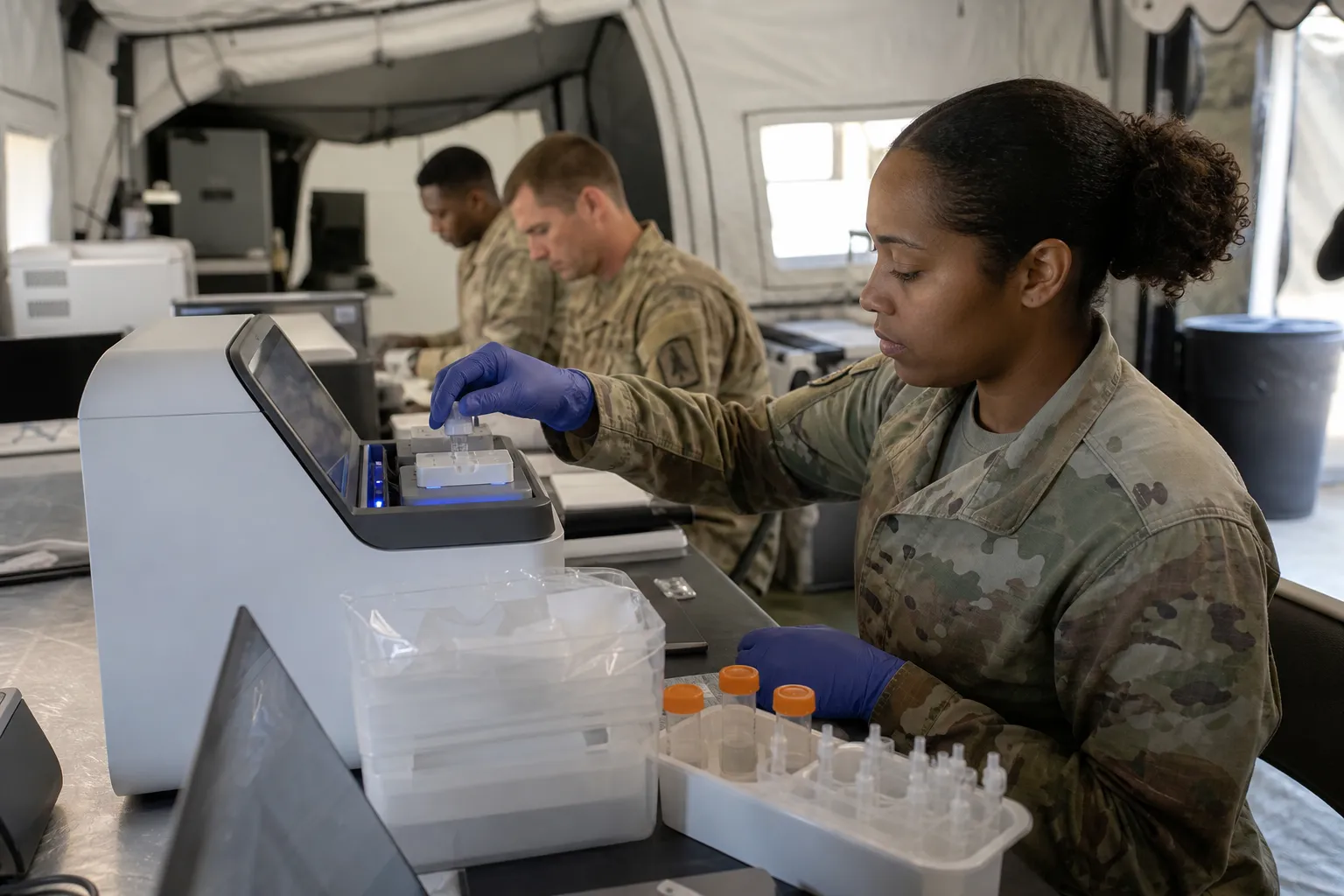
The US Army unveiled a new biodefense strategy through 2035 at Fort Belvoir, Virginia. Its goal is to maintain the troops’ full operational capability amid biological threats, including pandemics, accidental pathogen leaks, or an adversary’s deliberate use of biological weapons. Breaking Defense reports.
Lt. Col. Dave Kingerie, the US Army staff’s biodefense integrator and USANCA — the US Army agency for nuclear matters and countering weapons of mass destruction — said that a global pandemic or another public health event must not hinder force deployment, combat operations, or the ability to endure a conflict. According to him, such threats include natural factors, including COVID-19 and malaria, pathogen leaks from facilities, and adversary-created biological threats.
Five areas of the strategy
The document, signed by former Army Secretary Dan Driscoll, outlines five areas of work. The first calls for recruiting, developing, and retaining specialists in the scientific, medical, and operational aspects of biodefense, as well as incorporating relevant topics into training programs.
The second area concerns situational awareness. The Army plans to integrate biological sensors and analytical tools into existing platforms to improve decision-making and monitor signs of possible biological weapons use by adversaries.
More current news is available on the UA.News Telegram channel Telegram.
The third area provides for standardizing systems for sharing biological information across joint forces, with other agencies, and with allies. The Army also plans to counter disinformation by monitoring the information space using artificial intelligence and machine learning tools.
Equipment and artificial intelligence
The fourth area is strengthening preparedness for biological threats, including providing decontamination resources and protective equipment. The strategy states that biological threats should be viewed not only as a medical problem but also as a factor limiting the performance of combat functions.
The fifth area is modernizing biodefense by accelerating procurement and using artificial intelligence, synthetic biology, and additive manufacturing. By 2028, the Army plans to focus primarily on information management and modernization; in 2028–2031, on developing knowledge and situational awareness; and in 2031–2035, on preparedness for biological threats.
Col. Dennis Ruffolo, deputy director for force health protection at the Office of the Surgeon General and Army Medical Command, said that mobile genetic sequencing devices make it possible to test samples of suspicious animal remains or potentially hazardous substances in field conditions within 24 hours. Previously, samples had to be sent to the continental United States, and analysis could take weeks.


