
Russians have found a way to buy luxury Cartier jewelry despite the sanctions
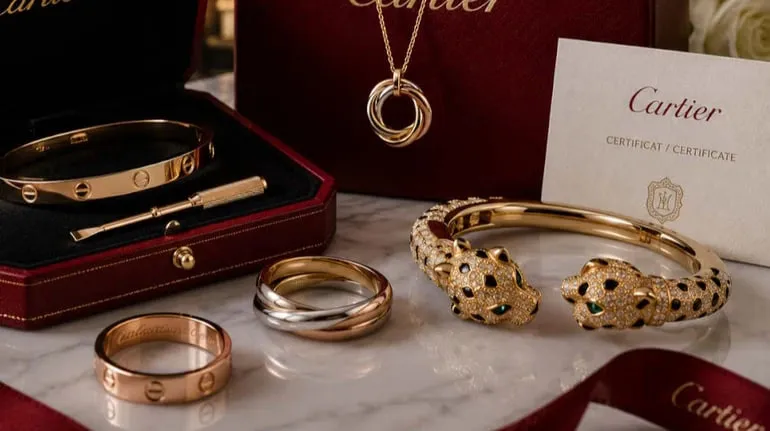
Despite the sanctions imposed in response to the full-scale aggression against Ukraine, wealthy Russian citizens continue to receive premium jewelry from Cartier.
As journalists have discovered, jewelry is being shipped to Russia via Kazakhstan to circumvent the restrictions. As a result, the Russian market continues to have access to luxury goods, the export of which is officially banned.
In particular, according to customs data, direct shipments of jewelry from France to Russia under the relevant customs code have plummeted by 91%—from $21 million in 2021 to less than $2 million in 2023. The total volume of legal direct imports of Cartier products into Russia officially fell from $50.6 million in 2021 to $5.5 million in 2023.
“However, a stable parallel supply network has been established via Kazakhstan, which is a member of the Eurasian Economic Union. Through this channel, luxury goods flow freely into Russia without any customs control,” the report states.
As a result, Richemont Group’s imports to Kazakhstan rose from zero in 2021 to $23 million in 2022, and by 2025 had already reached nearly $47 million. This virtually matches the pre-war import level for the entire Russian Federation, Mediapart notes.
The main growth in consumption of luxury goods in the region occurred in Almaty, where a Cartier boutique opened in 2025. Sales at this single store in Kazakhstan increased nearly tenfold compared to 2019, reaching approximately $57 million in 2025.
This figure is comparable to the sales figures of the brand’s much larger flagship store on the Champs-Élysées in Paris, Mediapart noted.
“This massive commercial surge took place against the backdrop of an average monthly salary in Almaty of only about $1,250 in 2025,” writes Guild Hall.
The Swiss parent company, Richemont, states that it completely halted all exports, sales, and distribution to Russia as early as March 2022, and categorically denies any violations of sanctions, although the group’s management declined to comment on the “abnormal growth in shipments” to Kazakhstan.
Sales are actively supported by well-known brand representatives and former employees who have maintained direct contact with Russian VIP clients. In particular, according to Mediapart, Tatyana Torchilina, the former director of Cartier’s flagship boutique in Moscow, now works at the branch in Almaty but continues to reside permanently in the Russian capital. Torchilina uses exclusive private art evenings, history lectures, and sponsored gala events in the Russian capital to covertly boost sales.
In response to journalists’ inquiries, Torchilina stated that she has not been an employee of Richemont for some time. Earlier, in March 2022, the Richemont Group demonstratively withdrew from the Responsible Jewelers’ Council, and at that time, Cartier CEO Cyril Vigneron emphasized that the company’s values were incompatible with membership in organizations whose members support wars.
Additional under-the-table sales on the gray market are being conducted directly through social media by other former employees of the now-closed Moscow boutique. In particular, a Telegram channel offers luxury goods to Russian customers: white gold bracelets for ten thousand dollars, even more expensive Baignoire watches, and so on.
Guild Hall reports on this.
The EU may approve new sanctions against Russia on July 13.
As a reminder, in light of the latest Russian attacks on Kyiv and other Ukrainian cities, EU Foreign Policy Chief Kaja Kallas announced new proposals for sanctions.
In Finland and Germany, organizers of schemes to export equipment to Russia in circumvention of sanctions are on trial — Euronews
Germany has urged its citizens to leave Russia.


