
Seven meals in South Africa revealed food insecurity problem — Daily Maverick
In South Africa, seven photographed meals showed how low-income families try to feed children and adults, often choosing filling food that may nevertheless fail to provide enough protein, vitamins and other nutrients. The seven meals presented in the Health-e News series were analysed by registered dietitian and public nutrition specialist Helen Donkin of the Association for Dietetics in South Africa, Daily Maverick reports.
Donkin estimated portion sizes from photographs and used data from the South African Food Data System. In her assessment, meals with a large share of carbohydrates and fats may provide a feeling of fullness but contain too little protein and micronutrients.
Not enough food for the family
32-year-old Zinzi from Lenasia South, who is raising three children on her own, usually feeds the family twice a day. Their diet is based on pap, a maize porridge. A meal of pap and spinach provides energy but, according to Donkin's conclusion, contains insufficient amounts of several important nutrients. Zinzi said that in March her daughter spent a week in Chris Hani Baragwanath Hospital, and that doctors told her the child was undernourished.
66-year-old Sekhwele Mnisi from the village of Ga-Motodi in Limpopo province receives about 1,500 rand per month to support himself, three adult children and two grandchildren. That is approximately 50 rand a day for six people. Due to the lack of running water and electricity, the family also spends money on water, paraffin and candles. A meal of pap and bread is high in carbohydrates but low in several important nutrients.
More current news is available on the UA.News Telegram channel Telegram.
68-year-old Toti, who lives near Ngcobo with five adult children and six grandchildren, said that when food is scarce, adults skip meals in order to feed younger children. Chicken with bread provides energy and protein, but contains no vegetables, fruit, legumes or dairy products. If such food is shared among many people, each person may receive insufficient energy, protein, fibre and micronutrients.
School meals and collective purchasing
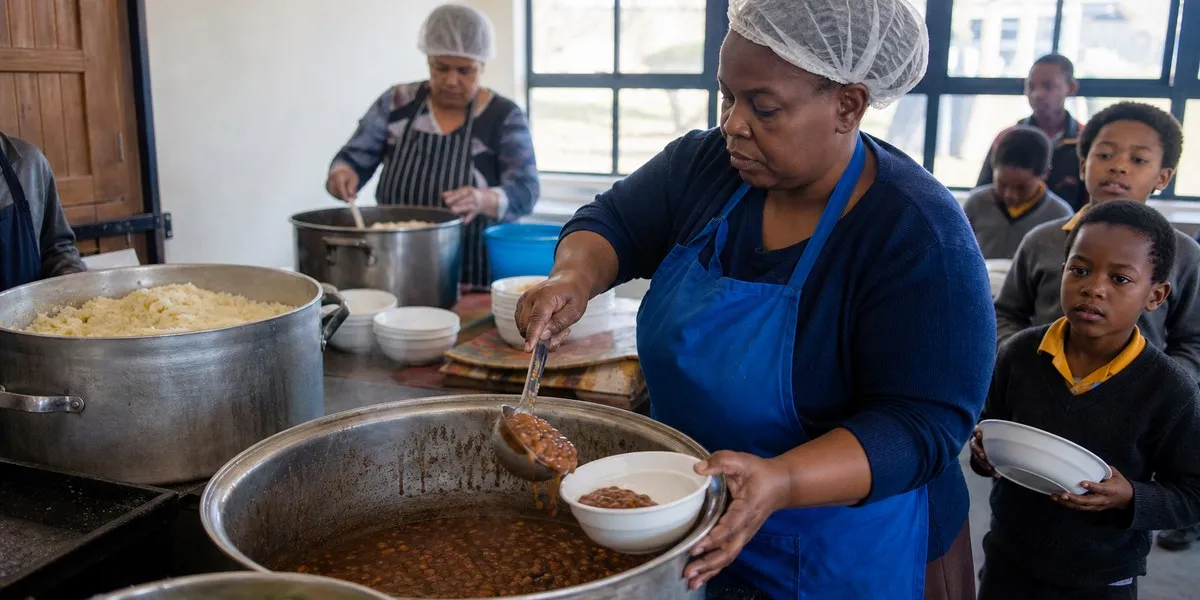
Donkin described the food served to children at SA Mokhothu Primary School in Nyakalong, Free State province, as one of the most balanced among the seven meals analysed. Samp with beans, pumpkin and tomato-onion sauce contains enough protein for a small child, plenty of fibre, and has a balanced ratio of energy from carbohydrates and fats. For some children, the school meal is their main meal of the day. The We Care Day Care Centre keeps its kitchen open during the first week of school holidays as well.
A plate of rice, scrambled eggs and fried vegetables in the family of Nokulunga Nkabinde in Embo, west of Durban, was more varied, although it contained no fruit, legumes or dairy products. In the village of Tsetse near Mahikeng, members of the Reabetswe Food Stokvel contribute money every month for bulk purchases. Their festive meal of fish, couscous and four types of vegetables has good variety, but more than half of its energy comes from fats.
Gardens as a supplement to the diet
At the Thuthukani centre in Lenasia South, unemployed residents grow spinach, tomatoes, onions, broccoli, sweet peppers and cabbage. A meal of pap, spinach, carrots and onions contains a lot of fibre, as well as significant amounts of vitamin A, calcium and iron, but contains no animal protein, legumes, dairy products or fruit. Donkin noted that gardens can supplement diets with nutritious foods, but require water, time and labour. In her view, responsibility for overcoming food insecurity cannot be placed solely on families, as more nutritious food requires money, time, or both.


