
The U.S. explored the possibility of building fuel storage facilities at Australian air bases
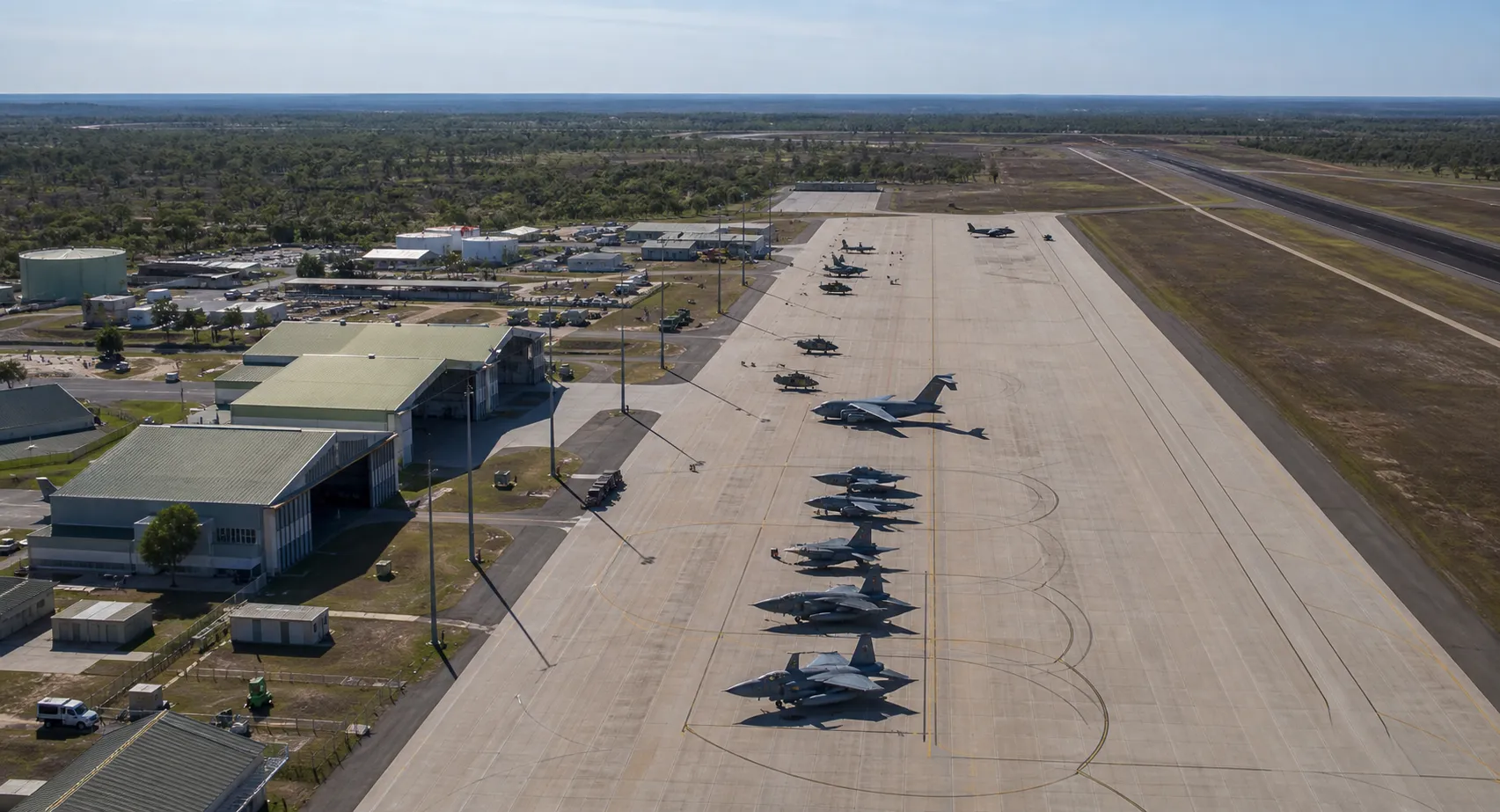
Last year, the U.S. government solicited proposals for the construction of aviation fuel storage facilities at three Royal Australian Air Force (RAAF) bases: RAAF Curtin and RAAF Learmonth in Western Australia, as well as RAAF Amberley near Brisbane. The planned capacity of the facilities was 190 million liters, according to ABC News Australia.
The contract documents called for the creation of infrastructure at each base for receiving, storing, adding additives to, and dispensing jet fuel. The documents also mentioned a total stockpile of over one million barrels. These documents are currently inactive, and the relevant U.S. agency has been asked to comment on whether the plans are moving forward.
RAAF Curtin and RAAF Learmonth are so-called non-permanently staffed bases: there is no permanent presence of the Australian Defence Force there, with the exception of personnel responsible for maintaining the facilities. The bases are regularly used for training exercises and can be deployed for operational use as needed. Learmonth also functions as a civilian airport for the neighboring town of Exmouth.
For more breaking news, follow the UA.News Telegram channel.
Australian Defense Minister Richard Marles stated that the additional capabilities at these bases will align with a broader strategy for developing defense infrastructure in the north of the country. According to him, Australia is discussing with the U.S. its plans to expand relevant capabilities, and U.S. investments in Australian bases are beneficial for both countries.
The U.S. is already investing in the infrastructure of northern Australian bases. At RAAF Darwin and RAAF Tindal, work is underway or has recently been completed to create new aircraft parking areas and facilities capable of accommodating long-range bombers. Thousands of U.S. Marines rotate through Darwin annually for training, although there is no permanent U.S. military presence in the region.
The Commander of the Royal Australian Air Force, Air Marshal Stephen Chappell, stated that U.S. investments have a deterrent effect. He also noted that Australian and U.S. forces are not only interoperable but also interchangeable. Australia’s Integrated Investment Plan allocates up to $30 billion for the development of air and missile defense over the next decade.


