
The U.S. Reports Progress in Indirect Talks with Iran – Bloomberg
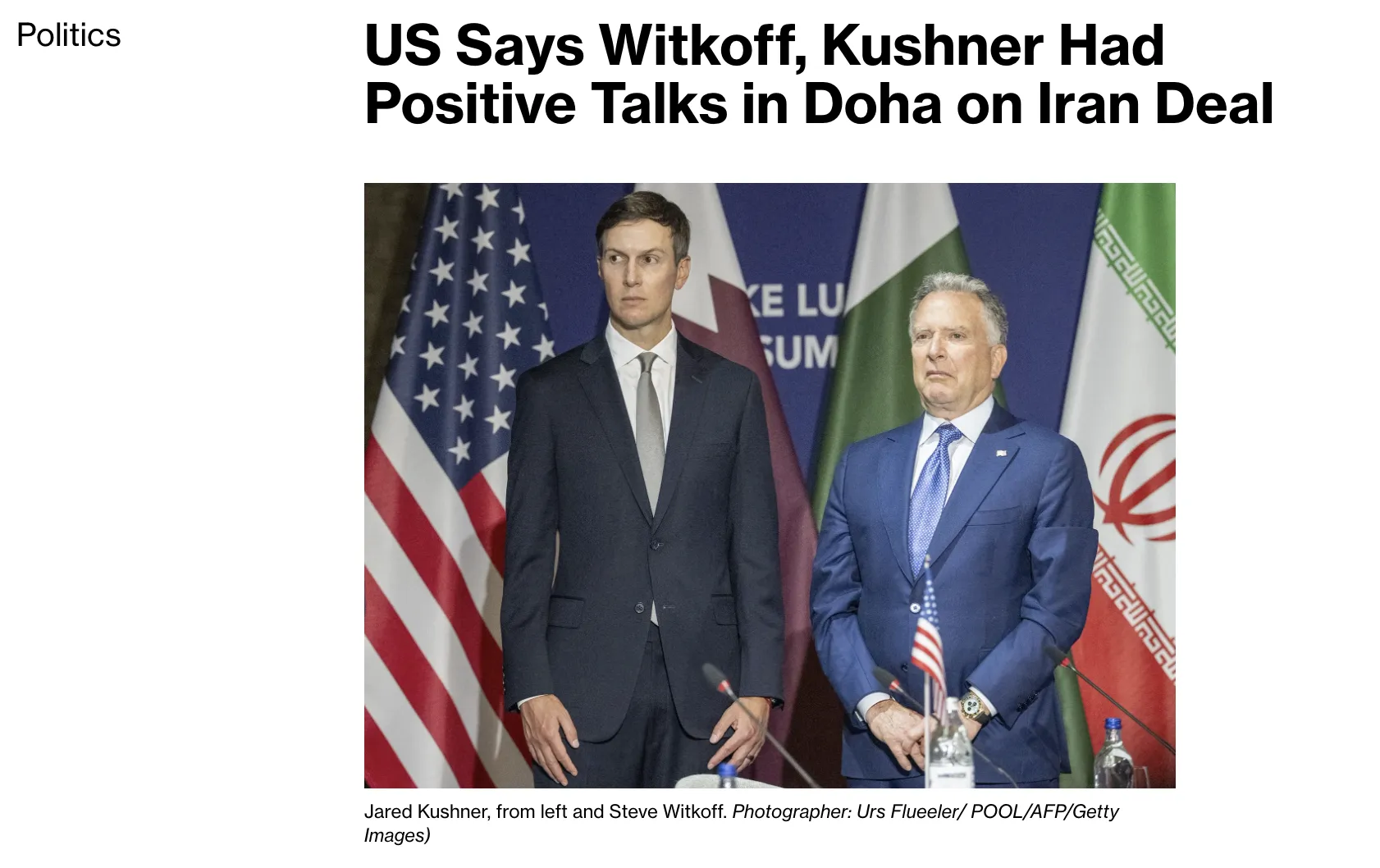
Negotiations between the U.S. and Iran in Doha are showing positive momentum, despite the lack of direct contact between the parties. According to Bloomberg, technical consultations are ongoing and are gradually moving forward.
According to an anonymous source, key negotiators from Washington—Jared Kushner (Donald Trump’s son-in-law) and Special Envoy Steve Witkoff—held productive meetings with regional leaders in Qatar. At the same time, technical discussions are continuing at a lower level between U.S. and Iranian representatives, aimed at de-escalating tensions and concluding a long-term peace agreement.
A previously signed interim agreement paved the way for a 60-day window of negotiations, but the process was threatened with collapse due to a series of armed clashes in the Strait of Hormuz. Witkoff and Kushner returned to Doha only after the parties reached a new agreement to cease mutual attacks. Given the delicate and fragile nature of the negotiations, Qatari officials are currently downplaying public expectations, emphasizing that no direct high-level meetings between American envoys and their Iranian counterparts are currently planned—the dialogue is being conducted indirectly, through Qatari and Pakistani intermediaries.
According to The Wall Street Journal, which cites its own sources in the White House, U.S. President Donald Trump has decided against resuming a large-scale military campaign against Tehran. The U.S. leader has made it clear to his team that he has no objection to continuing the negotiation process beyond the August 18 deadline.
Despite overall progress, several fundamental issues stand in the way of a final agreement:
- The parties are seeking a compromise on the mechanism for unfreezing billions of dollars in Iranian funds.
- Tehran insists on retaining partial control over shipping in the Strait of Hormuz and plans to impose transit fees on foreign vessels after the 60-day term of the interim agreement expires.
Any attempts by Iran to impose duties or fees for passage through the strait are met with categorical opposition from the United States, the European Union, and most of the Arab monarchies in the Persian Gulf. Qatar, in collaboration with Oman, is currently working to develop an alternative formula for ensuring the safety of shipping in the region, according to Bloomberg.
As a reminder, on June 26, global oil prices fell by about 2% due to an increase in the number of tankers passing through the Strait of Hormuz.
Exports of mineral fertilizers through the Strait of Hormuz have shown rapid growth, bringing supply volumes to the global market back to levels recorded before the military escalation began.


