
The U.S. destroyed an Iranian tanker following a missile attack by the IRGC
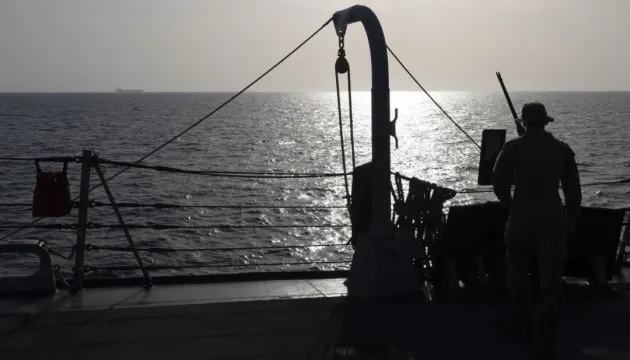
The U.S. military stated that on September 5, it carried out strikes against three Iranian oil tankers. According to CENTCOM, this occurred after the Islamic Revolutionary Guard Corps attacked two U.S. Navy ships. One of the damaged tankers subsequently sank in the Gulf of Oman.
According to the U.S. military, on September 5, U.S. forces attacked three oil tankers linked to Iran’s Islamic Revolutionary Guard Corps. CENTCOM stated that prior to this, the IRGC had fired ballistic missiles at two U.S. Navy warships patrolling the region’s waters.
The U.S. military claims that the aircraft carrier and the guided-missile destroyer were able to evade several Iranian attacks. According to CENTCOM, no U.S. service members were injured. Following this, U.S. forces struck three oil tankers.
Which tankers were attacked?
CENTCOM stated that the U.S. military disabled two tankers—the M/T Downy off the coast of Harg Island and the M/T Stark 1 near Jask. The third vessel was the unloaded tanker M/T Kylo, also known as the “Koxen.” U.S. forces struck it in the Gulf of Oman. Initially, CENTCOM reported that the vessel had sustained damage in several critical areas.
Later, the U.S. command clarified that the M/T Kylo sank as a result of the damage it sustained. Thus, according to CENTCOM, two tankers were disabled as a result of the U.S. attack, while the third sank.
The U.S. called the tankers part of a “shadow network”
U.S. Central Command explained why these particular vessels were targeted. U.S. military officials stated that the three oil tankers were transporting crude oil and were part of a multibillion-dollar network that, according to U.S. estimates, helps finance the IRGC and its affiliated regional groups. “Three Iranian crude oil tankers are part of a multibillion-dollar shadow network that finances the IRGC and its regional proxies,” CENTCOM stated.
The U.S. command also claims that Iran lacks sufficient capabilities to protect such vessels from U.S. strikes. However, the CENTCOM statement does not specify what weapons the U.S. used to attack the tankers or how many people were on board the vessels.
The strike occurred amid escalating tensions
The attack on the tankers occurred after the U.S. announced an Iranian missile strike on American military ships. According to the U.S. account, the ships were patrolling in regional waters when the IRGC launched ballistic missiles at them. The U.S. military stated that the ships sustained no damage and that there were no casualties among the crews.
Following this, the U.S. launched a retaliatory strike against Iranian oil tankers. However, this information is based on reports from the U.S. military command. A comprehensive assessment of the incident also requires data from other independent sources and the Iranian side’s perspective. It is currently known that one of the consequences of the attack was the sinking of the M/T Kylo in the Gulf of Oman. According to CENTCOM, the other two tankers were disabled. The U.S. Central Command (CENTCOM) reported the strikes.
In Iran, Taraneh Rahimi was sentenced to death for participating in the January anti-government protests, while her twin sister, Romine Rahimi, was sentenced to 25 years in prison. Both sisters were 19 years old at the time of their arrest; they are now 20. According to The Guardian World, the family has not seen either of them since the sentences were handed down.


