
Stubb has downgraded his forecast for a swift return to peace in Ukraine — The Telegraph
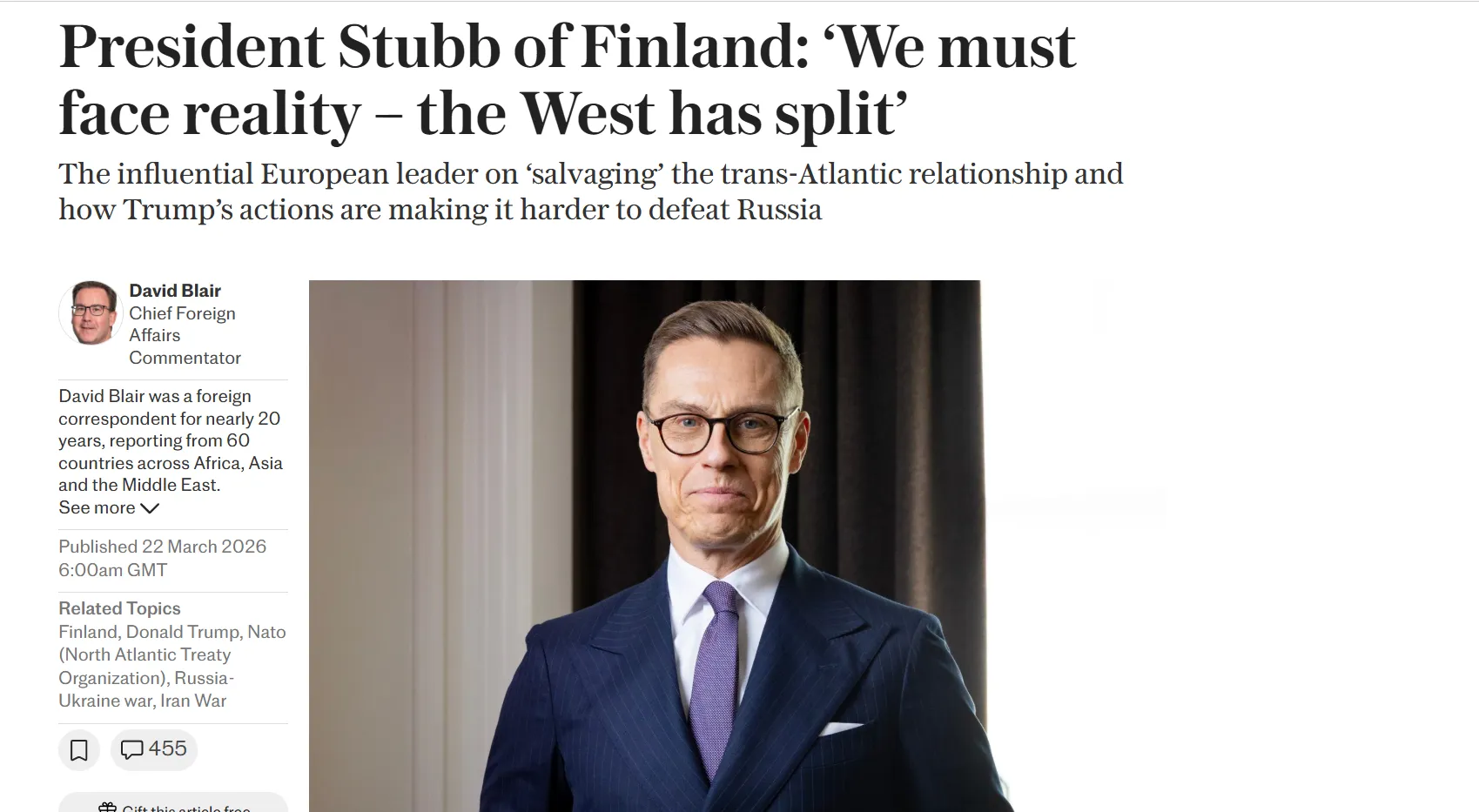
Finnish President Alexander Stubb expressed cautious pessimism regarding the timeline for ending the war, describing his current view as more realistic compared to last year.
Despite the complex geopolitical situation, the Finnish leader highlighted a number of strategic shifts that define Ukraine’s current position on the international stage and at the front.
In an interview with The Telegraph, the politician focused on three key factors that have transformed the conflict over the past twelve months.
“I think I’m more pessimistic now—in this sense, more realistic,” Stubb emphasized, analyzing the chances for a diplomatic settlement.
The president cited the shift toward active diplomacy as the first significant difference from last year’s events. According to him, the parties and the international community are now “engaged in peace talks, which was not the case then.”
This indicates a shift in focus toward seeking political tools to influence the aggressor.
Stubb considers the significant improvement in the positions of the Armed Forces of Ukraine directly in the combat zone to be the second positive aspect.
He noted that Ukrainian troops are once again demonstrating their ability to push back Russian occupiers and successfully recapture previously seized territories, which strengthens Kyiv’s negotiating position.
However, positive developments on the front lines are being offset by new global threats, particularly the war in the Middle East.
According to the Finnish leader, the escalation in and around Iran is creating unpredictable economic consequences that directly help the Kremlin maintain stability.
Before the outbreak of large-scale conflict in the Iranian region, the Russian economy was in critical condition under the pressure of international sanctions.
“Before the war, they were facing zero growth, zero reserves, 16% interest rates, double-digit inflation, and the Russian government’s inability to pay its soldiers,” noted the Finnish president.
According to forecasts by Western experts, Russia’s budget deficit was set to surge from last year’s $83 billion to a critical $130 billion.
However, the destabilization of the oil market due to the war in the Middle East triggered an unexpected rise in energy prices, which effectively propped up the aggressor’s financial system.
As a reminder, the President of Finland offered Trump Europe’s assistance in Iran in exchange for support for Ukraine.
Stubb also explained how a U.S. war with Iran could be beneficial for Ukraine.


