
Satellite images document destruction of Rafah — Asharq Al-Awsat
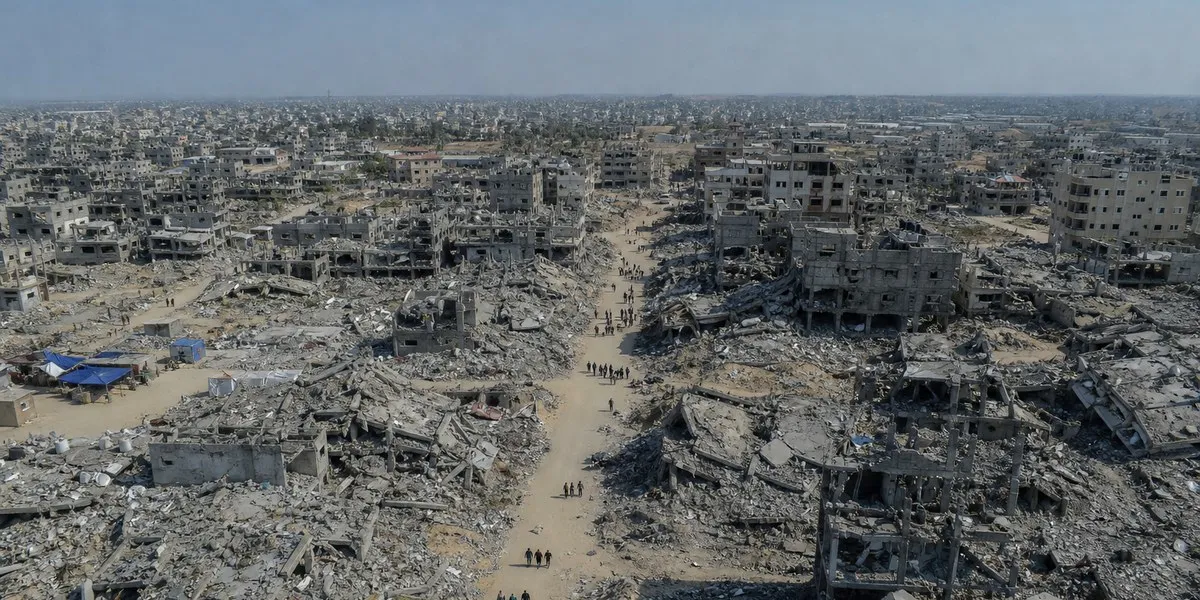
Satellite images from Planet Labs PBC indicate that most buildings in the Israeli-controlled part of the Gaza Strip have been bulldozed or blown up. In some areas, as reported by Asharq Al-Awsat, the military also cleared the rubble of destroyed structures.
Rafah, which had a population of about 250,000 people before the war, was largely destroyed even before the ceasefire agreement. At the same time, satellite images, according to the publication, indicate that the demolition of the few remaining buildings in the city continued afterward. Israeli military facilities were built on the sites of former residential neighborhoods.
Military facilities
The Israeli army controls more than 60% of the Gaza Strip's territory, while the population is concentrated in about 40% of its area. The images show at least 50 Israeli military outposts in the area controlled by Israel; at least 18 of them were built after the ceasefire began.
More current news is available on the UA.News Telegram channel Telegram.
A new military facility, according to the publication, appeared at the site of the main intersection in the city of Bani Suheila. In Jabalia, satellite images show that most of the Al-Awda Hospital complex has been turned into ruins in recent months, while a number of school buildings run by the UN have also been destroyed. A military base was also built near the Indonesian Hospital, which has not operated since June 2025.
Humanitarian situation
The Israeli military says it demolishes buildings to prevent their use by Hamas or to destroy the group's tunnel networks. A UN-appointed expert stated in a February report that the scale of destruction of civilian housing and infrastructure in Gaza is unprecedented by the standards of modern wars. The report said such actions could constitute a crime against humanity or rise to the level of genocide. Israel rejects accusations of genocide and says it is targeting Hamas fighters and the group's infrastructure located among civilian areas.
According to Asharq Al-Awsat, almost the entire population of the Gaza Strip has been left homeless, and many people are living in tents on the coast, former agricultural land and vacant lots. Housing reconstruction is complicated by restrictions on the import of most construction materials. Thousands of bodies, the publication notes, still remain beneath the rubble of destroyed homes.




