
Holiday on August 12, 2026: Feast of St. Jane de Chantal

On August 12, Christians commemorate Saint Jane Frances de Chantal—a French baroness, mother, widow, and founder of a women’s religious community. She endured the early loss of her mother, the death of her husband, and difficult years of family life, but ultimately devoted herself to helping others and to spiritual service. Together with Saint Francis of Sales, she founded the Order of the Visitation of the Blessed Virgin Mary, which later spread far beyond the borders of France.
The feast day of Saint Jane Frances de Chantal is August 12. It is on this day that she is commemorated in the modern calendar of saints published by Vatican News. This day is not a separate national holiday or a widespread public celebration. It is observed primarily within the Catholic tradition as a day to honor a woman who became a model of faith, mercy, fortitude, and service to others.
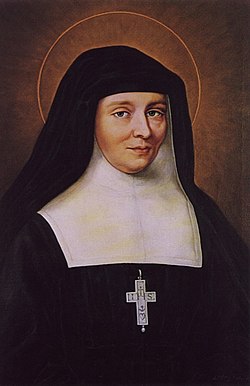
The date may cause some confusion, as older Catholic reference books indicate that after Jeanne de Chantal’s canonization in 1767, August 21 was designated as her feast day. Modern church calendars, including those from Vatican News and Franciscan Media, list August 12. Therefore, when writing about contemporary observances, it is best to use this date as a reference.
Who Was Jeanne de Chantal
Jeanne Françoise Fremieux was born on January 28, 1572, in Dijon, France. She came from a wealthy family, and her father was the president of the Parliament of Burgundy. Johanna’s mother died when she was very young, so her father had a significant influence on her upbringing. She received an education befitting her station and grew up to be a cultured, religious, and well-mannered woman.
In 1592, Jeanne married Baron Christophe de Chantal. She then became Baroness de Chantal and moved to the family estate. The couple had six children, but three of them died in infancy. Within the family, Joanna devoted herself not only to household duties but also to charity, helping the poor and ensuring the family’s daily participation in religious services. Her life changed dramatically after her husband’s death. In 1601, the baron died in a hunting accident. Joanna was left a widow at the age of 28 with children to raise. After that, she vowed never to remarry and began to seek a new path in life.
The Encounter That Changed Her Life
One of the most significant events in Joanna’s life was her encounter with Saint Francis de Sales. They met in Dijon in 1604, when Francis was preaching at a local chapel. Joanna recognized him as the spiritual mentor whom, she believed, she had previously seen in a vision. This marked the beginning of many years of spiritual guidance and correspondence between them.

Francis de Sales helped Joanna navigate a difficult period following her husband’s death and determine the course of her future life. She wanted to enter a convent immediately, but he convinced her not to rush. First, Joanna had to take care of her children, their future, and family matters. Only then was she able to devote herself fully to her new mission. Their collaboration laid the foundation for a future community of women. Francis of Sales wanted to create a place for women who sought a spiritual life but, due to age, health, or other circumstances, could not endure the strict rules of some of the monasteries of that time. Joanna was the one who helped turn this idea into a real community.
How the Order of the Visitation Came to Be
In 1610, a community was founded in Annecy and named the Order of the Visitation of the Blessed Virgin Mary. Its name is linked to the biblical story of the Virgin Mary’s visit to her relative Elizabeth. For Joanna and Francis Salsk, humility, gentleness, mercy, and a willingness to help others were of great importance.
Initially, the founders wanted the sisters to be able to engage not only in prayer but also in providing practical assistance to people. This included, in particular, caring for the sick and performing works of mercy. This idea was unusual for that time, as women’s religious communities often lived under strict rules of seclusion. Later, due to Church requirements, the community became more secluded and adopted the Rule of St. Augustine.

Despite this, the vision of Joanna and Francis did not fade. The community grew rapidly. According to the Catholic Encyclopedia, by the time Francis of Sales died in 1622, the community already had 13 houses, and by the time Joanna died, there were 86. After Joanna’s canonization, the number of such houses grew even further.
Why Joanna’s Story Is Linked to Charity
Even before founding the monastic community, Joanna was dedicated to helping the poor. Vatican News notes that during periods when her husband was away, she set aside her life of privilege and personally served those in need. Her estate became a place where people in need were helped. After her husband’s death, this care for others became an even greater part of her life. Joanna did not merely endure a personal tragedy; she gradually transformed her own experience of loss into a desire to help others. That is why compassion, patience, and service hold a special place in the story of her life.
Her example is particularly significant in the context of the society of that time. Joanna was an aristocrat, a wife, and a mother, but after her husband’s death, she was able to chart a new course for her life on her own. She became one of the founders of a great women’s religious tradition that continued to exist after her death.
The Difficult Trials in the Saint’s Life
Joanna’s life was not peaceful even after she decided to devote herself to religious service. After her husband’s death, she had to live in her father-in-law’s house, where she faced difficult conditions and complicated relationships. According to her biographers, for several years she patiently endured pressure from those around her. A particular trial was her decision to leave her children behind in order to begin a new spiritual life. One of her sons, Kels-Benin, did not want to let his mother go and even tried to physically block her path. Joanna made no secret of the fact that this moment was very painful for her. She was a mother and could not simply stop worrying about her children.
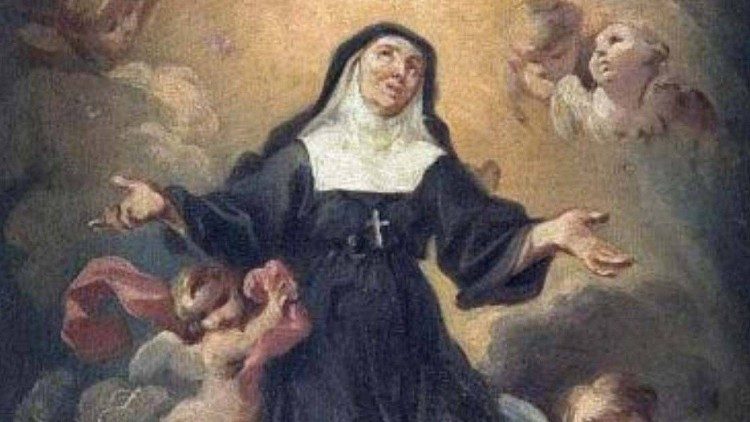
That is precisely why Joanna’s story is often viewed not merely as the story of a woman who left secular life. Her decision was tied to great personal losses and a difficult choice between her duties as a mother and her religious calling. This makes her biography more human and relatable even outside of a religious context.
How Saint Jeanne de Chantal Is Honored
On August 12, the faithful can attend a service, pray, and reflect on the saint’s life story. In the Catholic tradition, a saint’s feast day is not necessarily a grand celebration with large public festivities. Most often, it is a day of prayer, reflection, and remembrance of the example set by a person whom the Church considers a model of Christian life. In communities associated with the Visitation, liturgies, prayers, and gatherings dedicated to Jane de Chantal may be held on this day. Special attention is given to themes of mercy, caring for the sick, supporting the family, and spiritual fortitude. This reflects the central idea of her life—to serve others not only with words but also through concrete actions.
For the average person, commemorating this day is very simple. You can visit a church, pray for loved ones, or help someone in need. You can also do a good deed for a lonely person, support someone who is sick, or simply spend time with someone who has been overlooked.
Interesting Facts About Jeanne de Chantal
Jeanne de Chantal was born in 1572 and died on December 13, 1641. She lived to be 69 years old and, during her lifetime, served as a wife, mother, widow, nun, and founder of a large religious community. She had six children, but three died at a young age. Her son, Kels-Bénin, died in 1627 during a military campaign. He was survived by his daughter, Marie de Rabaudent-Chantal, who became the famous French writer and letter-writer—the Marquise de Sévigné.

Joanna and Francis of Sales maintained an active correspondence. According to the Catholic Encyclopedia, some of Joanna’s letters to him have not survived, as she destroyed them after the death of her spiritual mentor. However, her other letters and religious works have survived to this day. Jeanne de Chantal was beatified in 1751 and canonized in 1767. Her relics are currently venerated in Annecy at the Church of the Visitation, alongside the relics of Saint Francis de Sales.
What Was Her Main Idea?
Johanna de Chantal is remembered not only as the founder of a convent. Her story is that of a person who endured loss, family difficulties, and personal crises, yet did not allow them to destroy her life. She gradually found a way to transform her own pain into care for others. In the Church’s tradition, she is credited with a simple principle: “Do everything with love and nothing by force.” Vatican News cites this very thought as one of the main spiritual guiding principles of her life.
Therefore, August 12 is, above all, a day to remember mercy, patience, and humanity. The story of Jeanne de Chantal shows that a new phase of life can begin even after a great loss. And helping others sometimes becomes a way to find meaning and strength for oneself.


