
Holiday on September 18, 2026 — Croatian Navy Day: How Military Sailors Celebrate the Holiday
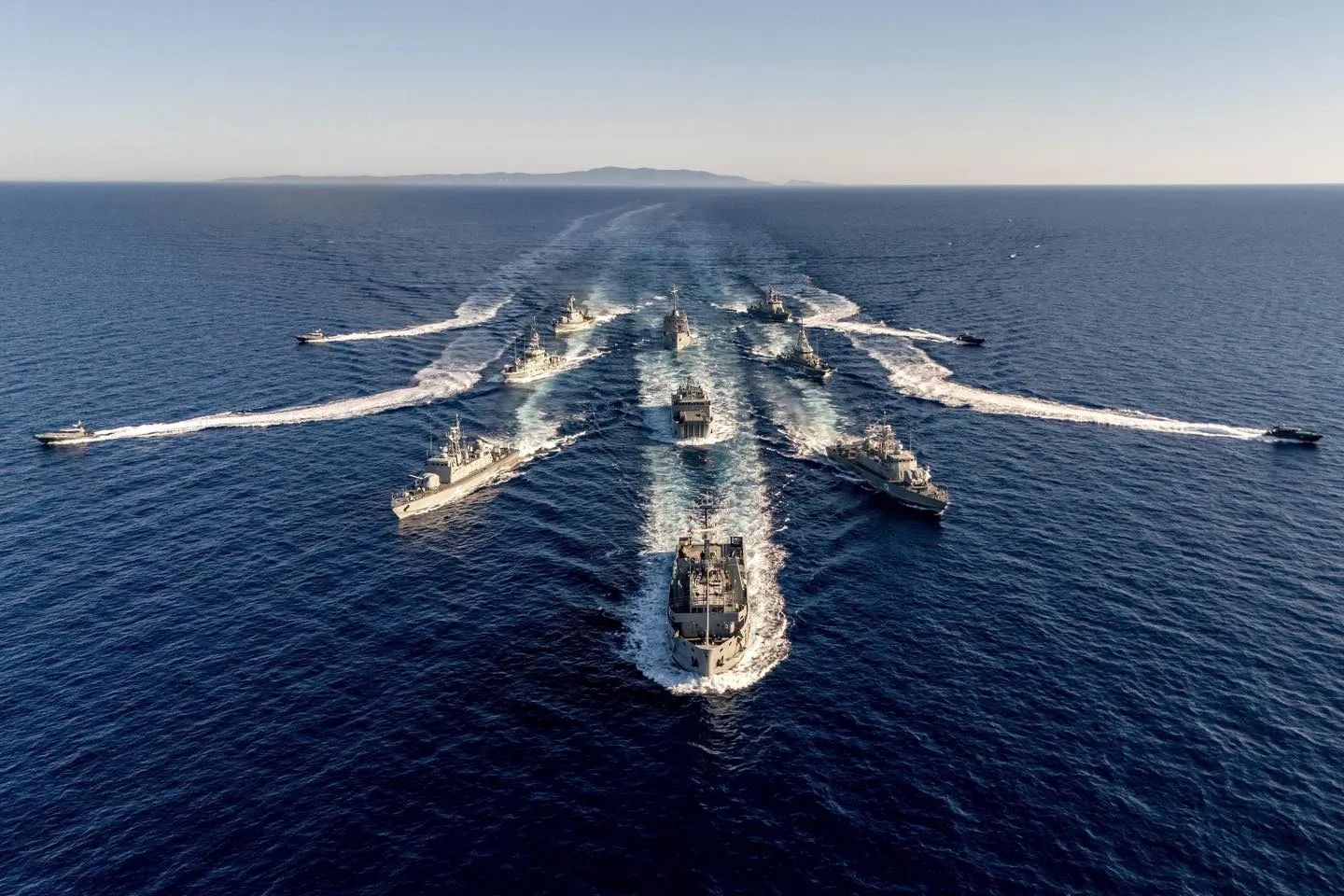
September 18 is Navy Day in Croatia—a date dedicated to the Croatian Navy and its history. They were officially formed in September 1991, when the country was fighting for independence and establishing its own armed forces. On this day, celebrations are held, fallen sailors are remembered, wreaths are laid, concerts are organized, and military ships are sometimes opened to visitors.
Croatian Navy Day is celebrated annually on September 18. In Croatian, this date is called Dan Hrvatske ratne mornarice. It is the professional holiday of the country’s navy and is linked to the events of September 1991. It was then that Croatia began establishing its own navy as part of its new armed forces. In 2026, Navy Day falls on Friday, September 18. This year, the date is particularly symbolic, as it marks the 35th anniversary of the establishment of the Croatian Navy. The Navy was officially established on September 12, 1991, by a decree of President Franjo Tuđman, and September 18 was subsequently designated as Navy Day.

The holiday is dedicated not only to today’s sailors. On this day, people who served in the navy during Croatia’s war of independence and made the ultimate sacrifice are also remembered. Honoring their memory is an important part of the official ceremonies.
How the Croatian Navy Was Established
The history of the modern Croatian Navy began during one of the most difficult periods for the country. In 1991, Croatia declared independence from Yugoslavia, after which a war broke out. The new state needed to establish its own armed forces, including forces to defend its coastline, islands, and territorial waters. On September 12, 1991, Croatian President Franjo Tuđman signed a decree establishing the Croatian Naval Forces as a separate branch of the Armed Forces of the Republic of Croatia. Admiral Sveto Letica became its first commander. Later, a military base housing the Navy’s headquarters was named after him.
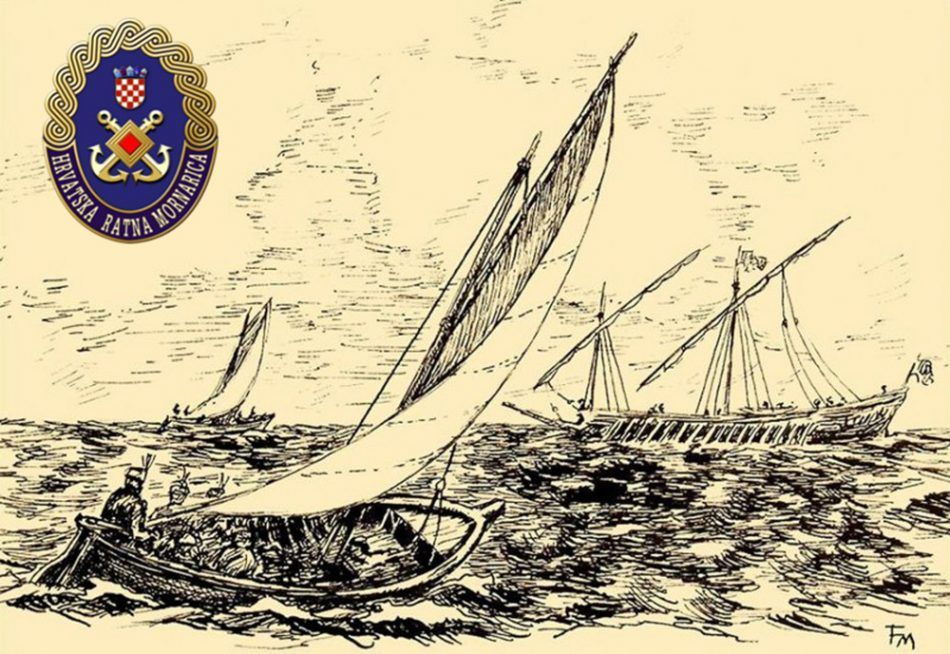
The fleet was literally formed in the midst of hostilities. In September 1991, Croatian forces received their first ships, and they managed to seize some vessels at a shipyard in Šibenik. According to the Croatian Ministry of Defense, there were approximately 30 naval vessels at that time. The early years were very difficult. The country did not yet have a large, modern fleet, and it had to be built practically from scratch. Naval personnel, together with coastal units, participated in defending the coastline and in operations during the war.
What Role Did the Navy Play During the War?
The Croatian Navy played an important role during the War of Independence. It participated in operations in the Adriatic Sea and helped defend the Croatian coast. According to the Croatian Ministry of Defense, the navy also helped break the naval blockade and maintain communication between different parts of the country. One of the key tasks was to maintain communication between the southern regions of the country and the rest of Croatia. The situation around Dubrovnik was particularly challenging. The Croatian Navy helped maintain connections with the city under very difficult conditions.
The Navy also supported operations along the coast and participated in military actions related to the liberation of territories. Among the operations in which the Croatian Navy is mentioned are “Maslenica,” “Lightning,” and “Storm.” Therefore, in modern Croatia, Navy Day holds not only professional but also historical significance. Official ceremonies commemorate the navy’s early years, its development, and the sailors’ contribution to the war for independence. Special tribute is paid to those who died while on duty.
Why September 18?
The date of September 18 is linked to the events of September 1991, when the new Croatian Navy was being formed. The Croatian Ministry of Defense also explains the choice of date by its historical connection to the events of 887 and Prince Branimir’s victory over Venice in central Dalmatia. This historical symbolism was later combined with the decisive events of September 1991.
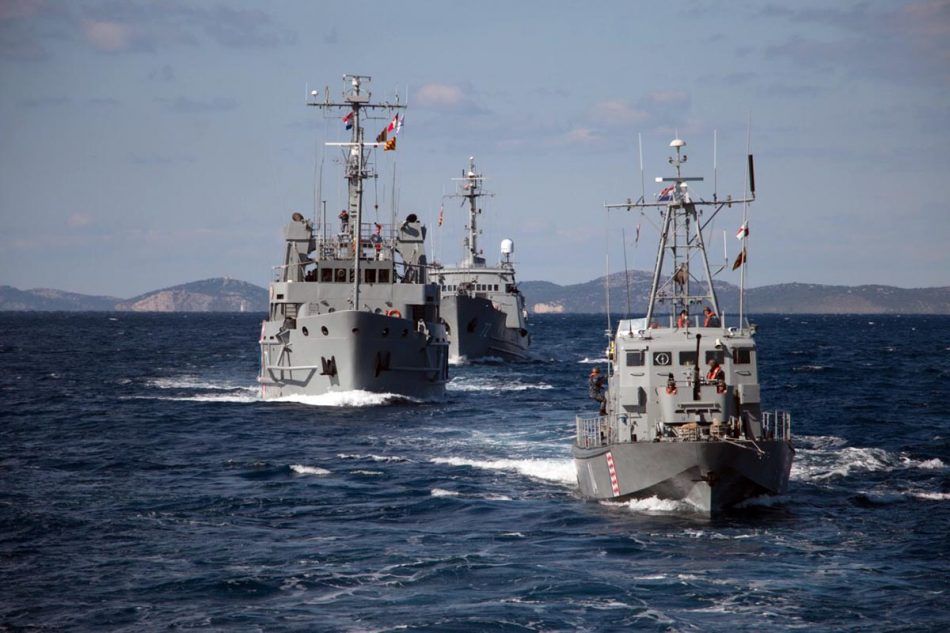
In other words, Navy Day has several layers of meaning. It commemorates Croatia’s long maritime history, the creation of the modern navy, and the sailors’ participation in the war for independence. For military personnel, it is a professional holiday, and for the state, it is an opportunity to highlight the role of the sea in national security. It is also important to note that Croatia has a very long Adriatic coastline and a large number of islands. Therefore, control and protection of its maritime space are of particular importance to the country. Today, the Navy’s missions include protecting Croatia’s sovereignty, territorial integrity, and national interests at sea.
How Navy Day Is Celebrated
The celebration usually consists of several parts. Military and government officials participate in formal ceremonies, march in parades, deliver speeches, and present awards to service members. They also commemorate the history of the Navy and those who died in the line of duty. A separate tradition involves laying wreaths and lighting candles. These are carried to memorials honoring fallen defenders and to sites associated with the history of the Navy. A naval tradition also involves placing a wreath in the water in memory of fallen sailors.

For example, during the Navy Day celebrations in Ploče, a military ship sailed through the Neretva Canal, and while underway, a wreath was lowered into the water in honor of fallen sailors. This was followed by a main ceremony at the passenger pier. The event concluded with a moment of silence for fallen Croatian servicemen. Another tradition is musical performances. The Croatian Navy Band may lead morning marches, and concerts are held in cities in the evenings. Over the years, such performances have taken place, in particular, on the Split waterfront.
Ships are open to visitors
Navy Day in Croatia is not always limited to military ceremonies. In some years, city residents and tourists have had the opportunity to board military ships and see how they are equipped. This tradition has been observed, in particular, in Split, Pula, Omis, Makarska, and Sibenik. This allows civilians to get a closer look at the work of naval personnel. On the ships, visitors can see the equipment, the deck, communication systems, and other aspects of naval service. Such events are especially interesting for children, as they get to see a naval vessel up close rather than just from a distance in the harbor.
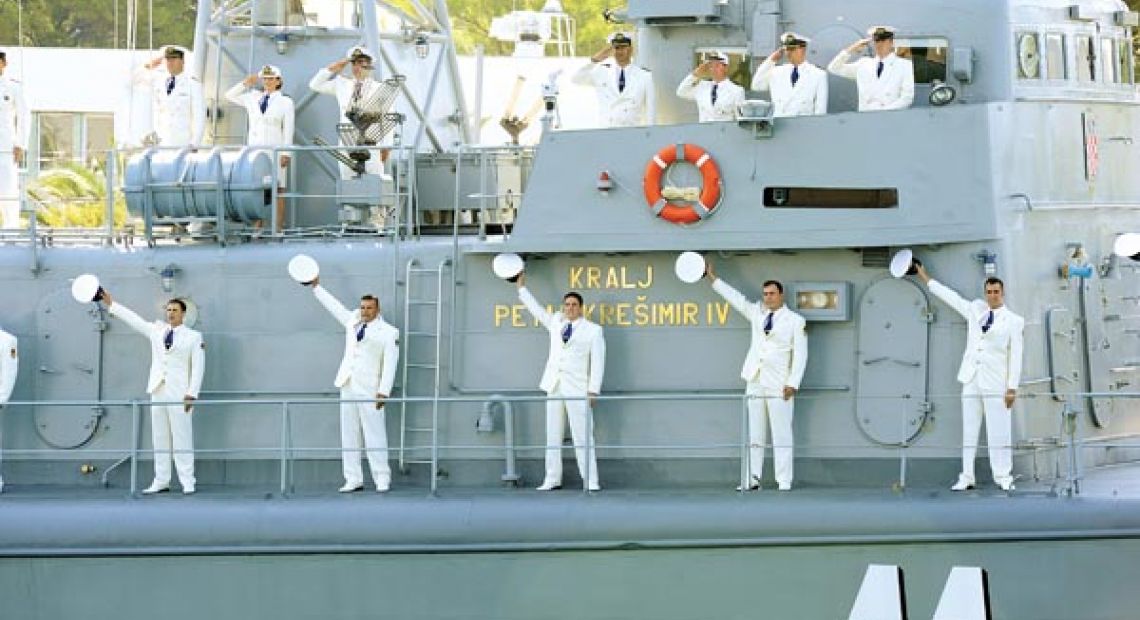
During the anniversary celebrations, exhibitions, concerts, and other public events are also held. Military personnel demonstrate equipment, discuss the history of their units, and present awards to service members. In this way, Navy Day becomes more accessible to the public.
What Are the Croatian Navy’s Tasks Today?
Today’s Croatian Navy performs far more tasks than simply patrolling the seas. It is responsible for defending the country’s sovereignty and territorial integrity at sea. The Navy can also support civilian operations and participate in international missions. Following Croatia’s accession to NATO, the Navy’s role has expanded. Croatian sailors participate in international missions and exercises alongside military personnel from other countries. The Croatian Ministry of Defense has reported that Navy personnel have participated in international operations conducted by the UN, NATO, and the EU.

The Croatian Navy also carries out tasks related to security in the Adriatic Sea. These include monitoring maritime areas, protecting territorial waters, and supporting the coast guard. Coastal surveillance systems also play an important role. Modernization is a separate area of focus. In 2025–2026, Croatia will continue to modernize its Armed Forces, and among the projects for the Navy are the development of the Coast Guard and preparations for the acquisition of a multi-purpose corvette-class vessel. The Ministry of Defense calls this procurement one of the key projects for modernizing the fleet and strengthening control over the Adriatic.
Interesting Facts About Croatian Navy Day
The first commander of the Navy was Admiral Svetko Letica. He led the fleet at the very beginning of its existence in 1991. Today, a military base housing the Navy command bears his name.
The modern fleet was established during the war. In September 1991, Croatian forces received their first ships, and some military vessels were seized at a shipyard in Šibenik. This marked one of the first steps toward creating a fully-fledged Navy.
Navy Day features a maritime tradition of remembrance. A wreath is lowered into the sea in honor of fallen sailors. This ritual has been performed, in particular, during celebrations in Ploče and during anniversary events in Split.
The holiday is celebrated not only at military bases. Over the years, the main events have been held in Split, Ploče, and Rijeka. The program may include military ceremonies, concerts, commemorative events, and opportunities to tour ships.
The Croatian Navy has close ties to the country’s maritime history. Official materials emphasize that the modern fleet is part of a much longer Croatian maritime tradition. That is why Navy Day commemorates not only the events of 1991 but also the earlier history of Croatian seafaring.
What Navy Day Means for Croatia
For Croatia, September 18 is, above all, a day of remembrance and professional honor for military sailors. On this day, the country honors those who established the navy in 1991, served during the war, and died while performing their duties. At the same time, the focus is on the Navy’s current missions and its role in the country’s security. For civilians, it is also an opportunity to better understand why the sea is so important to Croatia. The Adriatic is integral to the country’s economy, tourism, transportation, and daily life. Therefore, the protection of maritime space is important not only for the military but also for the state as a whole.
In 2026, Croatian Navy Day will be celebrated on September 18, 35 years after the establishment of the modern navy. The main elements of the celebration traditionally include solemn ceremonies, tributes to the fallen, military awards, musical events, and a fleet review.


