
Holiday on June 30: Today, the world celebrates International Asteroid Day
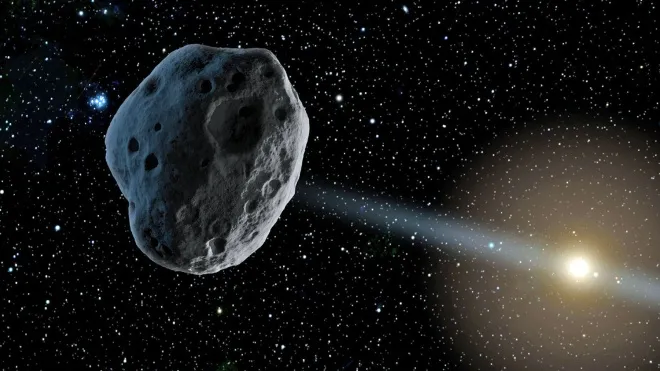
Every year on June 30, the global community celebrates International Asteroid Day. This is a relatively new international observance that was officially proclaimed by the United Nations in 2017. Its main goal is to draw attention to asteroids, their impact on the development of the Solar System, and the need to protect Earth from potentially hazardous space objects.
The date was not chosen at random—it was on June 30, 1908, that the famous Tunguska event occurred, which is considered the largest collision between Earth and a celestial body in modern history.
Why June 30?
On the morning of June 30, 1908, a powerful explosion occurred over Siberia near the Podkamennaya Tunguska River. According to scientists’ estimates, a celestial body with a diameter of approximately 50–80 meters exploded in the atmosphere at an altitude of several kilometers.
As a result of the explosion:
- over 80 million trees were felled;
- an area of more than 2,000 square kilometers was devastated;
- the shock wave was detected by observatories across Europe and Asia.
Fortunately, the explosion occurred over a sparsely populated area. If a similar object had fallen over a major city, the consequences could have been catastrophic.
When did the UN establish International Asteroid Day?
The idea to establish an international day was supported by scientists, astronauts, space explorers, and public figures. It was first observed in 2015, and in 2017, the UN General Assembly officially designated June 30 as International Asteroid Day.
The main goal of the observance is to
- to raise awareness about asteroids;
- to popularize space science;
- to inform the public about the risks of Earth colliding with celestial bodies;
- to support international cooperation in space monitoring.
Why are asteroids important to science?
Although asteroids are often associated with danger, for scientists they are a veritable “time capsule.” Most of them formed more than 4.5 billion years ago, at the very beginning of the Solar System’s existence.
Studying them helps us understand:
- how planets formed;
- what materials the Earth was made of;
- what the early stages of the Solar System’s development were like.
In addition, some asteroids contain rare metals, water, and other valuable resources that could be used in future space missions.

How dangerous are asteroids?
According to astronomers, millions of asteroids orbit the Sun, but only a small fraction of them could potentially come close to Earth.
Today, space agencies in various countries are constantly:
- monitoring potentially hazardous objects;
- refine their orbits;
- developing technologies to deflect asteroids in the event of a threat.
One of the most famous examples is NASA’s DART mission, which successfully altered the orbit of a small asteroid for the first time, demonstrating the possibility of planetary defense.
Interesting Facts About Asteroids
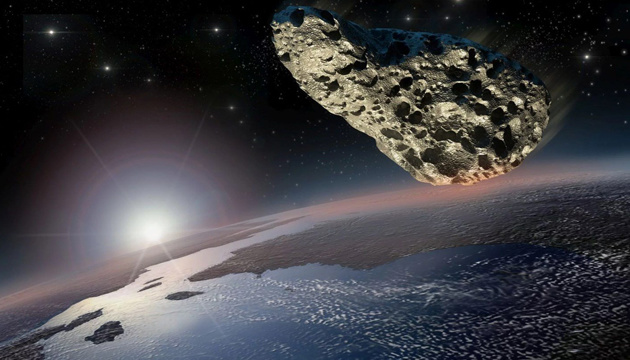
- The largest asteroid in the main belt is Ceres, which currently has the status of a dwarf planet.
- Every day, dozens of metric tons of space dust enter Earth’s atmosphere.
- Most asteroids burn up in the atmosphere and pose no threat.
- More than a million asteroids have been identified, and this number is constantly growing.
- Some asteroids have their own small moons.
How is International Asteroid Day celebrated?
On this day, various countries around the world hold:
- lectures and conferences;
- meetings with astronomers;
- live online broadcasts from space observatories;
- documentary screenings;
- themed exhibitions at science museums and planetariums;
- educational events for schoolchildren and students.
International Asteroid Day was a wonderful opportunity to remind us that space still holds countless mysteries, and that modern science is capable not only of exploring the universe but also of working to protect our planet from potential space threats.

International Asteroid Day, celebrated annually on June 30, is more than just a date on the calendar. The observance reminds humanity of the importance of space exploration, international cooperation, and the development of technologies that help monitor celestial bodies. Events that took place over a century ago have shown that even a small asteroid can significantly impact life on Earth, which is why knowledge about space today has not only scientific but also practical significance.


