
Holiday on July 30, 2026 — World Embroidery Day
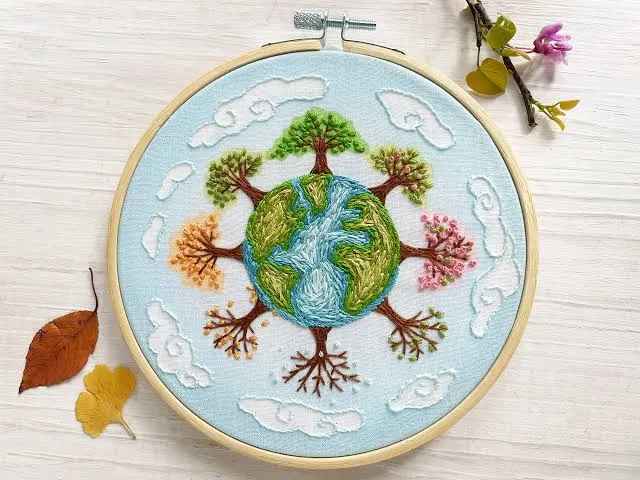
July 30 is celebrated around the world as World Embroidery Day. This holiday is dedicated to one of the oldest forms of handicrafts, which has been part of the culture of various peoples for many centuries. On this day, people embroider, hold creative gatherings and workshops, and reflect on the value of traditions passed down from generation to generation.
World Embroidery Day is celebrated annually on July 30. This holiday is relatively new—it was established in 2011. It was initiated by one of the local groups of the Swedish Embroiderers’ Guild. The first celebratory events took place in the Swedish town of Vismarlöv, and within just a few years, dozens of countries around the world had joined the initiative.
The idea behind the holiday is simple—to show that embroidery is not only a beautiful craft but also a means of creative self-expression, communication, and the preservation of cultural heritage. The founders of the holiday even created a special manifesto calling for July 30 to be a day of creativity, peace, freedom, and equality. “Let July 30 be a day filled with creativity for the sake of peace, freedom, and equality”—this is the core idea behind World Embroidery Day.
Why Embroidery Is So Special
Embroidery has existed for thousands of years. Archaeologists have found embroidered clothing dating back to ancient civilizations in Asia, Egypt, and Europe. It developed differently in various countries, but almost everywhere it became an important part of the culture.
For Ukrainians, embroidery holds special significance. Embroidered shirts, towels, and other items have long been not only decorations but also symbols of family, memory, and the bond between generations. The patterns often had their own meanings: some symbolized prosperity, others—health, protection, or the continuation of the family line. That is why embroidery has long ceased to be merely a form of handicraft. For many people, it has become a way to preserve the history of their family and culture.
How This Day Is Celebrated
World Embroidery Day does not feature any official state ceremonies, but every year it is celebrated by thousands of people around the world. In various countries, creative gatherings, exhibitions, festivals, charity events, and workshops are organized. Artisans showcase their work, share their expertise, and teach the basics of embroidery to anyone interested.
Many people simply pick up a needle and thread and devote at least a few hours to their favorite pastime. Others finish old projects or start new ones. Some museums and cultural centers open themed exhibitions dedicated to folk embroidery on this day. In recent years, social media has also become actively involved in the celebration. People post photos of their work, share stories about how they created their embroidery, and introduce others to their country’s traditions.
Interesting Facts About Embroidery
Despite the development of modern technologies, hand embroidery has not lost its popularity. On the contrary—in recent years, it has been experiencing a new wave of popularity. Young designers are incorporating traditional techniques into contemporary clothing, while artisans are creating paintings, jewelry, and even three-dimensional art installations using thread.
There are hundreds of embroidery techniques around the world. Among the most famous are cross-stitch, satin stitch, Richelieu, bead embroidery, ribbon embroidery, and gold embroidery. Every country has its own patterns, colors, and traditions. In Ukraine, almost every region also has its own style. Poltava, Podillia, Hutsul, Bukovina, and Borshchiv embroidery are easily recognizable by their colors, techniques, and patterns.
Why This Holiday Remains Relevant
World Embroidery Day reminds us that even in today’s digital world, people continue to value items created by hand. For some, embroidery is a form of creativity; for others, a way to unwind after a hard day; and for still others, an opportunity to preserve family traditions and pass them on to their children. That is why, every year on July 30, thousands of people in different countries pick up a needle and thread to create yet another small piece of work that will become part of the great global history of embroidery.


