
August 5, 2026 Holiday — St. Nonna’s Day: How the Mother of Gregory the Theologian Is Honored
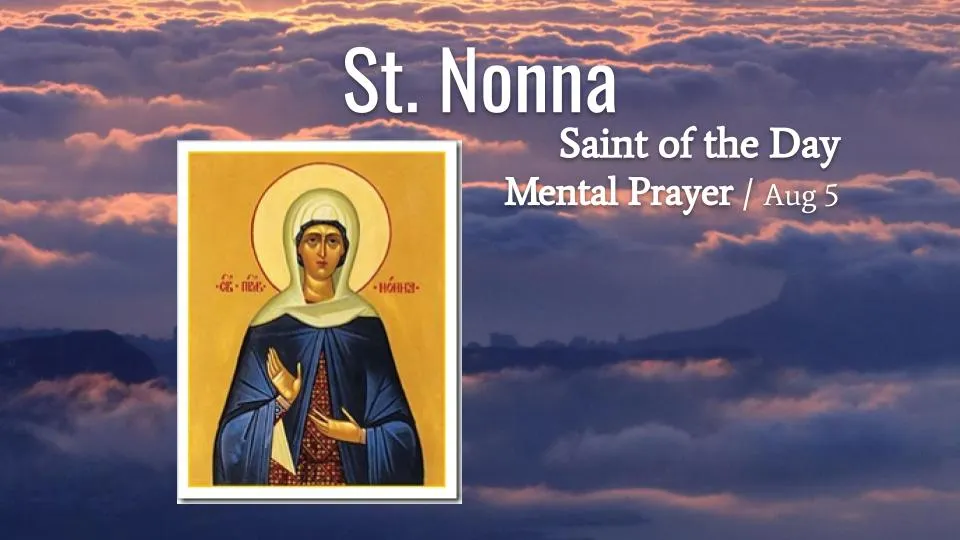
On August 5, 2026, according to the New Julian calendar, Orthodox Christians commemorate Saint Nonna of Nazianzus—the mother of Saint Gregory the Theologian. According to the Julian calendar, this date falls on August 18. Nonna went down in Church history not only as the mother of one of the most famous theologians, but also as a woman who, according to Church tradition, led her husband to the Christian faith through her prayers and raised three children whom the Church also considers saints.
The feast day of Saint Nonna falls annually on August 5 according to the New Julian calendar. In the Church tradition, this is not merely a day associated with her name, but a date on which the life, faith, and spiritual example of the mother of St. Gregory the Theologian are commemorated. For those who follow the Julian calendar, the feast day of Saint Nonna falls on August 18. The difference between the dates is 13 days.

Nonna lived in the 4th century in Cappadocia—a historical region of Asia Minor that was part of the Roman Empire at that time. The exact date of her birth is unknown, but she died in 374. Ecclesiastical sources refer to her as the wife of Gregory of Nazianzus the Elder and the mother of Gregory the Theologian.
Who Was Saint Nonna?
Nonna was born into a Christian family. Her parents were Philotatus and Gorgonia, who raised their daughter in the Christian faith. According to church tradition, Nona was a deeply religious person from a young age and strove to live her life in accordance with her beliefs.
She married Gregory of Nazianzus the Elder, a wealthy landowner. However, at the time of their marriage, he was not a Christian. Church sources describe him as a follower of a religious movement that combined belief in a supreme deity with certain Jewish rituals and the worship of fire. This was difficult for Nonna, so she prayed fervently for her husband’s conversion. According to church tradition, her prayers were not left unanswered. Gregory converted to the Christian faith, was later ordained a priest, and eventually became the bishop of Nazianzus. Thus, Nonna’s family became one of the most prominent Christian families of its time.
Nonna was the mother of three saints
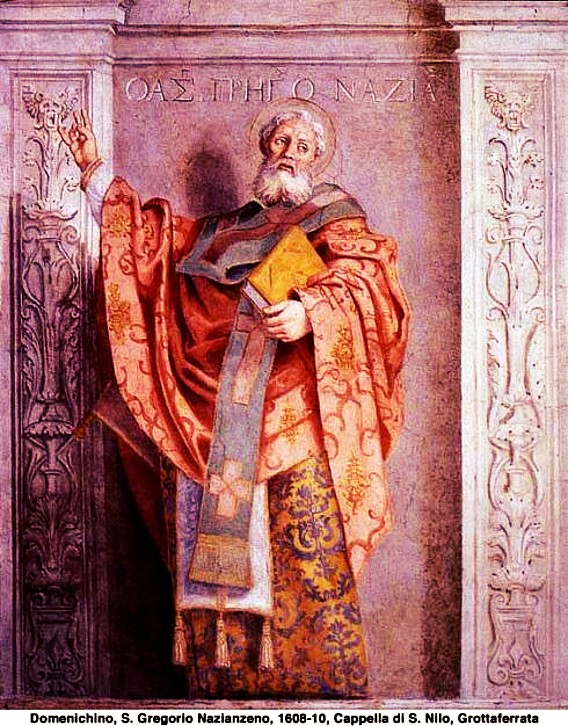
Nonna’s most famous son was Gregory the Theologian, one of the most prominent theologians of early Christianity. He was born around 329 in Arianza, near Nazianzus. According to church sources, his mother instilled in him a love for the Holy Scriptures and the faith from an early age. Gregory received an excellent education for his time. He studied in Caesarea, Alexandria, and Athens. It was in Athens that he became close friends with St. Basil the Great, and their friendship became one of the most famous stories of early Christian history. Later, Gregory became Archbishop of Constantinople and one of the great Church Fathers.
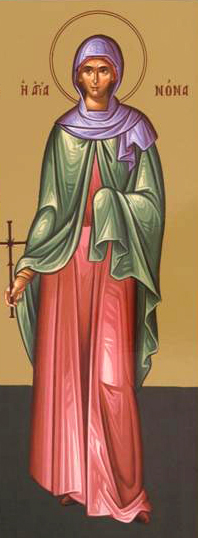
But Gregory was not the only child of Nonna whom the Church honors as a saint. Her daughter Gorgonia was also glorified as a saint, and her son Caesarius became a renowned physician and church leader. Thus, Nonna, her husband Gregory the Elder, and their three children are all counted among the saints. That is why the story of Nonna is often viewed as more than just a tale of motherhood. It is the story of an entire family that played a prominent role in the Christian tradition of the fourth century.
How Nonna Prayed for Her Husband
One of the most famous parts of her biography is connected specifically with her husband. Nonna did not try to force him to change his views. Instead, according to church tradition, she prayed for him and asked God to lead him to the Christian faith. Her biographies recount that Gregory experienced a spiritual turning point after an unusual dream. He heard words from the Psalter: “I rejoiced when they said to me, ‘Let us go to the house of the Lord.’” After that, Nona’s husband wanted to go to church.

He eventually became a Christian and began serving the Church. According to church tradition, Gregory attended the First Ecumenical Council in Nicaea, after which his ministry continued. He later became the bishop of Nazianzus. This story is one of the reasons why Nonna is remembered in the Church’s tradition as an example of persistent prayer. Her biography emphasizes not spectacular feats, but patience, faith, and care for her family.
What Was Nonna’s Life Like?
According to tradition, Nonna combined family life with active service to the Church. She raised her children, supported her husband, and engaged in charitable work. When her husband became a bishop, Nonna was also ordained a deaconess.

Her life was not without loss. Nonna endured the deaths of her children—Caesaria and Gorgonia—as well as the loss of her husband. Despite this, church sources describe her as a woman who did not renounce her faith even during the most difficult times. In early 374, her husband, Gregory the Elder, died. Shortly thereafter, Nonna also passed away. According to church tradition, this occurred on August 5, 374, while she was praying in a church. This detail is particularly often mentioned in her biography.
Why Saint Nonna Is Honored
The main significance of the commemoration of Saint Nonna is associated with her faith, patience, and devotion to her family. Her biography portrays a woman who did not separate her spiritual life from her daily responsibilities. She was a wife, a mother, a philanthropist, and a person who served the Church. Motherhood holds a special place in her story. Nonna raised children who themselves became renowned Christian figures. Her son Gregory the Theologian became one of the Church’s foremost theologians, and his writings and sermons had a profound influence on Christian thought.

Therefore, Saint Nonna is remembered not only as the mother of a great saint. Her example is associated with the idea that faith is manifested not only in words but also in daily deeds, patience, and responsibility for loved ones.
How Saint Nonna’s Day Is Observed
This day is primarily a religious observance, not a secular one. In churches, people pray during services and commemorate Saint Nonna. Believers may turn to her in prayer, asking for spiritual support, peace in the family, and the strength to endure difficult circumstances.
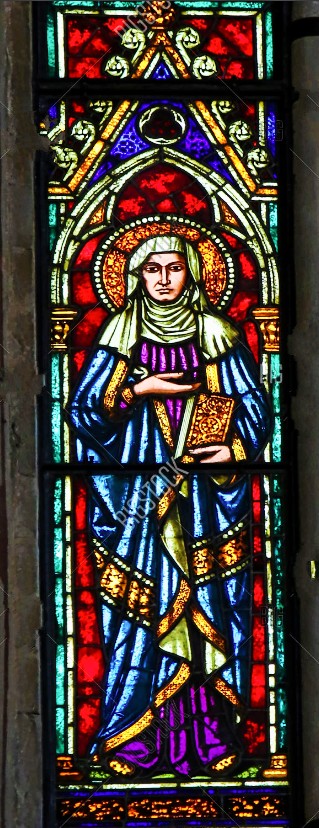
There are no specific church-wide celebratory traditions associated exclusively with Saint Nonna’s Day. Therefore, claims about mandatory dishes, prohibitions, or special folk rituals should be taken with a grain of salt. The main focus of the day is prayer, remembrance of the saint, and reflection on her life. On this day, you can also do a good deed for someone else. For example, you can help someone in need, offer support to a lonely person, visit loved ones, or simply find time for quiet prayer. This approach aligns well with the image of Nonna as a woman who combined her faith with care for her family and neighbors.
What You Can Do on August 5
On Saint Nonna’s Day, believers can visit a church and pray. It is especially fitting to remember family members and people going through difficult times in your prayers. You can also dedicate this day to your family: talk with your parents, spend time with your children, support a loved one, or make peace with someone with whom you’ve had a long-standing disagreement. For Saint Nonna, family was a very important part of life.
Another tradition you can make your own is charity. Helping others, making a donation, or simply doing a good deed aligns with the Christian way of life associated with Saint Nonna.
Interesting Facts About Saint Nonna
Nonna was the mother of three saints. Her son Gregory the Theologian, her daughter Gorgonia, and her son Caesarius were canonized by the Church. Her husband, Gregory the Elder, also became a saint.
Her son Gregory studied in Athens. There he received a thorough education and met Basil the Great. Later, Gregory became Archbishop of Constantinople and one of the most famous Church Fathers.
Nonna was a deaconess. After her husband became a bishop, she also received a church ministry.
She died while praying. A church source from the Patriarchate of Antioch notes that Nonna passed away on August 5, 374, in a church while praying.
Nonna was a relative of another well-known saint. She was the aunt of Amphilochius of Iconium, who also became a bishop and a saint.
Her name is associated primarily with motherhood, but her role was much broader. Church sources describe Nonna as a wife, mother, benefactor, and a woman who actively served the Church.
What Is Commemorated on August 5
In the Orthodox tradition, August 5 commemorates more than just Saint Nonna. On this day, other saints may also be commemorated, depending on the specific church tradition and calendar. For Ukrainians, it is important to consider which calendar the community’s church life follows. According to the New Julian calendar, the commemoration of Saint Nonna falls on August 5, while according to the Julian calendar, it falls on August 18.
Nonna’s story remains, above all, a story of faith and family. She endured a difficult marriage, the loss of loved ones, and challenging periods in her life, but, according to church tradition, she never renounced her convictions. Today, her memory is associated with patience, prayer, maternal love, and care for others. That is why August 5 is an opportunity for the faithful not only to remember the name of Saint Nonna, but also to reflect on just how important family support, mercy, and faith can be during life’s difficult moments.


