
July 6th Holiday: USU Celebrates Dollar's Birthday
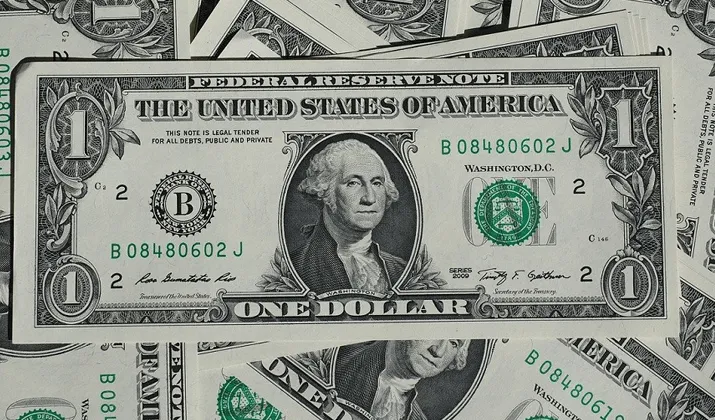
Every year on July 6, people celebrate an unofficial but popular holiday—the Birthday of the Dollar, a currency that has long transcended the borders of the United States and become one of the world’s major financial symbols.
On this day, people reflect on the history of the “$” symbol, the development of the American monetary system, and the currency’s journey from silver coins to a global economic tool. Despite its festive name, it is more of an opportunity to understand how the dollar became what it is today—the universal language of money.
Dollar Day does not have official state recognition, but every year on July 6, it is mentioned in financial reviews, educational materials, and popular culture as a symbolic date associated with the formation of the American monetary system. The dollar itself, as a unit of currency, began to take shape after the United States gained independence, when the young nation was seeking a way to move away from the British pound and Spanish coins, which were then widely used in circulation. In 1785, the Continental Congress officially adopted the dollar as the national currency, and later began developing a full-fledged monetary system featuring silver and gold coins.
The “$” symbol is a story in itself—one that is recognized today in every country around the world. According to one of the most common theories, the symbol derives from the Spanish peso, where the abbreviation “PS” was used; over time, these letters overlapped and transformed into the familiar shape. Another theory links the symbol to the two Pillars of Hercules on Spanish coins and the ribbon around them, which gradually evolved into vertical lines. There is also a popular explanation that “$” is a simplified overlapping of the letters U and S—as in “United States”—which, over time, lost part of their shape and merged into a single symbol.

The first dollars were not paper bills but silver coins, and it was only later that banknotes began to appear in the U.S., which initially looked quite different from modern bills. Interestingly, early banknotes often depicted not presidents but mythological or historical scenes, and it was not until the 20th century that portraits of statesmen became standard on banknotes—most of whom had already passed away by the time of printing. In 1792, the United States adopted a bimetallic standard, using both silver and gold, which was an important step in stabilizing the financial system of the young nation.

Over time, the dollar gradually evolved from the domestic currency of the United States into a global instrument of international trade. Its role grew particularly strong after the 20th century, when the global economy began to integrate and the United States became one of the key financial centers. Today, the dollar is used not only in the United States but also in many countries as a reserve or even official currency, making it one of the most influential symbols of the modern economy.

Despite its economic significance, Dollar Day remains more of an educational and cultural event than a mass holiday with traditions. On this day, historical articles are typically published, themed lectures on finance are held, and the media share interesting facts about the currency that has become a universal means of payment. For economists and historians, this is yet another opportunity to highlight how a symbol and a system can influence global processes over the centuries.


