
Holiday on August 8, 2026 — St. Gregory of the Caves Day: History and Church Traditions
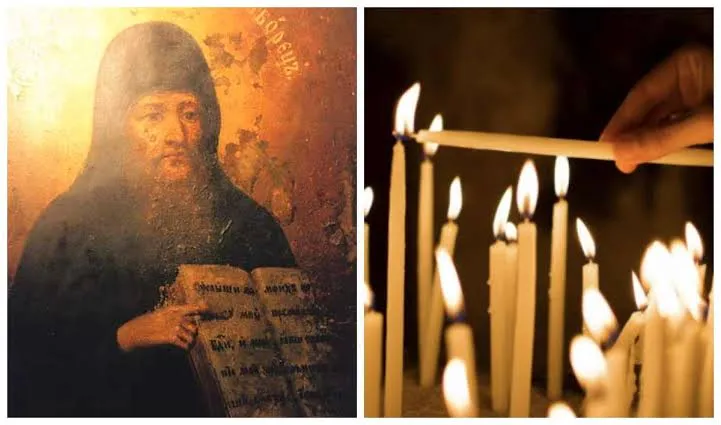
On August 8, according to the Old Church Calendar, Orthodox Christians commemorate St. Gregory, the iconographer of the Kiev-Pechersk Lavra. According to the Gregorian calendar, this date falls on August 21. Little is known about the saint’s life, but church tradition associates him with the Kyiv-Pechersk Lavra and the ancient Kyiv school of iconography. It is believed that Gregory created many icons that became famous far beyond the borders of Kyiv.
The Venerable Gregory the Iconographer lived in Kyiv approximately in the 11th–12th centuries and was a monk at the Kyiv-Pechersk Lavra. The exact date of his birth is unknown, as are many other details of his life. There is not enough information in the sources to accurately reconstruct his biography. It is known that Gregory was an iconographer. His name is associated with the tradition of the Pechersk Monastery, which at that time was one of the main centers of spiritual and cultural life in Kyiv.

Church sources credit Gregory with creating a large number of sacred images. The ancient “Tale of the Holy Iconographers” states that he painted many miraculous icons that were located in the Rus’ lands. In the same text, Gregory is named as a companion of another well-known Pechersk iconographer—the Venerable Alipius. It is for this reason that Gregory is often mentioned alongside Alipius. In church tradition, both saints have become symbols of early Kyiv iconography.
Why Gregory Is Called an Iconographer
In ancient times, icon painting was not merely a form of art. Icons held great religious significance, and working on them was viewed as a special form of service. Therefore, an iconographer had to do more than just master paints and technique. He was expected to undergo spiritual preparation, engage in prayer, and adhere to church tradition.
According to legend, Gregory devoted his life to this art. In church tradition, he is held up as an example of a person who combined monastic life with creativity. The Kyiv-Pechersk Lavra holds a special place in the history of Kyiv iconography. It was here that the masters worked, creating images for churches and spreading the tradition of iconography to other lands.
Gregory and Alipius of the Caves
Gregory is often referred to as a contemporary or associate of the Venerable Alipius of the Caves, who was also a renowned iconographer. According to church tradition, they worked together on icons and were associated with the Kyiv-Pechersk Lavra. “The Tale of the Holy Iconographers,” compiled at the turn of the 16th and 17th centuries, explicitly names Gregory as a companion of Alipius. It is this source that has been one of the main influences in shaping the perception of Gregory as one of the early Kyiv masters of icon painting.

Some researchers have suggested that Gregory might have been a Byzantine master. This assumption stems from the fact that church texts refer to him as “Gregory the Byzantine.” According to one theory, he may have belonged to a group of masters who came to Kyiv from Constantinople. They participated in the decoration of the Great Church of the Kyiv-Pechersk Lavra, dedicated to the Dormition of the Most Holy Mother of God. However, this is merely a theory and not a firmly established historical fact.
What Is Known About His Life
Grigory’s biography remains one of the most mysterious among the Pechersk saints. Historians have no reliable information about his exact place of birth, family, or early life. There are even differing accounts regarding the period in which he lived. Some sources date him to the 12th century, while others place him in the 13th century. That is why modern church calendars list different dates for the saint. The Kyiv-Pechersk Lavra, for example, specifically identifies Gregory the Iconographer in its materials as a 13th-century saint.
Other church sources associate him with the 12th century. The Orthodox Church in America also presents him as a 12th-century saint and mentions his connection to Alipius. Therefore, when discussing Gregory, it is important not to pass off assumptions as established facts. What is most reliably known is that church tradition associates him with the Kyiv-Pechersk Lavra, iconography, and the Near Caves.
Where Are the Saint’s Relics?
The relics of the Venerable Gregory the Iconographer are associated with the Near Caves of the Kyiv-Pechersk Lavra. It is there that he is honored today as one of the Venerables of the Caves. In the list of holy sites in the Near Caves, Gregory the Iconographer is mentioned among other ascetics of the Kyiv-Pechersk Lavra.
The Near Caves are one of the most famous underground complexes of the Kyiv-Pechersk Lavra. The relics of many saints associated with the monastery’s early history are preserved there. That is why the day commemorating Gregory holds special significance for people who come to the caves to pray and honor the saints of Kyiv.
When Is Gregory the Iconographer Honored?
It’s important to understand the calendars here. In church sources, the commemoration date for Gregory the Iconographer is traditionally given as August 8 according to the Julian calendar. In the modern calendar, this corresponds to August 21 in the New Style. The Kyiv-Pechersk Lavra explicitly indicates this correspondence.
The calendar materials of the Orthodox Church of Ukraine also reflect this correspondence: August 8 on the Old Style calendar corresponds to August 21 on the New Style calendar. This list includes the Venerable Gregory, the Iconographer of Kyiv-Pechersk. In other words, when referring specifically to the traditional date of August 8, it is important to clarify that this is the Old Style date. According to the New Style, the day of remembrance falls on August 21.
How the Church’s veneration of the saint began
The commemoration of Gregory gradually became established in the church tradition alongside the veneration of other Kyiv saints. One of the key sources for this were ancient accounts of the Pechersk ascetics and icon painters. In particular, the “Tale of the Holy Iconographers” mentions Gregory as a master who created many sacred images. This text became important for preserving the memory of the ancient masters of the Kyiv school of iconography.
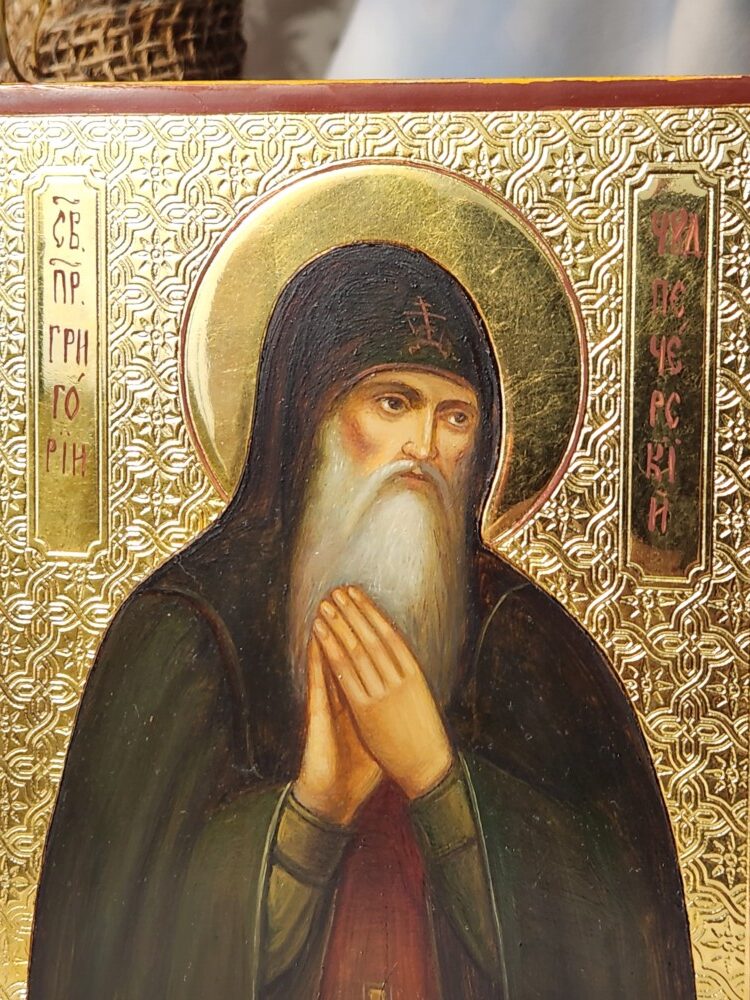
A separate, church-wide commemoration of Gregory the Iconographer developed later. Church sources indicate that his commemoration was included in the church-wide mensionals in the 18th century. Thus, the memory of the saint was preserved not only within the Kyiv-Pechersk Lavra. Over time, his name became part of the broader Orthodox tradition.
How the Day of Remembrance for Gregory Is Observed
Believers observe the saint’s commemoration day primarily through prayer. Divine services may be held in churches, during which the Venerable Gregory and other saints honored on this day are commemorated.
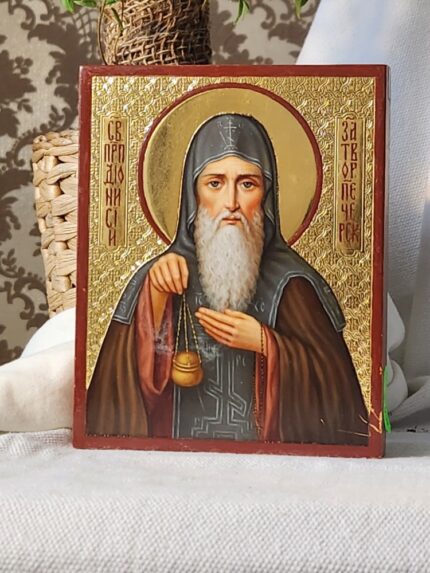
For believers, this is not merely a historical date. The saint’s memorial day is an opportunity to pause, pray, ask for help, and give thanks for what they have. A separate tradition involves visiting a church or monastery. People may visit holy sites associated with the saint’s life and memory, light candles, and pray. At the same time, there is no rule that one must perform any specific ritual on this day. The main purpose of this day is spiritual, not recreational.
Interesting Facts About Gregory the Iconographer
Gregory is one of the most enigmatic icon painters of the Kiev Caves. Far less biographical information about him has survived than historians would like.
He is associated with Alipius of the Caves. The ancient “Tale of the Holy Iconographers” refers to Gregory as Alipius’s companion.
He was called “the Byzantine.” In the service to the Caves Saints, Gregory is mentioned alongside Alipius as an iconographer referred to as “the Byzantine.” This has served as the basis for the theory regarding his possible origin or training within the Byzantine tradition.
Many icons are attributed to him. The “Tale of the Holy Iconographers” mentions a large number of miraculous images he painted. At the same time, it is difficult to establish a specific list of these works today.
His memory is associated with the Near Caves. It is there that the saint’s relics are kept, and he is venerated among the holy fathers of the Caves.
The date depends on the calendar. August 8 is the Old Style date, while according to the New Style calendar, the feast day falls on August 21.
Why the memory of Gregory is important today
Grigory’s story is interesting not only from a religious perspective. It serves as a reminder of just how ancient the artistic tradition in Kyiv is. Icon painting at the Kyiv-Pechersk Lavra was part of a broader cultural process. Masters created images for churches, passed down techniques to subsequent generations, and shaped an artistic tradition that evolved over the centuries.
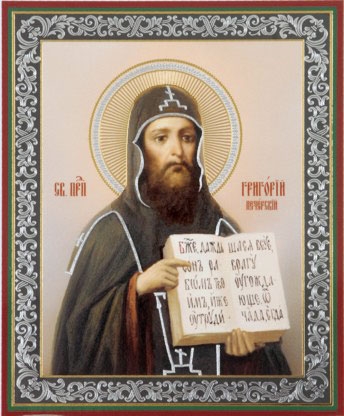
Even though little is known about Gregory himself, his name has remained in the church’s memory. He is mentioned alongside Alipius—one of the most famous ancient Kyiv icon painters. Therefore, the day commemorating the Venerable Gregory the Iconographer is also an occasion to reflect on the ancient history of Kyiv, the Kyiv-Pechersk Lavra, and Ukrainian spiritual culture.
On August 8 according to the Old Style calendar, believers honor the Venerable Gregory, the Iconographer of the Caves. According to the New Style calendar, his feast day falls on August 21. Although little is known about the saint’s life, church tradition has preserved his memory as a master who devoted his life to icon painting and spiritual service.


