
Holiday on September 9, 2026: North Korea celebrates the Founding Day of the DPRK
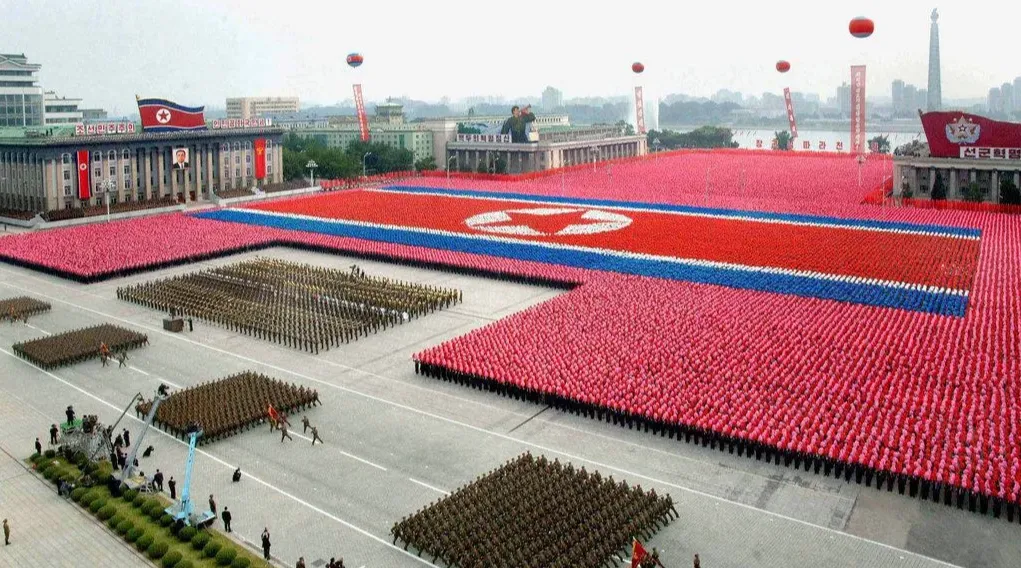
On September 9, North Korea celebrates the Founding Day of the Democratic People’s Republic of Korea—one of the country’s most important national holidays. It was on this day in 1948 that the founding of the DPRK, led by Kim Il-sung, was proclaimed in Pyongyang. The emergence of the new state was one of the consequences of the division of the Korean Peninsula after World War II, when the north came under Soviet influence and the south under American influence.
The Day of the Founding of the DPRK commemorates the event that took place on September 9, 1948. On that day, the Democratic People’s Republic of Korea was officially proclaimed in the northern part of the Korean Peninsula. Pyongyang became its capital, and Kim Il-sung became the country’s first leader. Prior to this, he had headed the provisional authorities in North Korea and gradually consolidated political power in his own hands.

For North Korea, this date holds immense symbolic significance. It is used as one of the key elements of the country’s history and official ideology. At the same time, outside the DPRK, the establishment of the state is viewed in the broader context of the start of the Cold War and the division of Korea into two separate states. Interestingly, the DPRK emerged just a few weeks after the establishment of South Korea. On August 15, 1948, the Republic of Korea was proclaimed in Seoul, and on September 9, the DPRK was proclaimed in the north. Both states asserted their claims to the entire Korean Peninsula and considered themselves the legitimate representatives of the Korean people.
How Korea Became Divided
To understand the emergence of the DPRK, we must go back to 1945. Until the end of World War II, Korea had been under Japanese colonial rule for 35 years. After Japan’s surrender in August 1945, the country had a chance at independence, but almost immediately found itself at the center of a rivalry between the great powers. The Korean Peninsula was effectively divided along the 38th parallel. Soviet troops occupied the north, while American troops occupied the south. Initially, this division was viewed as a temporary measure related to the acceptance of the Japanese forces’ surrender. It was expected that Korea would eventually be able to establish a single, independent government.
But an agreement on the country’s future could not be reached. The United States and the Soviet Union had differing visions for Korea’s political system. A joint Soviet-American commission, tasked with helping to form a provisional Korean government, was unable to reach an agreement. As the Cold War intensified, the chances of a rapid reunification of the peninsula grew increasingly slim.
In 1947, the issue of Korea was brought before the United Nations. The UN General Assembly supported holding elections to establish a pan-Korean government. However, the Soviet side did not allow a special UN commission to operate in the northern part of the peninsula. As a result, UN-supervised elections took place only in the south, and on August 15, 1948, the Republic of Korea was proclaimed there.
How the DPRK Came into Being
After the establishment of the South Korean state, the process of forming a separate government in the north accelerated. With the support of the Soviet Union, the north established its own governing bodies. Kim Il-sung played a key role in these bodies and gradually became the leading political figure in the northern part of Korea. On September 9, 1948, Kim Il-sung proclaimed the establishment of the Democratic People’s Republic of Korea. Pyongyang was designated as its capital. The new state’s constitution had been adopted the day before, on September 8. The state system was modeled after the Soviet socialist model.
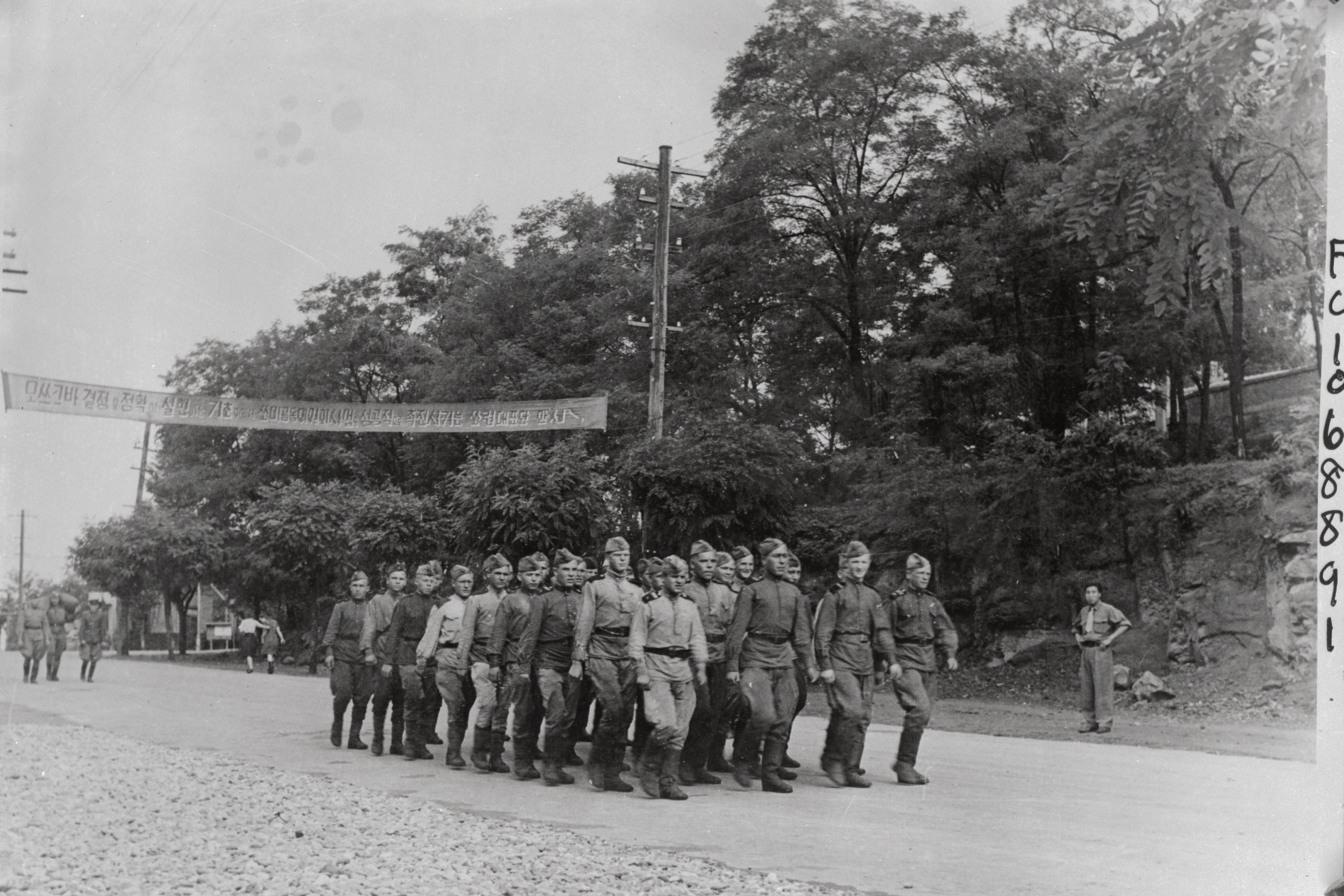
The North Korean leadership claimed that the new state represented the interests of the entire Korean people. At the same time, South Korea also claimed pan-Korean legitimacy. This created a situation in which two states existed on a single peninsula, each claiming the right to represent all of Korea. Soviet troops withdrew from the northern part of Korea at the end of 1948. However, Moscow’s political and military support continued. A centralized political system gradually took shape in the DPRK, and Kim Il-sung’s power grew ever stronger.
Who Is Kim Il-sung
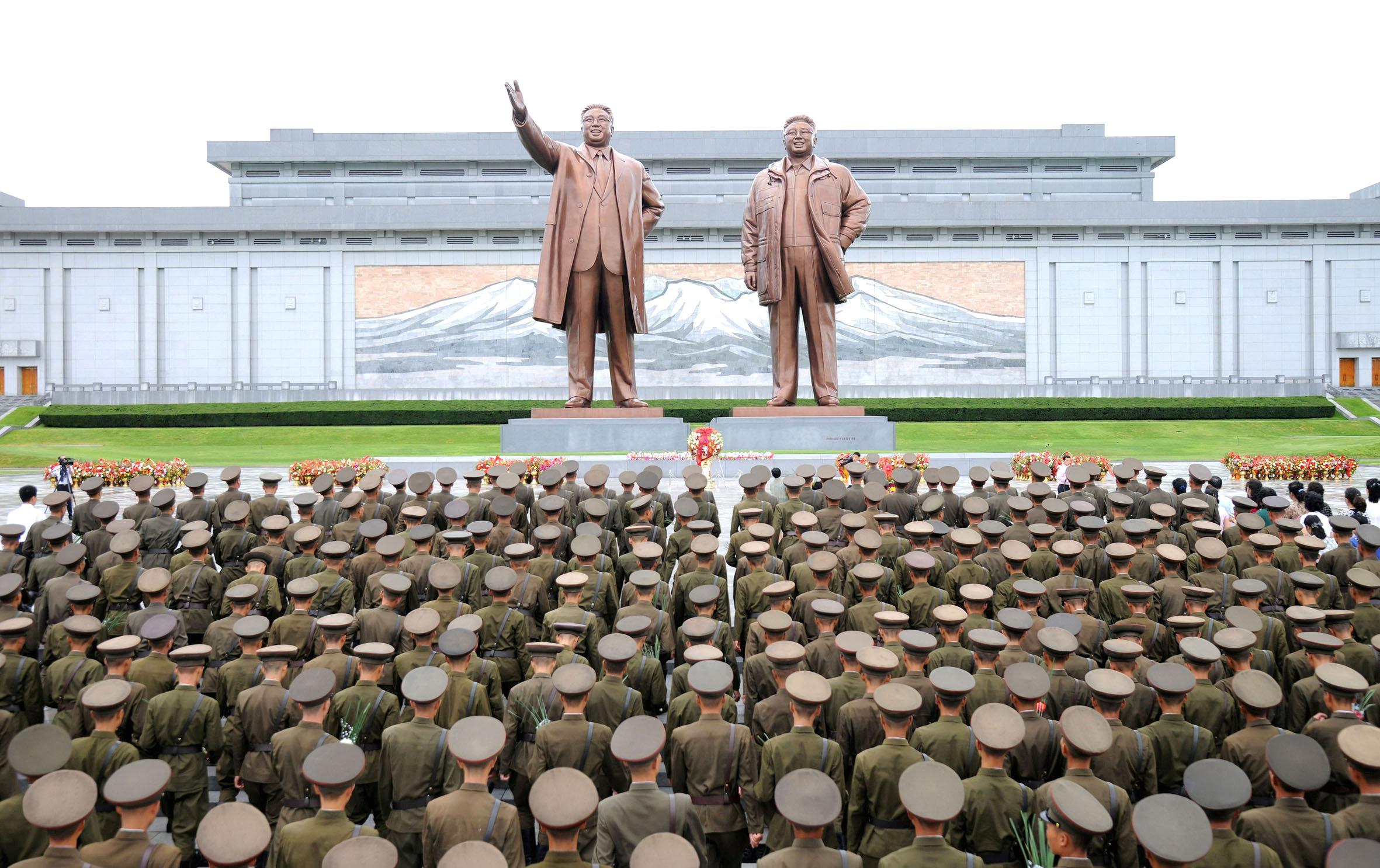
Kim Il-sung became the first and most important political figure in the history of the DPRK. Before coming to power, he participated in the struggle against Japanese rule on the Korean Peninsula and in Manchuria. After World War II, the Soviet government supported his rise to power in North Korea. Following the proclamation of the DPRK, Kim Il-sung became the premier of the new state. In the years that followed, he gradually eliminated or weakened his political rivals and became the country’s de facto sole leader. His rule lasted until his death in 1994.

In North Korea, a massive cult of personality developed around Kim Il-sung. For decades, his image was present in schools, government institutions, propaganda outlets, and public spaces. After his death, power remained in the hands of his family—first his son Kim Jong-il, and later his grandson Kim Jong-un. That is why the history of September 9 in the DPRK is inextricably linked not only to the founding of the state but also to the formation of the political system that exists in the country to this day.
Why the DPRK Was Established in 1948
The year 1948 was a turning point for the entire Korean Peninsula. After the end of Japanese rule, Koreans looked forward to the creation of an independent, unified state. However, the confrontation between the United States and the Soviet Union gradually turned Korea into one of the battlegrounds of global rivalry. Initially, it was expected that the occupying forces would leave Korea once a unified government was formed. But the negotiations reached an impasse. The parties could not agree on the composition of the future government or the rules for holding pan-Korean elections.
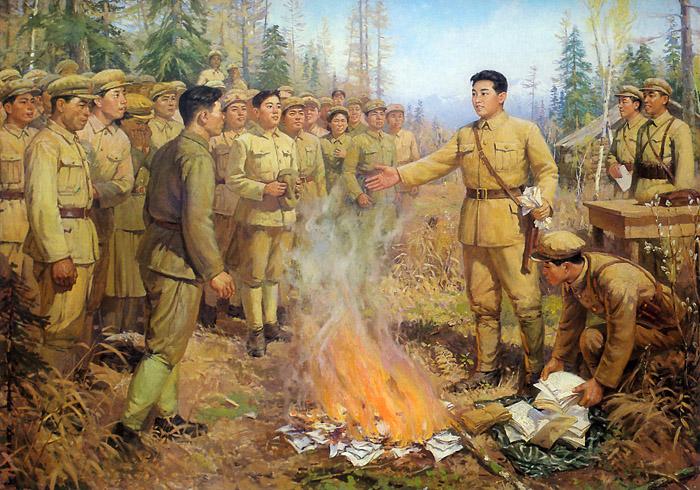
The UN attempted to find a way to hold elections throughout the entire territory of Korea. However, its representatives were denied access to the northern part of the peninsula. As a result, distinct political systems took shape first in the south and then in the north. Thus, the emergence of North Korea was not an isolated event that occurred on its own. It was part of a larger process during which, after World War II, the world began to divide into spheres of influence. The Korean Peninsula became one of the first places where this confrontation led to the creation of two separate states.
What Happened After the Formation of North Korea
The creation of the two states did not mean the end of the conflict. On the contrary, the confrontation between the North and the South quickly escalated. Armed clashes occurred regularly along the border at the 38th parallel, and both sides were preparing for a possible large-scale conflict. On June 25, 1950, North Korean troops crossed the 38th parallel and launched an offensive against South Korea. Thus began the Korean War. International forces quickly intervened in the conflict: a UN command led by the United States sided with South Korea, while China sent troops to support North Korea.
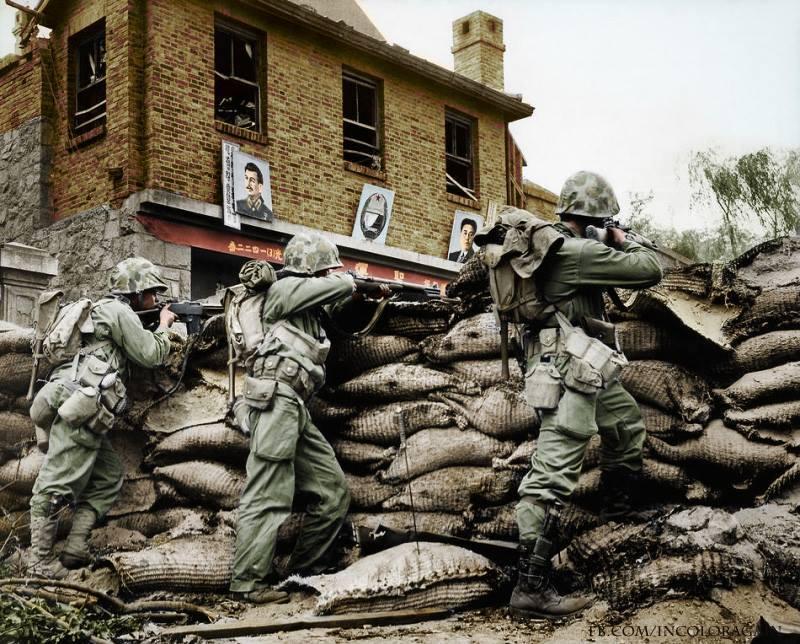
Hostilities lasted more than three years. In 1953, the parties signed an armistice agreement, but a peace treaty between North and South Korea was never concluded. Therefore, formally, the Korean conflict remains unresolved. After the war, the division of the peninsula deepened. North Korea developed as a closed socialist state, while South Korea eventually took a different political and economic path. Today, the two countries have completely different political systems, economies, and social structures.
How North Korea Celebrates its Founding Day
September 9 is one of the most significant national holidays in North Korea. Celebrations take place primarily in Pyongyang and other major cities. The government organizes ceremonies, concerts, mass rallies, and other events designed to showcase the country’s strength and the population’s loyalty to the leadership. Military parades play a particularly important role in these events. However, the scale of the celebrations varies from year to year. In some years, the authorities hold particularly large parades featuring military equipment and missiles, while in others they limit themselves to different formats.

Mass dances, concerts, and fireworks displays are also common. For example, during the 2025 celebrations in North Korea, there were large-scale festivities, mass dances, and fireworks. State media provided extensive coverage of the events and the leadership’s speeches. Special cultural programs are also prepared for the national holiday. Performances by artists, sporting events, and mass spectacles may take place in Pyongyang. For foreign guests—if they are permitted to be in the country during this period—the celebrations may also be part of an organized tour program.
Why the holiday is of great significance to the North Korean authorities
In North Korea, September 9 is not merely a commemoration of the events of 1948. This date is part of the country’s official history and a way to emphasize its independence and political distinctiveness. State propaganda links the founding of the DPRK to the Korean people’s struggle for independence and the establishment of their own state. At the same time, historical events are presented in accordance with the official North Korean narrative. Outside the DPRK, historians view the emergence of the state in a much broader context—as a result of the division of Korea and the confrontation between the USSR and the United States after World War II.
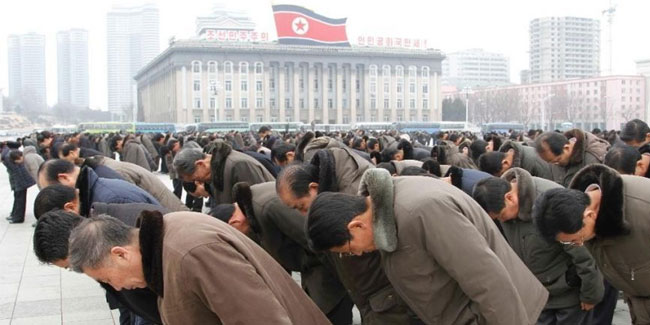
This is an important point for understanding North Korean holidays. In the DPRK, state celebrations often combine historical remembrance, political symbolism, and displays of military power. Therefore, September 9 is both the anniversary of the state’s founding and an important element of the country’s contemporary political culture.
Interesting Facts About September 9
The DPRK was proclaimed 25 days after the establishment of South Korea. The Republic of Korea was founded on August 15, 1948, and the DPRK on September 9. Thus, within a few weeks, two states emerged on the Korean Peninsula.
Another interesting fact is that the DPRK’s constitution was adopted on September 8, one day before the state was proclaimed. The very next day, the establishment of the republic was officially announced.
From the very beginning, the DPRK claimed to represent the entire Korean Peninsula. South Korea held the same position. That is why, after 1948, the two states did not simply coexist side by side but regarded each other as part of the unresolved Korean question.
Another important fact is that after the establishment of the DPRK, Soviet troops remained in the north for only a few months. Their withdrawal was completed in December 1948. At the same time, the Soviet Union’s political and military influence over the new state remained significant for a long time.
Finally, September 9 remains one of the DPRK’s most important national holidays. Every year, the government uses this date for large-scale propaganda and cultural events, and sometimes to showcase new military equipment.
Why This Date Is Important Today
The founding day of the DPRK is an occasion to reflect not only on North Korea itself but also on the history of a divided Korea. The current division of the peninsula took shape largely between 1945 and 1948, when, following the end of World War II, the interests of major powers clashed on the Korean Peninsula. Nearly eight decades have passed since then, but the consequences of those events remain relevant today. One of the most heavily militarized borders in the world still exists between North and South Korea. The countries remain technically at war, since the Korean War ended with an armistice rather than a full-fledged peace treaty.
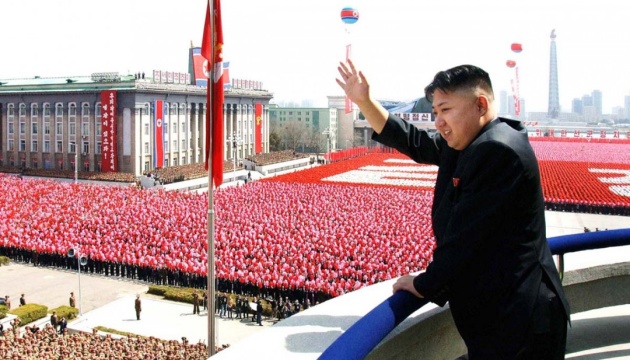
That is why September 9 is not just a date on the calendar for North Korea. It is a day that commemorates the founding of the state, Kim Il-sung’s rise to power, and the beginning of North Korea’s distinct history. And for the rest of the world, it is also a date that helps us understand how, after World War II, a single Korean people ended up on opposite sides of the border.


