
The melting of permafrost could exacerbate global warming
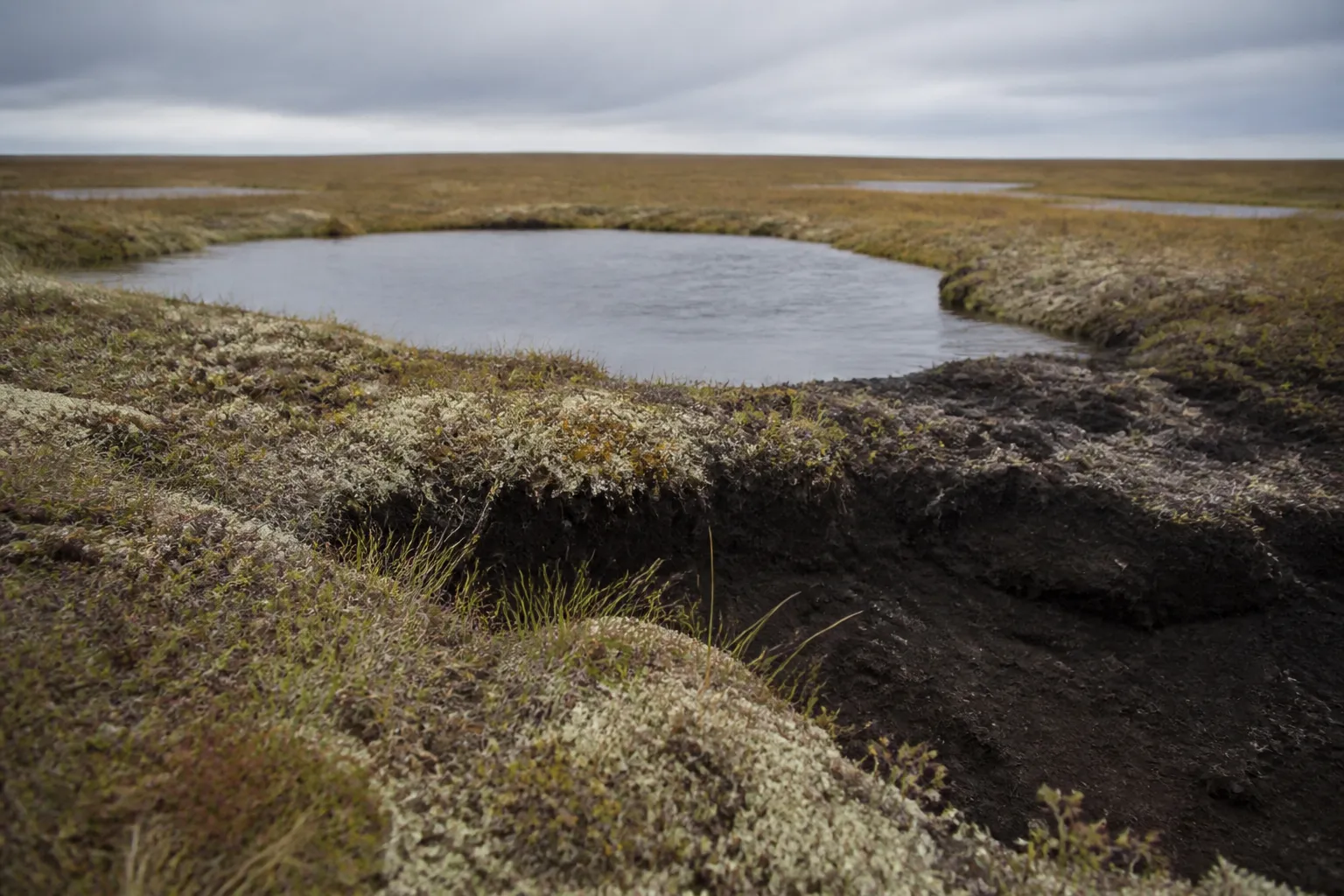
Heat waves and wildfires are increasing the risk of irreversible changes in permafrost regions, which could lead to higher emissions of carbon dioxide and methane. Gustaf Hugelius, a professor at Stockholm University who studies the melting of the tundra and peatlands, discussed this in an interview with The Guardian.
Permafrost is soil that remains frozen year-round. It is primarily found in Russian Siberia, Canada, Alaska, and parts of Europe. These areas cover about 20 million square kilometers, and the soil contains approximately 1,500 gigatons of carbon—three times more than all living vegetation on Earth.
As the permafrost thaws, ancient plant remains become accessible to microorganisms, which break down the organic matter and release CO₂ or methane. In dry environments, carbon dioxide is primarily produced, while in wetlands or lakes, where oxygen is scarce, methane is produced. According to the scientist, methane is approximately 30 times more potent as a greenhouse gas in the short term, but it breaks down in the atmosphere within 10–15 years. CO2 is less potent but persists for much longer.
For more breaking news, follow the UA.News Telegram channel.
The melting of permafrost changes the landscape: the surface may subside, forming lakes, swamps, or ravines. Such landforms are called thermokarst features. Once the ice is lost and the landscape has been reshaped, the permafrost may not recover for hundreds of years, and the altered areas can release carbon for decades or even centuries.
According to Hugelus’s estimates, with warming of 1.8–3.6°C by the end of the century, 200–300 gigatons of CO2 equivalent could be released from permafrost. He does not expect the entire system to cross a critical threshold simultaneously on a global scale, although he notes that with very high warming—around 6°C—the situation could be different. At the same time, local irreversible changes have already begun and may occur sequentially in different regions.
The researcher also noted that the permafrost’s response to warming may be delayed by decades due to the insulation provided by vegetation and a layer of peat. Some areas, particularly in northern Sweden and Finland, may lose their permafrost even if the climate stabilizes immediately. At the same time, a rapid reduction in emissions could limit the extent of this process: according to the professor, every degree of limited global warming helps preserve about 4 million square kilometers of permafrost.


