
The Guardian reports on Hungarians in Ukraine who support Orbán
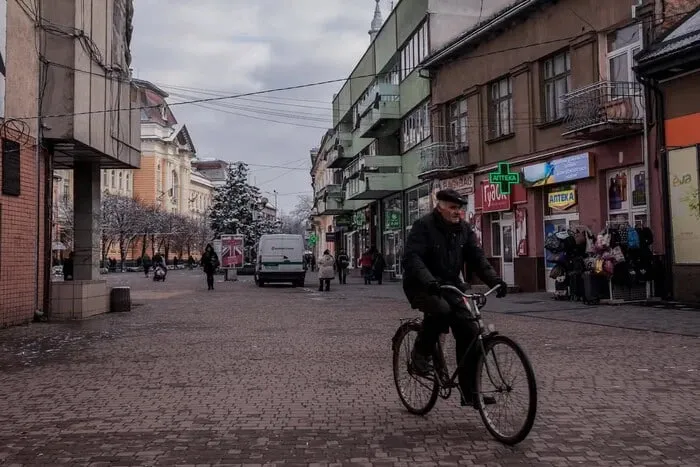
A segment of the Hungarian community living in Ukraine supports Prime Minister Viktor Orbán’s political agenda, according to The Guardian. This refers to the Berehove region, where Hungarian political forces have long supported local residents in the hope of securing their votes during elections.
This is reported with reference to The Guardian. And this tactic seems to be working.
A journalist from the publication, who visited Berehove in Zakarpattia, noted the difference between this region and others: “Most of Ukraine is watching the Hungarian elections with a single hope: that Viktor Orbán, the Kremlin-friendly leader who has made opposition to Kyiv a central element of his campaign, will be ousted from office after 16 years in power. But in Berehove, the mood is more complex.”
Why some people in Ukraine are ready to vote for Orbán
Of Berehove’s 30,000 residents, the majority are Hungarians, and the Hungarian language is “heard just as often as Ukrainian” there. In total, about 60,000 Hungarians live in Zakarpattia. Daily life—from schooling to the TV channels watched at home—remains closely tied to neighboring Hungary.
Some residents admitted that they support Orbán’s party, Fidesz.
“Orbán isn’t perfect, but he looks out for Hungarians everywhere,” explained local resident László, who plans to vote on Sunday.
László said he is saddened by the deterioration of relations between Hungary and Ukraine, but praised Orbán for granting passports to ethnic Hungarians, providing financial aid, and protecting what he called “the community’s language rights.” According to the publication, Budapest has set up several polling stations at consulates in the region, as “many people in Berehove have a second Hungarian passport,” even though this is technically illegal in Ukraine.
Orbán’s Policy Toward Transcarpathia
Orbán “has long portrayed himself as a defender of ethnic Hungarians abroad.” He claimed that they “face widespread discrimination in Ukraine and are forced to assimilate into Ukrainian society.” The journalist noted that his critics in Hungary and Ukraine say he has exaggerated the grievances to justify a hostile stance toward Kyiv and its Western allies.
At the same time, residents of Berehove said that politics has its “nuances.” Some expressed concern about Ukraine’s language policy affecting Hungarians, particularly the law that is gradually phasing out minority languages in schools. But many also said that Orbán’s claims of discrimination are untrue. Some compared the mood in Berehove to the divisions observed within Hungary itself.
“Just like there, there are people who want Orbán to win, and people who want the opposition to replace him,” said Artur, who added that he wants Orbán’s government to lose, citing problems with corruption and his stance on Ukraine.
Leaders of the Hungarian community and analysts have attempted to explain the support for Orbán in the towns and villages of Transcarpathia in two ways. They pointed out that Berehove (or Beregsas in Hungarian) has long existed on the border of empires.
“For centuries, it was part of Hungary before becoming part of Czechoslovakia after World War I, and then briefly returned to Hungarian control on the eve of World War II. Incorporated into Soviet Ukraine in 1945, it became part of independent Ukraine in 1991. But regardless of who was in power, it remained relatively poor and underdeveloped,” the article states.
Locals say that Orbán’s government has invested in schools and community centers and helped farmers.
Timbur Tomba, who heads the Hungarian community in Kyiv and is an active critic of the current government in Budapest, blamed Orbán’s popularity among Ukrainian Hungarians on state media controlled by the Hungarian government: “Most Hungarians in Ukraine still watch state propaganda. These people are simply being fed lies on television.”
Transcarpathia and the War with Russia
Orbán also capitalized on the sometimes complex wartime sentiments in the region. Located on the border with Hungary, Berehove may seem far from the war: “The city has sent relatively few men to the front compared to other parts of Ukraine, and daily life has largely remained undisturbed by air raid sirens or missile strikes.”
Orbán accused Ukraine of sending ethnic Hungarians “to the slaughter” and exaggerated their military losses.
But Tomba strongly opposed the notion that ethnic Hungarians are unwilling to serve Ukraine. He said that since the full-scale invasion, several thousand people from Zakarpattia have fought in the ranks of the Ukrainian Armed Forces, about a hundred of whom have died in combat. As in any other city, Berehove has a memorial to fallen Ukrainian soldiers in its central square.
Orbán’s team announced a possible government takeover by Magyar.
Fico expressedhis support for Orbán ahead of the elections.
Orbán warned of the danger to Hungaryin the event of his defeat in the elections.
Recall that despite Orbán’s opposition, Ukraine will receive 90 billion: IPA President Galina Heylo on the EU’s plans to finance the country.
Balázs Orbán, political director to Hungarian Prime Minister Viktor Orbán, assured that Ukraine does not pose a military threat to his country.


