
Berlin votes in election where the Left Party leads in poll — Anadolu Agency
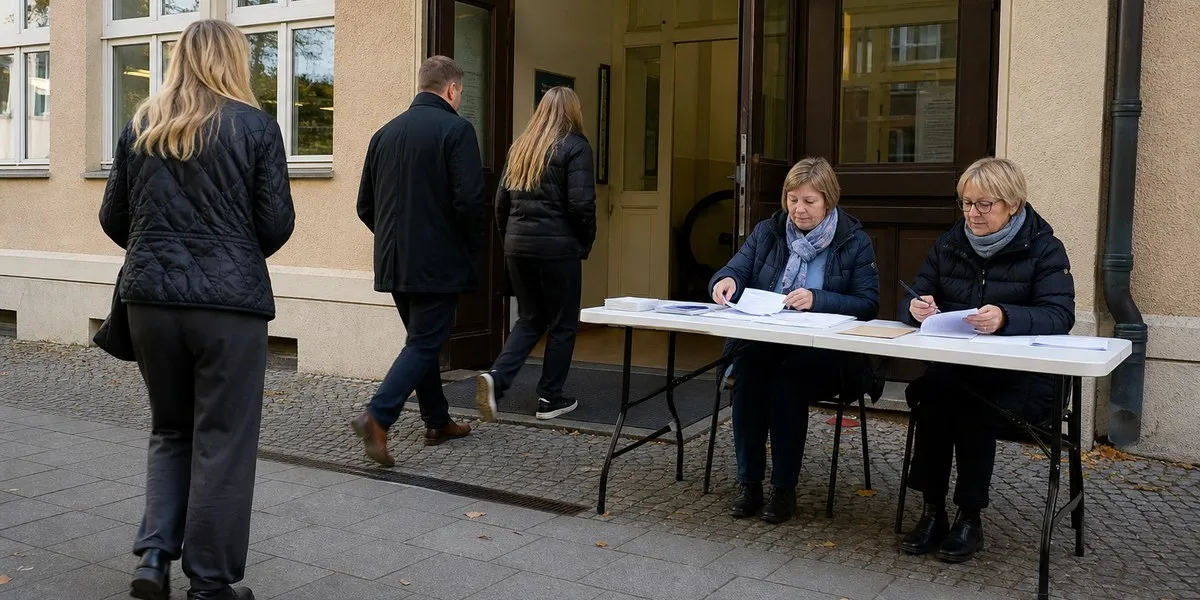
In Berlin, Germany, elections to the House of Representatives — the parliament of the city-state — are taking place on Sunday. Around 2.4 million voters are to elect a new parliament, and the candidate who can secure a majority will become mayor of Berlin and head the state government.
As Anadolu Agency reports, 16- and 17-year-old Berlin residents can vote in these elections for the first time. Polling stations are open from 8:00 a.m. to 6:00 p.m. local time. A total of 2,542 polling stations have been set up for voting, and up to 40,000 assistants are expected to be involved. The first projections are expected after the polling stations close.
The Left Party is ahead of the CDU
According to the latest poll by public broadcaster ZDF, the Left Party has 22% support — two percentage points more than Chancellor Friedrich Merz's Christian Democratic Union. Alternative for Germany has 18%, the Greens 15%, and the Social Democratic Party of Germany 12%. The Sahra Wagenknecht Alliance received 4% and does not clear the five-percent threshold for entering the Berlin parliament.
The Left Party's candidate Elif Eralp, a human rights defender of Turkish origin, has focused her campaign on rising rents, transport costs and problems with garbage collection. She proposes limiting annual rent increases at municipal housing companies to 1% and building 7,500 municipal apartments every year. Eralp also wants to revive the discussion on transferring major private housing companies into public ownership.
More current news is available on the UA.News Telegram channel Telegram.
Parties need a coalition
Eralp's main competitor is the CDU's lead candidate and finance senator, Stefan Evers. His campaign focuses on security in the city. Evers called the Left Party a “risk to security” and claimed it would cut the police budget and abolish the domestic intelligence service.
Alternative for Germany candidate Kristin Brinker has made migration the central issue of her campaign. She advocates an immediate halt to accepting asylum seekers in Berlin and speeding up the deportation of people who have no right to remain in the country, including those convicted of serious crimes.
According to polls, none of the parties will win a majority to govern alone. If the Left Party wins, the most likely option is said to be a coalition of the Left Party, the Greens and the SPD. If the CDU finishes first, an alliance of the CDU, SPD and Greens could be an alternative. Other parties rule out cooperation with Alternative for Germany.


