
Hospitals partially reopen in Sudan amid crisis — Asharq Al-Awsat
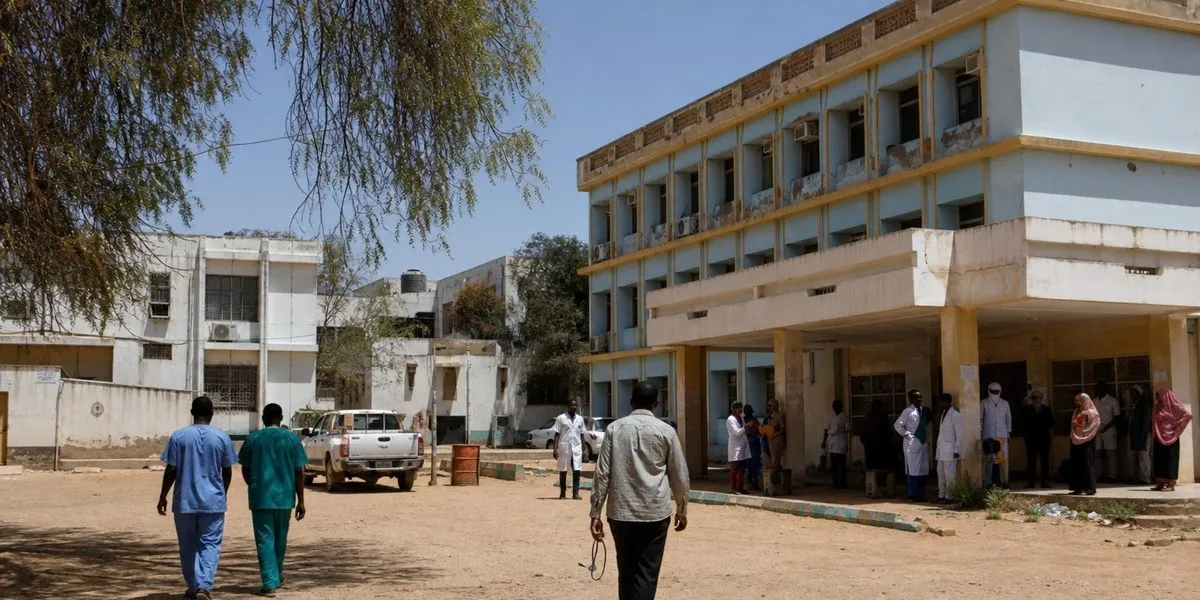
In Sudan, major hospitals in Khartoum are gradually resuming operations after destruction and looting during the war, but people in many regions still lack access to basic medical care. According to the World Health Organization, about 37% of the country’s medical facilities are not operating, and approximately 21 million people need health services, Asharq Al-Awsat reports.
Khartoum hospitals resume operations
Omdurman Teaching Hospital began rebuilding its emergency department in 2024. In July 2025, the facility received a 730 kVA generator, as well as equipment for intensive care, emergency care and the laboratory. According to hospital director Abdel Moneim Ali al-Qasim, after the power supply was stabilized, the waiting time for laboratory test results decreased from four to six hours to about one hour and 15 minutes.
The hospital now receives about 600 patients daily. Eleven of its 15 intensive care beds are operational. The number of surgeries increased from about 500 in the first month after the aid arrived to 1,000–1,500 per month. The facility also received an oxygen production unit and opened a prosthetics center that can produce up to 50 prostheses per month in one shift.
At the same time, the hospital lacks wards, fuel and a stable power supply. The rebuilt Bahri Teaching Hospital, designed for 640 beds and 20 operating rooms, also reports a need for intensive care equipment, a backup power source and completion of its drainage system.
More current news is available on the UA.News Telegram channel Telegram.
Access to treatment remains uneven
Outside major medical facilities, the situation is much more difficult. According to testimony published by UNICEF in December 2025, the medical center in the Fattasha area west of Omdurman had only one healthcare worker and did not provide vaccination, laboratory diagnostics or medicine supply services. Local residents were waiting for a UNICEF-supported mobile clinic that visits the area twice a month.
In White Nile State, mothers with children spend about two hours reaching the nearest medical facility for vaccination. In North Darfur, a displaced woman named Amani told UNICEF that she gave birth under a tree on the way to Tawila while her family was fleeing fighting and there was no hospital or medical staff nearby.
Shortages of medicines and funding
Hospitals and patients also lack medicines. A cervical cancer patient, Nayla Hamad, was receiving chemotherapy at Khartoum Oncology Hospital, but her family had to look for the required drug outside the medical facility. According to Reuters, the medicine was found for about 180,000 Sudanese pounds, or about $45 at the time.
Médecins Sans Frontières warned that cuts in humanitarian funding are forcing an increasing number of medical facilities to cease operations. As of August 11, Sudan’s $2.87 billion Humanitarian Response Plan was funded at about 41%. Representatives of Sudanese hospitals and Health Minister Haitham Mohamed Ibrahim disagree with the characterization of the system as being on the brink of collapse, but acknowledge an acute shortage of resources and specialized equipment.


