
Wine press discovered at Sekhmet Temple near Memphis in Egypt — Jerusalem Post
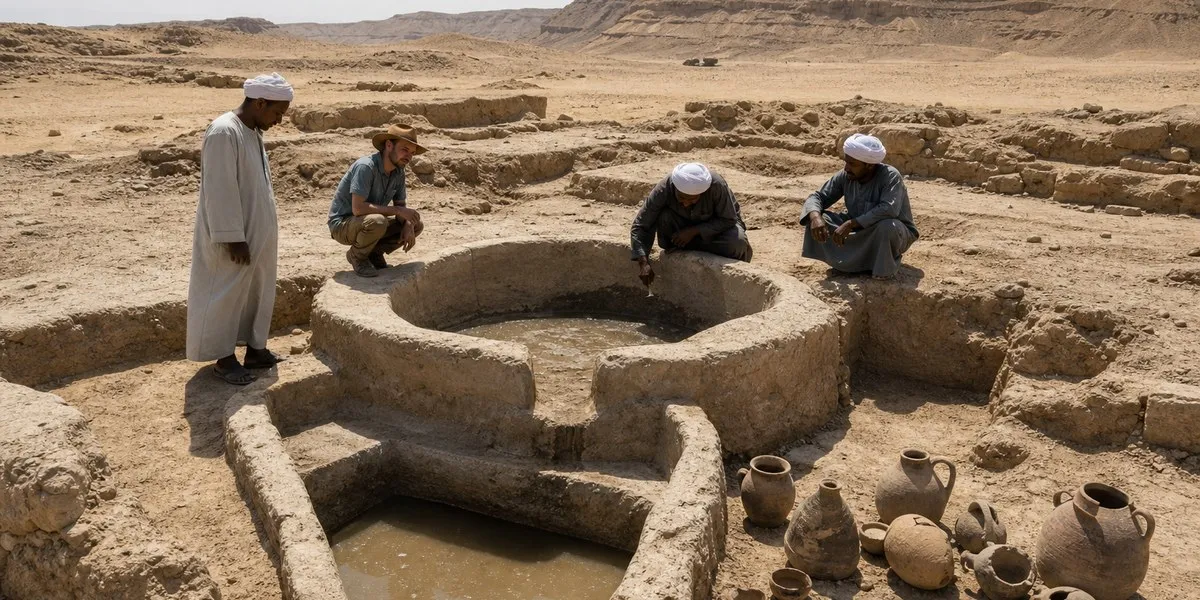
An Egyptian-Chinese archaeological mission has discovered a limestone structure believed to be a wine press at the Temple of the goddess Sekhmet near the village of Mit Rahina in Egypt. Grape seeds were found inside the structure, supporting archaeologists’ interpretation of the find, the Jerusalem Post reports.
Structure of the wine press
According to Egypt’s Ministry of Tourism and Antiquities, the structure has an upper basin sloping toward a central opening and a lower basin for collecting liquid. Both basins had openings intended for placing amphorae.
Mit Rahina is located near the ruins of ancient Memphis, which in ancient times was the capital of the first nome of Lower Egypt. The Temple of Sekhmet is part of the Great Temple of Ptah complex, the main temple of ancient Memphis. In Egyptian mythology, Sekhmet is considered the goddess of war and medicine.
More current news is available on the UA.News Telegram channel Telegram.
Other finds of the expedition
Archaeologists also discovered near the temple the remains of a mud-brick residential complex, stone blocks, and fragments of statues that were likely part of the Temple of Ptah. Most of the blocks and fragments date to the New Kingdom period, mainly the reign of Ramses II. They were made of limestone, red granite, and slate.
Other artifacts include pottery fragments, faience amulets, small terracotta and limestone figurines, ostraca, and votive stelae. Mohamed Abdel-Badi, head of the Egyptian Antiquities Sector at the Supreme Council of Antiquities, said the finds indicate continuous settlement of the area from the Third Intermediate and Late periods, through the Ptolemaic era and into the Greco-Roman period.
The Temple of Sekhmet was accidentally discovered in 1959 during the construction of a house. In 1961–1962, Egyptian antiquities inspector Mohamed Abdel Tawab El-Khetta conducted one season of excavations there, and in 2015 the visible remains of the temple were documented as part of the Ancient Memphis Site and Community Management Project.




