
The EU has blocked the issuance of a Bulgarian commemorative 2-euro coin
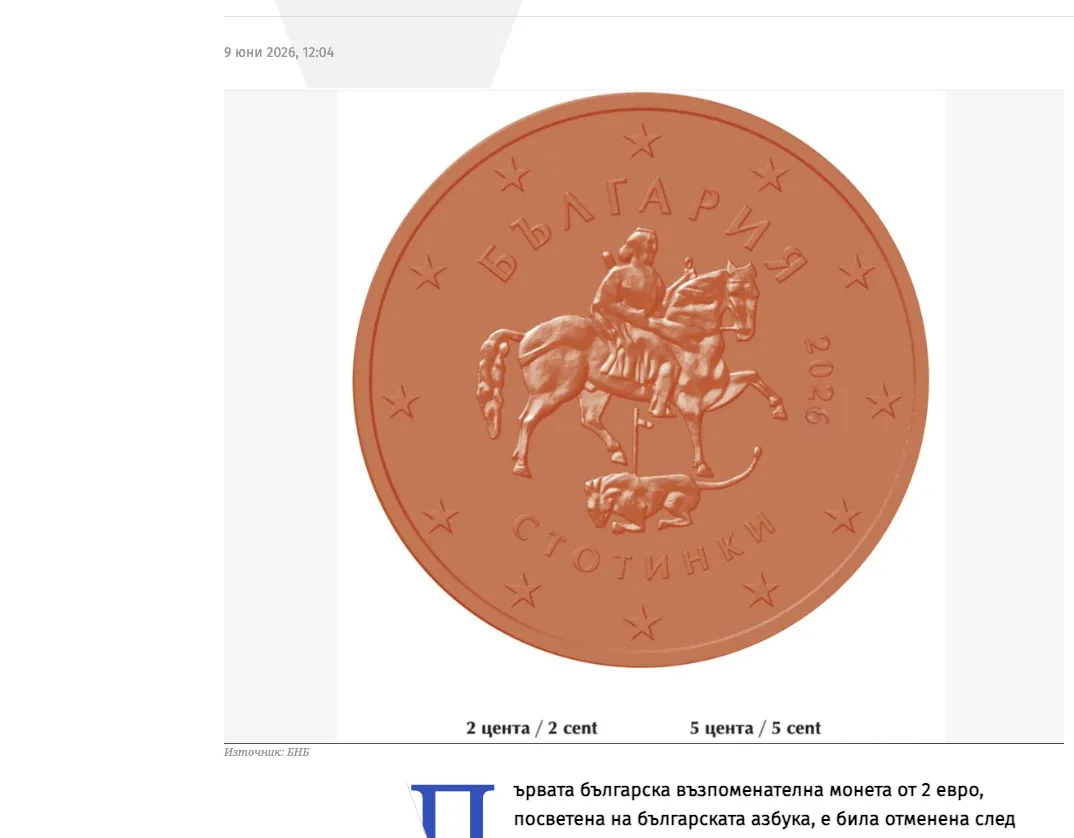
Bulgaria’s plans to issue a commemorative 2-euro coin dedicated to the Bulgarian alphabet have so far failed to materialize due to objections from one of the European Union’s member states. The decision was blocked at the EU Council level. The reasons for the objection have not been officially specified, but the issue has sparked debate regarding the historical and cultural heritage of the Cyrillic alphabet.
The coin was scheduled to enter circulation in the second half of 2026. However, one of the EU member states filed an objection to its design with the EU Council.
The project features a design that includes a composition of Cyrillic letters and the inscription “Bulgarian alphabet” to commemorate Bulgaria’s contribution to the Cyrillic alphabet as the third official alphabet of the European Union. The design was created by Svetlin Balezdrov and Stoyan Derchev.
It is currently unknown which member state filed the objection or what its motives are, as the relevant document has not yet been made public. Claims circulating on social media regarding a specific country have not been confirmed by official sources.
Bulgaria submitted a design for a commemorative 2-euro coin bearing the inscription “Bulgarian alphabet” on May 19, 2026, for approval, but an objection was subsequently received from a eurozone country whose name has been redacted from public documents. In the public version of the document, the country’s name has been redacted.
Despite this, subsequent numismatic catalogs, specialized publications, and the Bulgarian National Bank’s program continue to list the coin as scheduled for release in the second half of 2026 with a mintage of 1 million units.
The Cyrillic alphabet was officially recognized as the third alphabet of the European Union after Bulgaria joined the EU in 2007, alongside the Latin and Greek alphabets, Vesti reports.
Earlier, Bulgaria explained its refusal to join the agreement on a special tribunal for Putin.
In Bulgaria, the winners of the parliamentary elections have been granted the right to form a new government, and the mandate to do so has been handed over to Rumen Radev. The politician had previously been at the center of international criticism due to statements regarding occupied Crimea. His party won a majority in parliament, which effectively paves the way for the formation of a cabinet.
In Bulgaria, parliament approved a new government led by former President Rumen Radev, which immediately sparked political controversy within the country. The decision was passed by a majority vote, despite criticism from the opposition and the reserved stance of some lawmakers.


