
Demand for stress-relief toys rises in Finland — YLE News
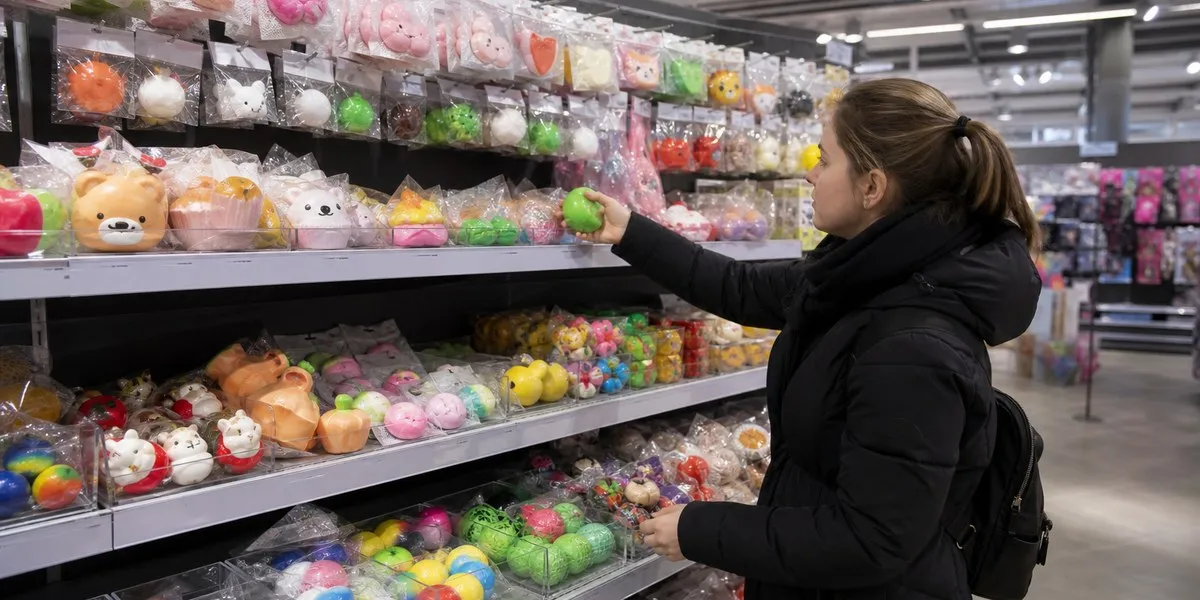
Stress-relief toys that can be squeezed, kneaded or handled with the fingers are becoming increasingly popular in Finland. At the Kärkkäinen store in the Ideapark shopping centre in Seinäjoki, shelves with such products are restocked approximately every other day as demand remains high, YLE News reports.
Store manager Kris Niemiste said that at the beginning of summer he considered interest in such toys to be short-lived, but sales have not declined. Some products in the store have occasionally had to be kept locked away to prevent them from being stolen or squeezed into a condition unfit for sale.
Tactile sensations
Katriina Heljakka, a researcher of toys and play at the University of Turku, links the growing popularity of these items to the need for tactile sensations amid digitalisation. According to her, touching objects can be calming, while playing with such toys provides a sensory experience that the digital environment does not offer.
Heljakka compared children’s use of stress-relief toys to knitting to improve concentration. In her view, in an environment dominated by visual content, hands need activities that activate touch. For some, this means handling objects with their fingers; for others, stroking or squeezing them.
More current news is available on the UA.News Telegram channel Telegram.
Toys in schools
Stress-relief toys are also being used increasingly often in schools in Seinäjoki. Several dozen pupils have various aids intended to support concentration, self-regulation or reduce motor restlessness.
Tuomo Lukkari, head of primary and special education in the city, explained that schools generally allow aids that do not interfere with learning and do not pose a safety risk. According to him, such aids can positively affect pupils’ emotional state and their attitude towards learning. Decisions on the use of toys are currently made by individual schools.
Social media and short videos also influence the popularity of the products. Heljakka called this a viral trend in which children imitate one another, while the toys create a sense of belonging to a group. Children make some of these products themselves from paper, cardboard and stuffing materials.


