
Ghana recalls Kwame Nkrumah’s legacy and the idea of African unity — MyJoyOnline
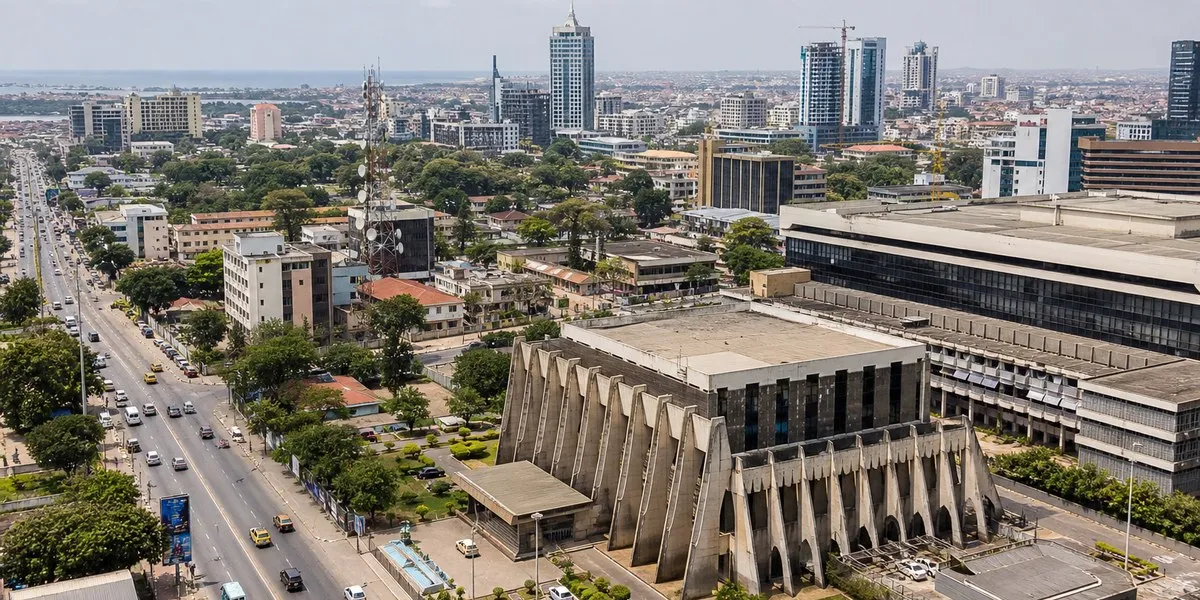
Ghanaian outlet MyJoyOnline recalled the political legacy of Kwame Nkrumah, who, after Ghana gained independence on March 6, 1957, linked its future to the liberation of the entire African continent. During a ceremony in Accra, when the British flag was lowered and the Black Star flag was raised, Nkrumah stated that Ghana’s independence would have no meaning without the complete liberation of Africa.
Nkrumah viewed political independence as the beginning of a broader struggle against colonialism. He believed that individual African states would remain vulnerable to economic pressure, military intimidation and divide-and-rule policies as long as colonial powers retained influence on the continent.
Accra as a center of the liberation movement
Under the rule of the Convention People’s Party, Accra became a center of anti-colonial activity. Ghana hosted political refugees, activists and members of liberation movements, including Patrice Lumumba, Robert Mugabe, Amílcar Cabral and Sam Nujoma, who are mentioned in the publication. They received financial and political support, Ghanaian travel documents, as well as specialized military training, including through the Bureau of African Affairs.
More current news is available on the UA.News Telegram channel Telegram.
In April 1958, Nkrumah convened the Conference of Independent African States in Accra. At that time, only eight African countries were independent, but the participants developed a common approach to foreign policy and proclaimed the principle of solidarity in the event of an attack on a sovereign state. In December of the same year, the All-African Peoples’ Conference was held with the participation of liberation movements, trade unions and representatives of political parties.
The idea of African integration
Nkrumah warned that independence without economic and institutional integration could lead to neocolonialism. He advocated the creation of a central political body for Africa, a Pan-African Parliament, joint armed forces, a single market and a common currency. Article 2 of Ghana’s 1960 republican Constitution provided for the possibility of transferring sovereignty, in whole or in part, for the sake of a broader union of African states.
Nkrumah also initiated the Ghana-Guinea-Mali Union in 1958–1961 as an early practical experiment in continental federation. The Casablanca Group supported immediate political unification, while the Monrovia and Brazzaville groups insisted on state sovereignty and gradual economic cooperation. The compromise was the creation of the Organization of African Unity in Addis Ababa in May 1963, which established a Liberation Committee to finance and coordinate the anti-colonial struggle.


