
Architects in Japan discuss possibilities for greening urban rooftops
In Japan, architects discussed how to turn the flat roofs of residential buildings, which are currently barely used, into green spaces for residents. The discussion took place at a symposium organized by the Embassy of Norway in Japan and Norwegian architecture firm Snøhetta, The Japan Times reports.
Over 20 years, the population of Tokyo’s 23 wards has grown by more than 1.2 million people, to 9.8 million. The population density there is 15,600 people per square kilometer. The city is becoming denser through the construction of residential high-rises, as well as the division of plots with houses and gardens into several smaller households.
Lost greenery
Discussion participants noted that neighbors also feel the disappearance of private gardens: passersby could enjoy them, while vegetation attracted birds. In their view, greening rooftops could partially compensate for the loss of greenery, give residents outdoor space, and make the view from neighboring buildings greener.
Among the reasons why roofs in Japan are rarely used as living spaces, they cited fears of noise complaints, a lack of privacy, and risks during bad weather. Kjetil Trædal Thorsen and Richard Wood of Snøhetta, as well as architects Takaharu and Yui Tezuka, believe that professionally installed rooftop structures can withstand a typhoon. Thorsen also noted that soil and vegetation absorb significant volumes of water, reducing risks associated with water runoff after heavy rains.
More current news is available on the UA.News Telegram channel Telegram.
How to make a roof part of a home
Takaharu Tezuka proposed installing permanent benches and plant boxes on roofs to change the perception of empty technical floors. Yui Tezuka added that direct access from an apartment to a terrace, rather than indirect access through a side balcony, could make outdoor space a full-fledged part of a home.
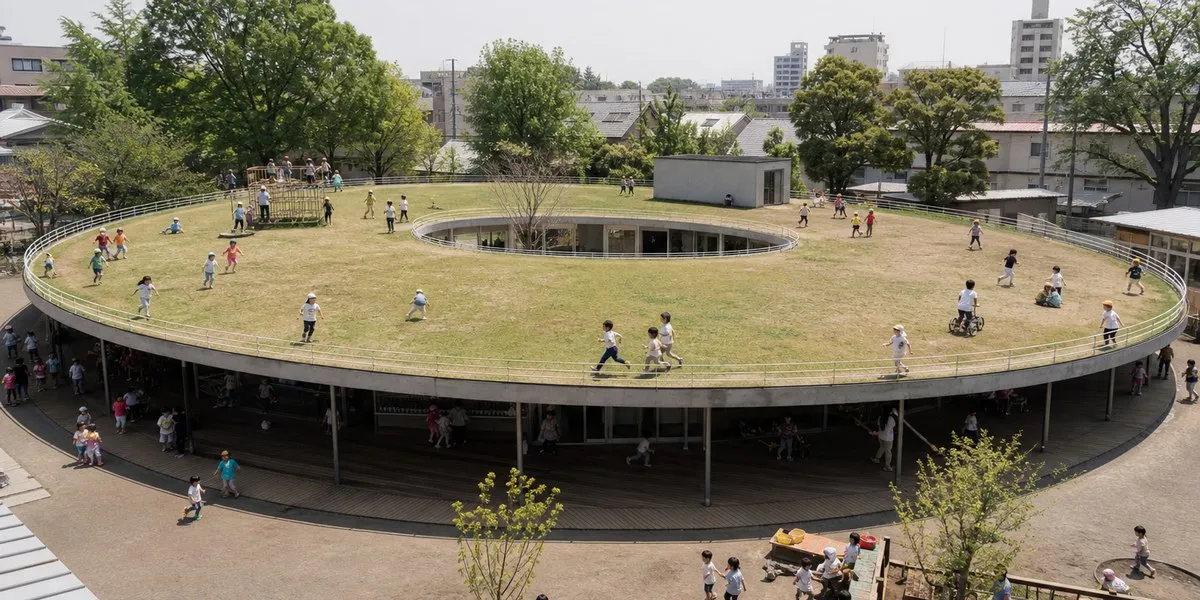
The Tezuka couple is known for the Fuji Kindergarten project in Tachikawa, where the oval roof is used as a playground. In 2010, the Organisation for Economic Co-operation and Development named Fuji Kindergarten the winner of the Exemplary Educational Facilities competition, which received 166 applications from 33 countries.
There are already examples of active rooftop use in Tokyo. At Miyashita Park, lawns, walking paths, spaces for skateboarding and bouldering have been created above commercial development. The Ginza Honey Bee Project has turned the roofs of commercial buildings in the Ginza district into apiaries that produce local honey.


