
At least 20 potentially new species discovered in the Indian Ocean — Channel NewsAsia
Scientists have discovered at least 20 species of organisms that may be new to science in a poorly studied part of the eastern Indian Ocean. During a 24-day expedition to the Monsoon Rise chain of seamounts, the team mapped 6,050 square kilometres of the seabed and collected more than 2,000 samples, Channel NewsAsia reports.
Study of the seamounts
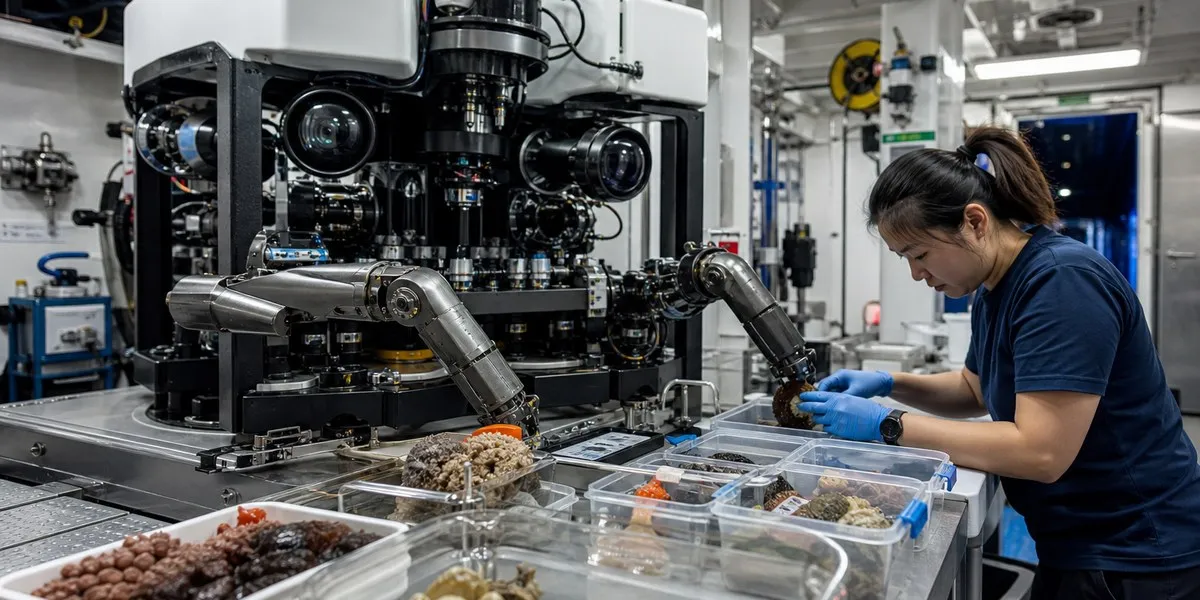
The expedition in October of the previous year was jointly led by the National University of Singapore and the nonprofit ocean exploration initiative OceanX. The research vessel OceanXplorer is equipped with laboratories, sonar systems, manned submersibles and remotely operated vehicles.
One of the team's main tools was the remotely operated vehicle Chimera, which can dive to depths of more than 6,000 metres. It is equipped with cameras, sensors and sampling equipment. On the slopes of the seamounts, researchers observed corals and other cnidarians, while crustaceans were found on the seabed.
Scientists estimate that between 100 and 200 species were documented during the expedition, with a significant portion still requiring full description. Deputy chief scientist of the expedition Jose Christopher E. Mendoza noted that the team studied only a small section of the seamounts, which are about 3,000 metres high on average.
More current news is available on the UA.News Telegram channel Telegram.
Samples and DNA analysis
Among the collected samples were 20 sea cucumbers. Scientists were able to confidently identify four of them to the species level, while another 10 likely belong to unidentified species encountered during previous scientific voyages. Six other samples may be organisms that no one has observed before.
Researchers are also studying the collected crustaceans, fish, sponges and sea anemones. In addition to physical samples, the team is analysing environmental DNA in water and sediment samples. Preliminary results have already detected organisms that were not among the collected samples, while genetic data indicate a greater number of species for some groups.
Scientists continue to analyse the samples, genetic materials and other data in laboratories. The information obtained may serve as a basis for further study of biodiversity in the Monsoon Rise area.


