
In Colombia, 169 people were killed and more than 3,000 are missing following an earthquake
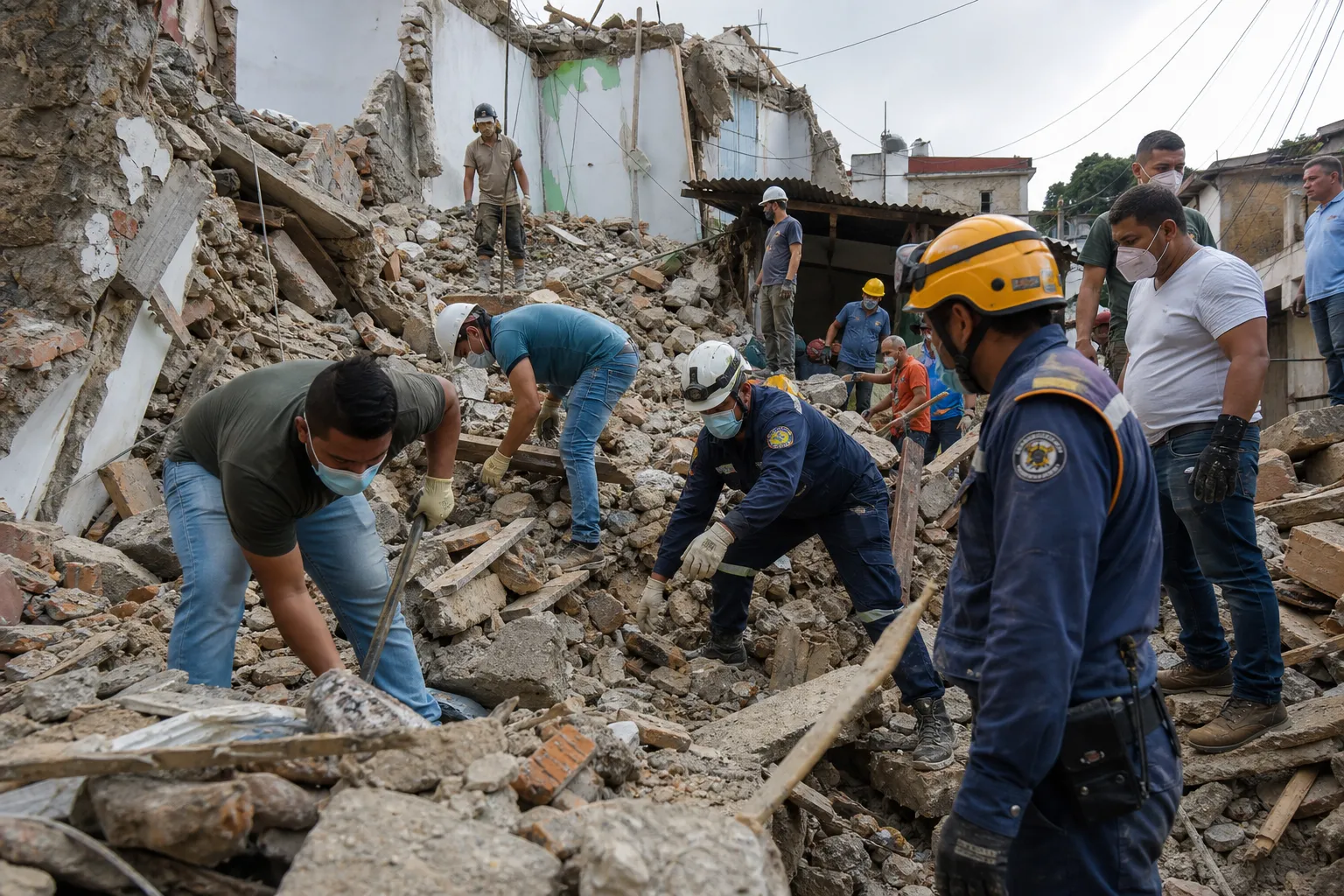
In western Colombia, rescue workers and volunteers continue to clear debris following Monday’s 7.4-magnitude earthquake. According to the Colombian Association of Capital Cities (Asocapitales), as of Tuesday, 169 people have been confirmed dead, and another 668 have been injured.
More than 3,000 people are reported missing following the earthquake. Rescue workers fear that many of them may be trapped under the rubble of collapsed buildings. The casualty figures remain incomplete, as they primarily cover major cities and do not account for the full number of victims in remote rural communities.
The epicenter of the earthquake was near the town of San José del Palmar in the western department of Chocó. Cali, Pereira, Manizales, Quibdó, and Buenaventura suffered significant damage. According to Asocapitales, 85 people died in Cali and 66 in Pereira.
For more breaking news, follow the UA.News Telegram channel.
About 1,600 buildings were damaged or destroyed. At least 165 structures completely collapsed in Pereira, Cali, Quibdo, and Manizales, where a red alert remains in effect due to the extent of the damage. Hospitals, airports, public utilities, and transportation infrastructure in several western departments were also damaged.
Access to areas near the epicenter is difficult: some parts of the region can only be reached by boat, plane, or through jungle trails. Damaged roads and other infrastructure are also hindering rescue efforts, so the full extent of casualties and destruction in the area around the epicenter is currently unknown.
The United States has offered $15.5 million in emergency aid. The European Union has activated the Copernicus satellite service to support the rescue operation and has also begun providing assistance, including 100,000 euros in initial support through the German Red Cross. Geologist Raúl Pérez of the Geological and Mining Institute of Spain told the EFE news agency that the earthquake was a complex event in the subduction zone between the Nazca Plate and the South American Plate. According to him, local geological conditions in certain areas may have amplified the seismic waves and prolonged the duration of the tremors.


