
Mexico steps up protection of the rare horned guan — Mexico News Daily
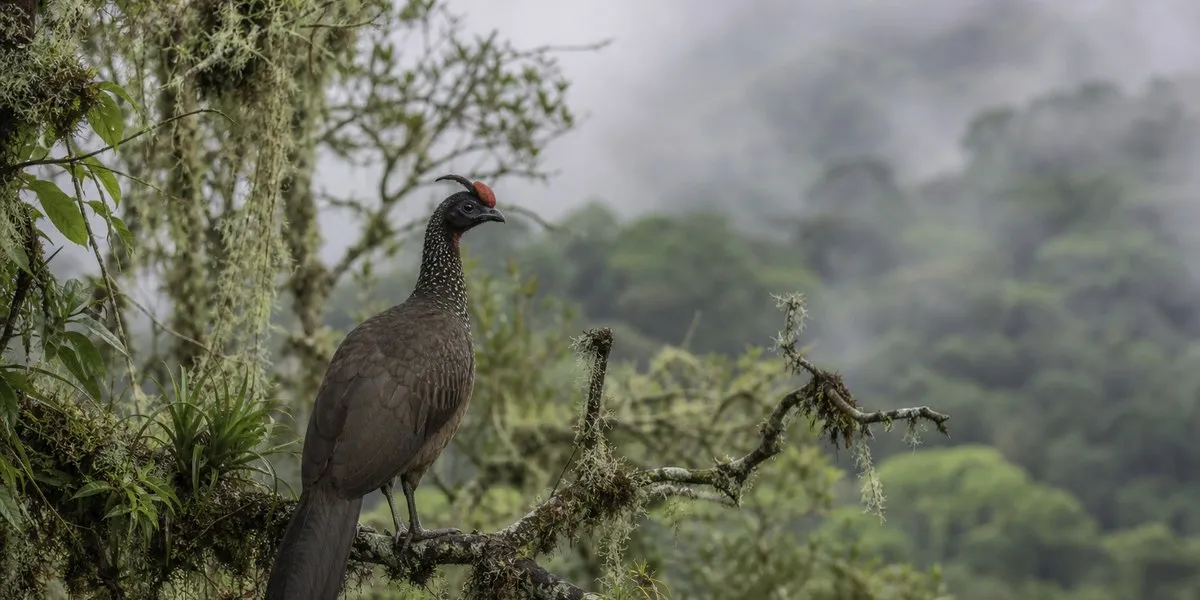
In the mountain cloud forests of the Mexican state of Chiapas and southern Guatemala, researchers are strengthening conservation measures for the horned guan, a rare bird with a distinctive red fleshy growth on its forehead. As Mexico News Daily reports, the International Union for Conservation of Nature estimates the species’ population at between 600 and 1,700 adult individuals.
The horned guan, or Oreophasis derbianus, occurs only on the mountain slopes of Chiapas and southern Guatemala. Its small population and isolated forest areas make encounters with it rare even for scientists. The species was recognized as endangered in 2000.
An ancient evolutionary lineage
According to the history cited by the publication, the first known specimen of the bird was collected on the slopes of Guatemala’s Fuego volcano in the 1840s. The specimen was reportedly given to naturalist Edward Smith-Stanley, the 13th Earl of Derby. In 1844, George Robert Gray, head of the ornithological department at the British Museum, described it as Oreophasis derbianus. The name is associated with the bird’s mountain habitat and the name of the Earl of Derby.
More current news is available on the UA.News Telegram channel Telegram.
DNA research completed around the turn of the century showed that the horned guan does not belong to the true guans. It was recognized as a separate evolutionary lineage that split from other guans about 20–40 million years ago.
Threats to the population
The bird feeds on fruits, flowers and leaves in tree canopies, although it sometimes descends to the ground in search of food. During the breeding period, most active from January to March, males may court several females. Mating rituals include wing waving, stretching the neck, spreading the tail and the pair remaining in dust, which helps clean feathers and get rid of parasites before nesting.
The main risks to the species are habitat loss and fragmentation, climate change and forest fires. The birds are protected in nature reserves in Chiapas and Guatemala, while measures against illegal hunting, according to the publication, have been successful. In the state of Puebla, Africam Safari ran a captive breeding program for horned guans, but the appearance of several chicks in captivity does not yet mean they can be returned to the wild.




