
In Melbourne, Travellers Aid helps passengers with mobility difficulties — ABC News Australia
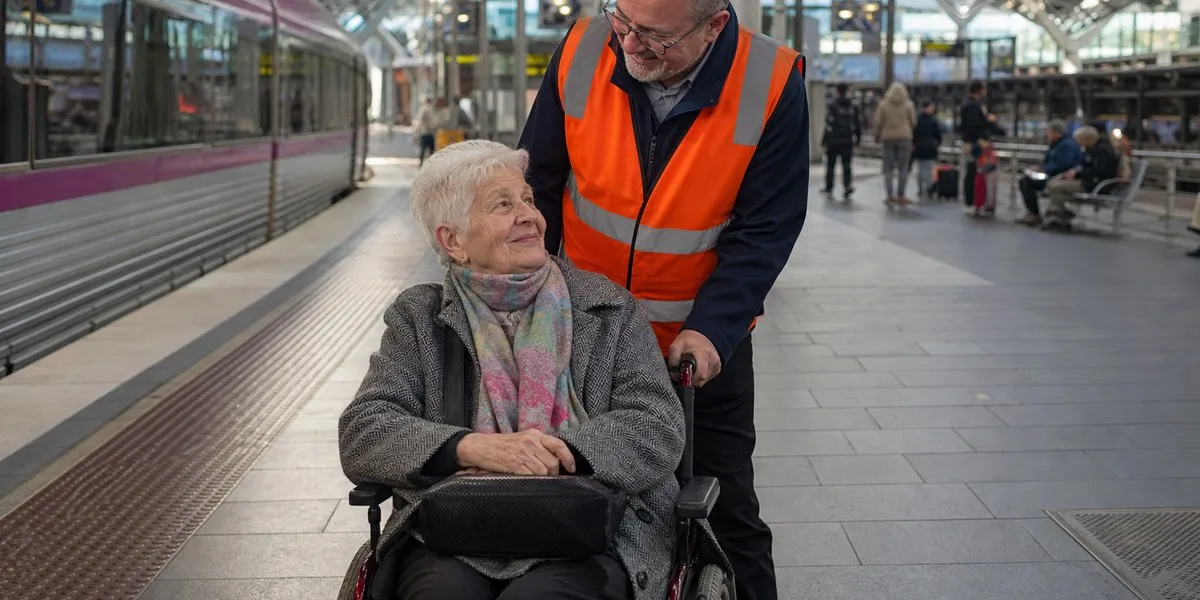
In Melbourne, Australia, the non-profit organisation Travellers Aid helps more than 110,000 people each year in Victoria’s public transport system. According to ABC News Australia, the organisation’s staff and volunteers primarily support passengers with mobility difficulties who use trains, buses and trams.
Travellers Aid began operating in 1916, when it helped ensure safe travel for women and children at a time when many men had left for the First World War. Volunteers met people arriving in Melbourne by ship or train and helped them find accommodation and work. The organisation later supported post-war migrants, students from Asia under the Colombo Plan in the 1950s, as well as passengers during and after the COVID-19 pandemic.
Help at stations and the airport
Today, the service offers buggy rides at stations, wheelchair assistance, personal care, travel accompaniment, and advice on routes and timetables. Southern Cross station has a rest room, as well as showers that anyone can use for a small fee.
More current news is available on the UA.News Telegram channel Telegram.
Travellers Aid also operates at Flinders Street, Seymour and Ballarat stations. At the end of last year, the organisation expanded to Geelong, the new Parkville station on the Metro Tunnel network, and Melbourne Airport. At Parkville station, located near hospitals, the team has helped nearly 3,400 people since the start of a two-year pilot programme in December.
Support for passengers
According to chief executive Elias Lebbos, around 100 employees and 150 volunteers at the organisation helped tens of thousands of people last year. The service is funded through government grants, corporate partnerships, commercial income and donations.
During the Telstra outage in early July, which brought the V/Line network to a halt, Travellers Aid staff informed passengers, helped them reach replacement buses and contact relatives. The organisation also accompanies visitors to major events, including the Australian Open tennis tournament and the Australian Formula 1 Grand Prix. Lebbos noted that mobility difficulties do not disappear when a person leaves a station, so the organisation seeks to make travel and attending events more accessible.


