
NATO sees no risks to its eastern flank
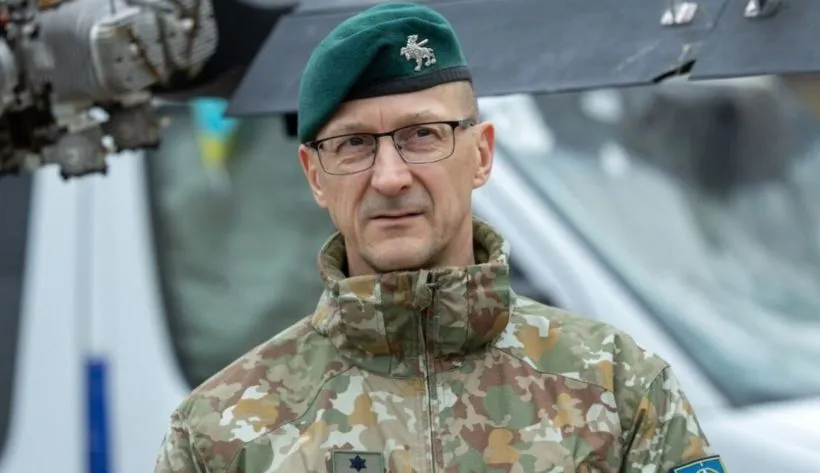
NATO has stated that adjustments to the deployment of U.S. troops in Europe do not pose additional risks to the Alliance’s eastern flank, despite discussions regarding changes in the U.S. military presence. At the same time, the allies continue to increase their own defense spending and arms purchases. This was reported by LRT.
The North Atlantic Alliance believes that the redeployment of U.S. military forces in Europe does not critically affect the security of NATO’s eastern member states, which border Russia and Ukraine. This was stated by Remigijus Baltrėnas, Director General of NATO’s International Military Staff, on Lithuanian broadcaster LRT, commenting on current changes in U.S. military planning.
According to him, Washington has indeed been reviewing its presence in Europe recently, but this is being done in coordination with allies, and EU countries are simultaneously accelerating their own defense programs and arms purchases. “There is currently no risk to deterrence and defense on the eastern flank,” Baltrėnas noted, emphasizing that the Alliance’s security system remains stable.
He also acknowledged that certain challenges exist in the process of redeploying forces, but, according to him, they are being addressed. “I won’t hide the fact that there are challenges, and they need to be addressed; we are addressing them. But at this time… there is no risk to deterrence and defense on the eastern flank,” he added.
Separately, the NATO representative commented on the hostilities in Ukraine, noting that strikes on Russian territory are affecting the overall dynamics of the war. In his assessment, the situation remains close to a stalemate at the strategic level; however, Ukraine, he said, is gaining additional capabilities through long-range strikes, which strengthens its position in the conflict.
The Inspector General of the Bundeswehr stated that Russia could be ready for a potential attack on NATO countries as early as 2029, although the risk cannot be ruled out sooner.
The Alliance’s mission in Ukraine expressed solidarity with the Ukrainian people following a large-scale missile and drone attack carried out by the occupiers.
Sweden warned Denmark of the risk of a potential provocation by Russia in the Baltic Sea. This refers to a possible seizure of one of the islands to test the reaction of NATO countries and the unity of the Alliance.
NATO Secretary General Mark Rutte has proposed that Alliance countries allocate 0.25% of their GDP annually to aid Ukraine, sources report.


