
Efforts to rescue a humpback whale in the Baltic Sea in Germany were unsuccessful
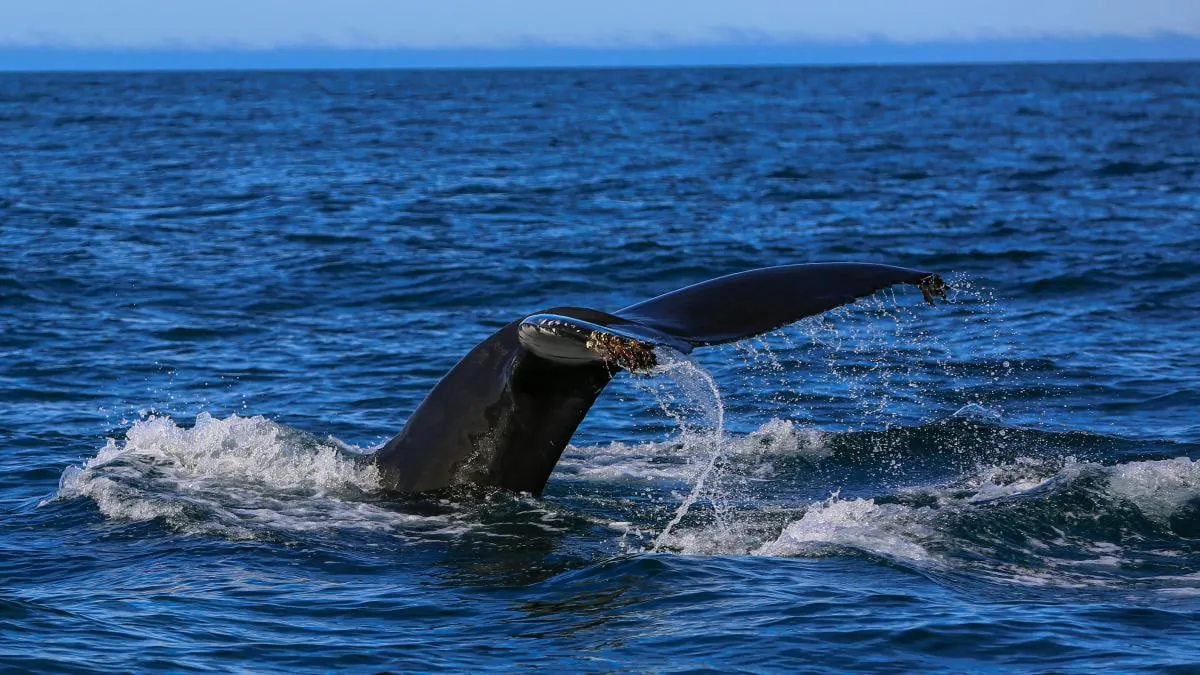
In Germany, the rescue operation for a humpback whale that had become stranded in the Baltic Sea has officially concluded. The animal became stranded near the beach at Nindorf, not far from Lübeck, after the tide went out, blocking its path back to deeper waters.
Zielona reports on this.
Why the marine giant made this fatal mistake and swam into the dangerous area remains a mystery. "The water didn’t carry the huge animal out to deeper water. The sand was too dense to dislodge its body," explained Stefanie Gross from the Institute for Terrestrial and Aquatic Wildlife Research (ITAW). Therefore, the Germans used heavy machinery, which dug a tunnel under the animal over a week ago, while ensuring its mental well-being and minimizing stress.
The use of dredges caused it to float out into the open sea, but after a while, a little further out, it ran aground again. And then once more.
In the end, the Germans gave up
After numerous attempts to rescue the cetacean, German authorities finally abandoned the effort. Experts reported that they were halting the rescue operation for the humpback whale, which was struggling in the shallow waters of the Baltic Sea off the coast of Germany, and had lost hope for its survival.
They added that the difficult situation had significantly weakened the whale, its breathing had become “very, very irregular,” and it showed “virtually no” reaction to the presence of people. The chances of successfully freeing the animal again are “very slim,” and further rescue attempts would be “pure cruelty toward the animal.”
A 500-meter exclusion zone will be established around the whale to avoid disturbing its peace. Authorities ruled out euthanizing the whale, acknowledging that it would be too dangerous both for the whale itself and for those involved in the operation. Marine biologist and whale conservationist Fabian Ritter explained the difficult decision to halt rescue operations, as well as the need for changes in policy and individual actions in response to such incidents.
According to him, all our assessments of the animal’s condition are very superficial and based solely on observing the whale stranded on the beach. There are no blood or tissue tests, no autopsy, and it is essentially unknown whether the animal is healthy and what caused it to swim into the Baltic Sea, which is not a natural habitat for such large animals. This situation clearly demonstrated that the appearance of any whale in the Baltic Sea is a major sensation for residents of the Baltic countries, but in essence is a tragedy for the mammal.
It cannot swim freely here because the Baltic Sea is quite shallow and, above all, too low in salinity. The lack of salt has a massive impact on the biology of cetaceans.
Fishing nets also catch whales
A German biologist pointed out a detail that many people observing this unfortunate humpback and its days-long struggle with the shallows and shallow Baltic waters had overlooked. "The humpback whale suffered for weeks because it became entangled in a fishing net, which likely weakened it significantly. There are still fragments of the net in its mouth, so it may not be able to eat even if it wanted to," he noted.
This means that the operation to rescue the whale was doomed to fail from the very beginning. First, the nets would have had to be removed—not only from the humpback’s mouth but likely from its digestive tract as well. Without this, the animal could not eat, was losing strength, and was unable to free itself from the trap. And removing the net was impossible in the case of such a giant.
Fishing nets and their fragments drifting in the oceans are one of the major causes of problems for marine animals, particularly whales. Becoming entangled in them leads to their death, and pieces of net that are swallowed or block the mouth result in the animal facing a painful, starvation-induced death.
We previously reported that a humpback whale was once again trapped on a sandbar in Germany.
Also, in the Baltic Sea, a dramatic rescue operation concluded for a humpback whale that had become trapped near the island of Niedenhof.


