
For the first time in Germany, a politician of Turkish descent will become a state premier
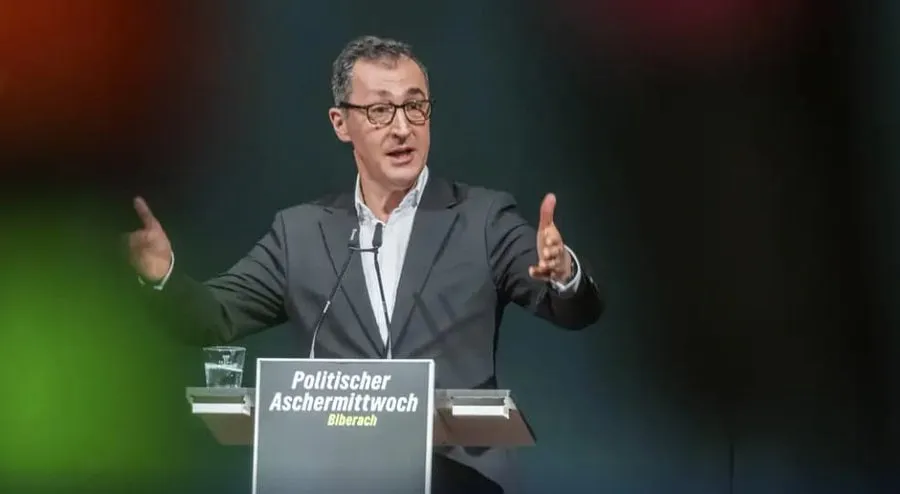
A new coalition has been formed in the German state of Baden-Württemberg. The Green Party and Friedrich Merz’s Christian Democratic Union have agreed to form a coalition government following several weeks of negotiations. It is expected that a politician of Turkish descent will become the state’s premier for the first time.
This was reported by DW.
The main negotiators—Cem Özdemir of the Greens and Manuel Hagel of the CDU—noted that both sides had made considerable efforts. They described the outcome not merely as a minimal compromise, but as a “reformist coalition.”
Özdemir is set to become the first prime minister of a German state of Turkish descent. He will replace the previous prime minister, Winfried Kretschmann. The coalition agreement is to be presented next week, followed by Özdemir’s scheduled election as prime minister on May 13.
The coalition partners have already decided on the distribution of ministries.
The alliance between the Greens and the CDU in Germany is also known as the “pizza coalition.” This name originated after young politicians from the CDU and the Greens began meeting informally at a pizzeria in Bonn, when the city was still the capital of Germany.
As the junior partner, the CDU will receive key portfolios, including the ministries of the interior, economy, and transportation, while the Greens will be responsible for finance, social affairs, the environment, and housing.
Key personnel decisions remain unresolved, particularly regarding whether CDU Chairman in Baden-Württemberg, Hagel, will become Minister of the Interior.
Özdemir stated that the coalition will not simply distribute responsibilities along party lines. Instead, he emphasized a joint approach to security, climate policy, and economic strength. He promised to combine climate protection with economic growth while reducing the burden on businesses.
Germanymay join Ukraine’s Brave1 defense program, says Pistorius.
Germany is strengthening its defense cooperation with Ukraine and adopting its experience in developing modern military technologies that are tested directly in combat conditions. This was stated by German Defense Minister Boris Pistorius.
Germany recently transferred three cogeneration units to Ukraine for the Chernihiv region, which are intended to ensure a stable supply of heat and electricity. This equipment will be able to meet the needs of tens of thousands of residents and the city’s critical infrastructure.
Germany is expanding its military exchange program and actively involving Ukrainian instructors with real combat experience in the training of Bundeswehr units to adapt its army to the conditions of modern warfare. Ukrainian military personnel are already working at key training schools and passing on practical skills gained on the front lines.
