
A 2,400-year-old Iron Age structure has been discovered in Germany
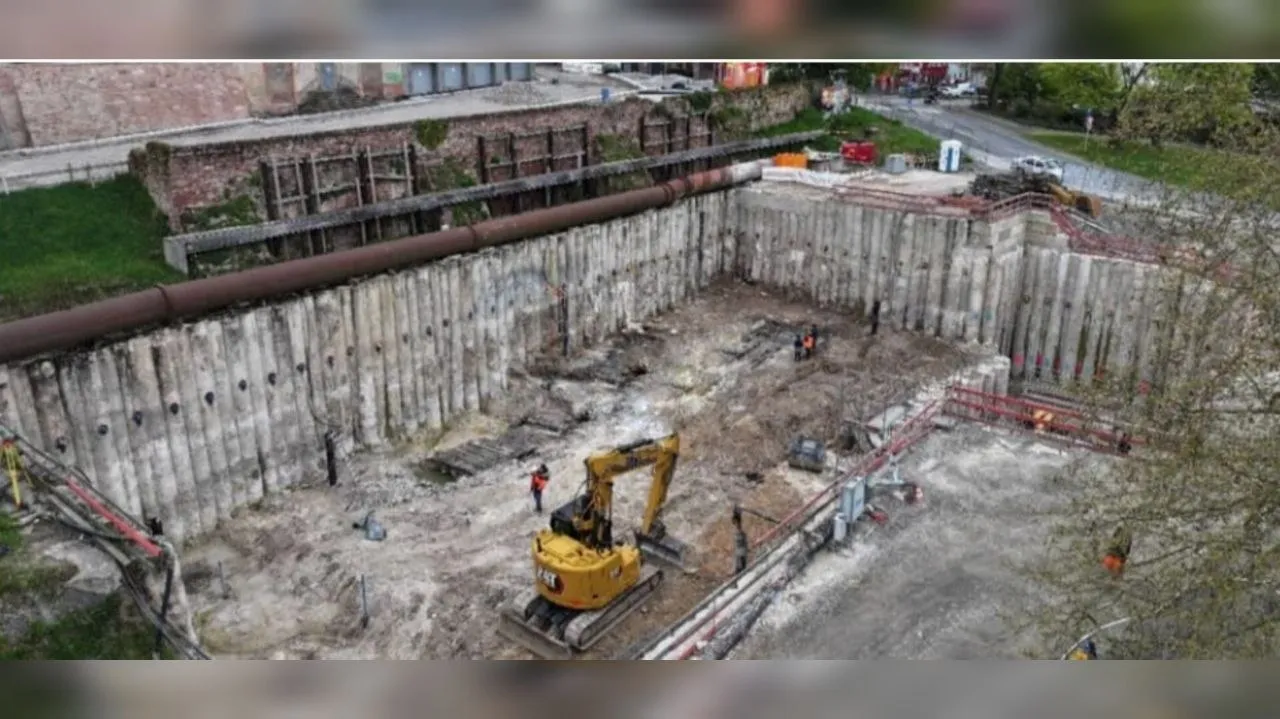
In Aschaffenburg, Germany, archaeologists have discovered a unique Iron Age structure built from massive oak beams and stone. Experts were surprised not only by its age but also by its exceptionally good state of preservation.
The discovery of the remains of the architectural complex at a depth of about 8 meters underground was reported to the Bavarian State Office for the Preservation of Historical Monuments in March 2026.
The discovery was made by chance during the construction of a catchment basin near the Main River. At first, archaeologists assumed that the wooden structures dated to the early modern period, as they looked quite “fresh.” However, dendrochronological analysis showed that the oak beams were cut as early as the 4th century BCE—approximately 2,400 years ago.
Since this area had not previously been considered an archaeological site, the excavations had to be conducted under extreme and challenging conditions directly inside a deep construction pit, with every step coordinated to meet safety requirements.
The structure’s design proved to be technically complex. On the side facing the Main River, it ended with a dry stone wall, which is a great rarity for the Iron Age in this region. Typically, stone architecture from that period is associated exclusively with large-scale defensive fortifications.
Dr. Stefanie Berg, head of the Department of Archaeological Heritage Preservation, described the find as exceptional due to its location, state of preservation, and unique combination of materials. Researchers speculate that the building may have been a representative structure belonging to the elite of the time, although its exact function remains a mystery.
This discovery significantly enriches the history of Aschaffenburg. Previously, only isolated artifacts from the La Tène period had been found in the old town area, including gold and a fibula depicting an animal’s head. However, the new discovery in a construction pit 8 to 10 meters deep proves that a much more complex and organized settlement existed here than previously thought.
Further research should clarify whether the structure was part of a coastal port, a fortification, or a large public building.
Archaeologists have discovered a unique statue of a goddess in an ancient city.
At the Cathedral of Saints Michael and Gudula in Brussels, a stained-glass window depicting the so-called “blood libel” against Jews, linked to the events of 1370, was removed.
In Pompeii, the possible remains of a doctor who died during the eruption of Vesuvius were found.


