
At least 120 inscriptions identified in a cave near Valencia — The Independent
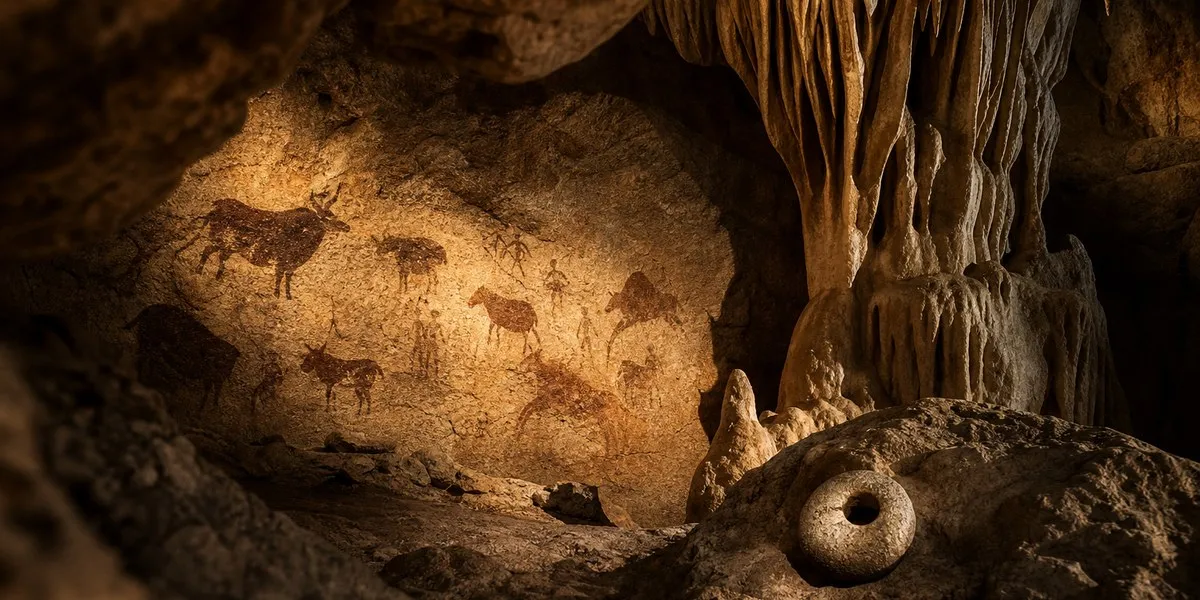
Archaeologists studying the Cova de les Dones cave in a mountain canyon southwest of Valencia, Spain, have identified at least 120 inscriptions. Of the few that have already been translated, most were left by women, according to researchers; the appeals are addressed to a Roman goddess known as Domina or Malaci, The Independent reports.
A sanctuary with a history spanning many millennia
Researchers believe that the cave was used intermittently for rituals or ceremonies for at least 24,000 years. The oldest rock paintings date to that time, while another group of images is estimated to be about 16,000 years old. The drawings include horses, deer, wild bulls, ibex, animals of an unidentified species, and more than 80 abstract signs — straight and wavy lines and rectangles.
In front of one of the painted panels, archaeologists found a Paleolithic ornament — a stone pendant with a hole. Researchers believe it was deliberately placed there as a votive offering. The cave has also preserved structures made from deliberately broken stalactites and stalagmites: circles, platforms, passages and simple stairs. They may be roughly the same age as the paintings, or even older.
More current news is available on the UA.News Telegram channel Telegram.
Inscriptions and objects from Roman times
The cave was also visited during the Neolithic and Bronze Age, approximately between 7,500 and 3,500 years ago, although the purpose of these visits has not yet been established. For the Iron Age, particularly the 5th–3rd centuries BCE, the approximately 200 ceramic bowls found there point to ritual use.
The greatest amount of evidence of the cave's possible connection to women's rituals dates to the Roman period, about 2,000 years ago. A bracelet, two rings and spindle whorls, which were mostly used by women in antiquity for spinning fibers, were found in the cave's ritual sanctuary. One inscription contains the words domina votum, meaning a vow or a sacred offering to a goddess.
The meaning of the name or title Malaci has not yet been established. In the Roman era, the title domina was used, among other things, for Bona Dea, the goddess of fertility and women's health. Researchers suggest that the same or a similar goddess may have been worshipped at Cova de les Dones. Since at least the 18th century, local residents have called the cave the “Cave of Women,” and by the beginning of the 20th century it was likely used as a ritualized place for the consummation of marriages.




