
A state-owned bank in Russia has announced massive layoffs
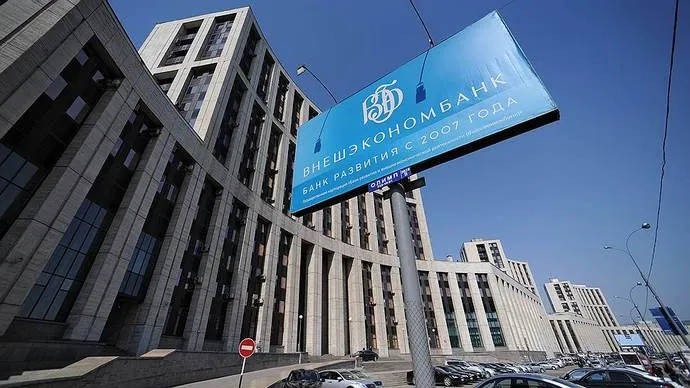
In Russia, one of the key state development banks, VEB.RF, has announced large-scale staff and cost cuts, citing the deteriorating economic situation and a “credit crunch” in the economy. The bank plans to lay off about 15% of its employees and revise its budget through 2027.
In effect, the bank, which finances the Kremlin’s state projects, is forced to drastically streamline its operations amid a general economic slowdown.
One of Russia’s largest state-owned financial institutions—Vnesheconombank (VEB.RF), which finances the Kremlin’s strategic projects and manages the pension savings of millions of citizens—is launching a large-scale reduction in staff and expenses in response to the deteriorating economic situation in the country and growing pressure on the financial system.
This was announced by the bank’s chairman, Igor Shuvalov. According to him, the decision was made as part of the so-called “credit cooling” of the economy being implemented by the Central Bank of the Russian Federation, and the downsizing process has already begun and will be part of a long-term optimization strategy. “We issued the order 10 days ago; we have begun… this time we are cutting by 15%, reducing our organization’s budget to meet the budget targets set for 2027,” Shuvalov stated.
He clarified that the cost cuts will occur gradually and will affect not only the parent company but also VEB Group subsidiaries in the coming years, which effectively means an expansion of the wave of layoffs. At the same time, the country’s economic backdrop has long been showing negative trends: according to estimates by analytical firms, a significant portion of Russian enterprises have been forced to cut staff due to falling demand and financial losses, while certain sectors, particularly metallurgy, have recorded thousands of layoffs following the collapse of the steel market.
Similar processes have also affected the financial sector—banks and large corporations in Russia had previously announced staff reductions, and a number of companies in the IT sector and industry have also carried out workforce optimization. Despite this, VEB.RF itself reported a profit in its financial statements; however, according to media reports, it received significant injections from the National Welfare Fund throughout the year, making it one of the key recipients of state resources in Russia.
Experts note that the announced cuts are yet another sign of mounting pressure on the Russian economic system, which is forced to simultaneously finance the war, sustain state projects, and respond to declining economic activity within the country. The Moscow Times reports on this.
In several regions of Russia, particularly in the Kursk and Belgorod regions, restrictions on gasoline sales have begun due to fuel shortages, while in the occupied territories, including Sevastopol and Luhansk Oblast, a rationing system and limits on refueling have been introduced.


