
One of Russia's largest oil refineries has shut down following a drone attack
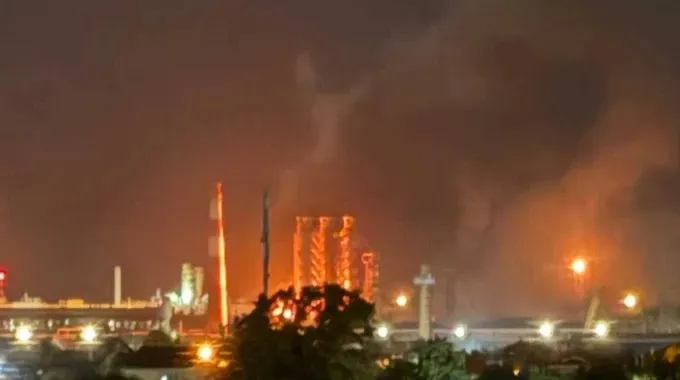
The Russian oil refinery "Kirishinefteorgsintez" in the Leningrad Region completely halted oil refining operations following a drone attack on August 30. According to Reuters, two primary refining units at the plant were damaged, while two others were not in operation at the time of the strike.
The “Kirishinefteorgsintez” oil refinery, or “KINEF,” in Russia’s Leningrad Oblast has completely halted oil refining following a drone attack.
“KINEF” is owned by Surgutneftegaz and is Russia’s second-largest oil refinery in terms of capacity. Its design capacity is approximately 20 million metric tons of crude oil per year. Only the Omsk Oil Refinery has a higher capacity—approximately 22 million metric tons per year.
Which units were damaged
According to Reuters sources, two primary oil refining units at the plant were damaged during the August 30 attack. The first is AVT-6. It can process about 22,860 metric tons of crude oil per day. This accounts for about 40% of the plant’s total capacity. The second is AT-1, with a capacity of about 4,860 metric tons per day, or 8% of the plant’s capacity.
Thus, the damaged units together accounted for nearly half of KINEF’s potential capacity. The plant has two additional units—AT-6 and AVT-2—which together account for the remaining 52% of the plant’s capacity. However, according to sources who spoke with Reuters, these units were not operational at the time of the attack. That is why, after the damage to the other two units, the plant effectively lost the ability to continue refining oil.
A Key Refinery for Northwest Russia
The shutdown of “KINEF” is significant for the Russian fuel market. The plant is one of the main suppliers of fuel to St. Petersburg and other regions in northwestern Russia. The facility accounts for about 7% of all oil refining in Russia.
Each year, KINEF produces about 2 million metric tons of gasoline and 7 million metric tons of diesel fuel. Therefore, a prolonged shutdown of the plant could exacerbate fuel shortages in Russia, where a serious gasoline shortage had already emerged by the end of August. This is particularly significant given that Russian refineries have regularly been targeted by drone attacks in recent months.
This is not the first time KINEF has been forced to shut down due to attacks
This year, the plant has already been shut down for extended periods twice due to damage from drone attacks. The previous shutdowns occurred on March 26 and May 5. The plant has not yet been able to fully resume operations following the previous attacks. According to Reuters, the plant was operating at approximately 50% of its capacity in August.
In other words, the new attack occurred just as the facility was beginning to return to normal operations. This could significantly complicate the situation on the Russian fuel market. Every new shutdown of a major refinery means less gasoline and diesel for domestic consumption.
In August, problems arose at several refineries at once
“KINEF” is not the only major Russian refinery to have suffered from drone attacks this summer. According to Reuters, seven Russian refineries completely or partially halted fuel production in August. Among them was “Yaroslavnefteorgsintez” (YANOS), which plays a key role in supplying fuel to Moscow and central regions of Russia.
Lukoil’s “Nizhegorodnefteorgsintez” also halted production. It is one of Russia’s largest gasoline producers and ranks among the country’s top five refineries in terms of processing volume. Problems also arose at other facilities.
Due to the attacks, production was halted or curtailed at Permnefteorgsintez, as well as the Novoshakhtinsk, Saratov, and Volgograd refineries. Zapsibneftekhim—Russia’s largest polymer producer—was also hit. As a result, problems are piling up across several segments of the Russian oil industry.
Russia Is Already Running Short of Gasoline
The shutdowns of major refineries have already affected the amount of fuel Russia produces. By the end of August, motor gasoline production had fallen to approximately 80,000 metric tons per day. By comparison, domestic consumption in the summer is about 115,000 metric tons per day.
In other words, domestic production covers only about 70% of the Russian market’s needs. Moscow is trying to make up for the shortfall through imports and other measures. Russian authorities are also restricting gasoline exports to keep more fuel for the domestic market.
However, it is difficult to fully compensate for production losses in this way—especially if large refineries continue to remain idle.
Why Attacks on Refineries Matter
Oil refineries are doubly important to Russia. On the one hand, they supply the civilian market with gasoline, diesel, and other petroleum products. On the other hand, fuel is needed by the Russian military and for military logistics. Furthermore, the oil industry remains one of the main sources of revenue for the Russian budget.
Therefore, strikes against oil refineries can simultaneously affect fuel production, Russia’s ability to refine oil, and revenue from the energy sector. In the case of KINEF, the consequences are particularly severe due to the facility’s scale. It is Russia’s second-largest refinery by capacity and also supplies fuel to a significant portion of the country’s northwest.
It is not yet known how long it will take to fully restore its operations. However, this latest shutdown occurred after several previous attacks and at a time when the Russian fuel market is already experiencing a gasoline shortage. Thus, the August 30 attack struck one of the key facilities in Russia’s oil refining industry. If repairs are delayed, this could further reduce the amount of fuel available to the domestic market and exacerbate the gasoline shortage in Russia. Two sources in the oil industry told Reuters about this.




