
In Siberia, bears have begun hunting Russians
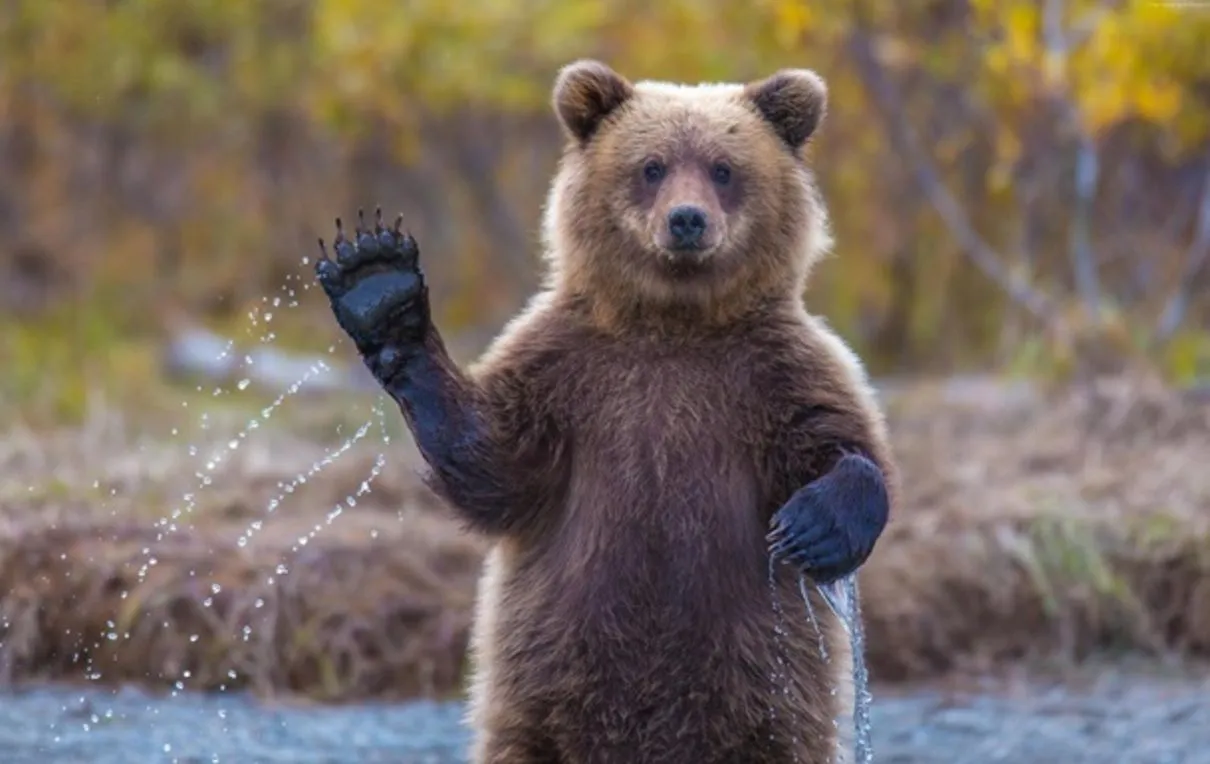
In Russia, at least 10 people have died in bear attacks since the beginning of 2026. Most of the fatalities have been reported in Siberia, and on September 16 alone, a bear killed two men in the Irkutsk Region who had gone into the forest to pick berries.
In Russian regions, there has been an increase in incidents where bears approach people and attack them. According to Life, at least 10 people have died as a result of such attacks since the beginning of 2026. The highest number of incidents has occurred in Siberia and the Far East. The most recent fatalities took place on September 16 in the Irkutsk region. In the Kirensk District, three local residents went into the forest to pick berries. They were attacked by a bear. Two men were killed, while the third managed to escape and report the tragedy.
After the attack, police and hunters arrived at the scene. They found the bodies of the victims and the bear itself. They opened fire on the bear, wounding it, but it fled into the forest. The search for it continues. This is not the first fatal incident in this area recently. Earlier, a bear killed a retiree who had gone into the forest to pick mushrooms. His body was found near a motorcycle, and hunters later shot and killed the bear.
In Buryatia, 27 reports were received in a single day
The situation remains difficult in Buryatia as well. There, in just one day, experts received 27 reports of bears appearing near people. Seven animals posing a danger were shot. On September 7, a bear attacked a man near the Khurtaga ulus. The victim was taken to the hospital with severe injuries, but efforts to save him were unsuccessful. Later, another fatality resulting from an encounter with a bear was found in the Barguzinsky District.
Authorities in some districts have recommended strengthening safety measures due to bear activity. People are also urged to exercise greater caution when venturing into the forest, especially during the period when the animals are actively searching for food before hibernation.
Bear Kills Tourist in Tent
There have also been fatalities in other regions of Siberia. In August, a bear attacked tourists at a resort in Artibash in the Altai Republic. The predator tore open the tent and dragged a 29-year-old woman from Novosibirsk into the forest. The woman died as a result of the attack.
Another fatal incident occurred on September 16 in the Krasnoyarsk Territory. There, a bear attacked a 66-year-old woman near her home in the village of Verkhniy Kebezh. The animal entered the property and attacked the woman. The situation in the Krasnoyarsk Krai also remains tense. Over the past month, about 60 bears that had ventured into populated areas and posed a danger to people were culled there. On the night of September 16, one of the bears appeared near an orphanage in Lisosibirsk.
Why Bears Are Approaching People
The Russian Ministry of Natural Resources cites a lack of natural food as one of the reasons. According to Tatyana Aramileva, a representative of the ministry, there is almost no staple food for bears in Siberia this year. “Throughout the Siberian Federal District, everyone is reporting a complete crop failure for all food sources. There are no pine nuts, hazelnuts, berries, or mushrooms,” she said. Before hibernation, bears actively gain weight, so they spend a particularly large amount of time searching for food during this period. If there isn’t enough food in the forest, the animals may venture near roads, villages, summer cottages, tourist camps, and other places where it’s easier to find food.
However, a lack of food isn’t the only reason. The Ministry of Natural Resources also points to trash dumps, open dumpsters, and food waste near human settlements. A bear that gets used to finding food near people may return there again. Another factor cited is the growing population of brown bears. According to the Russian Ministry of Natural Resources, their population has grown by approximately 2.3 times over the past 36 years—to more than 307,000 animals. The largest number of bears live in Siberia and the Far East.
Consequently, the situation became particularly dangerous in September for residents of several Russian regions. Bears are actively preparing for hibernation, but due to a shortage of natural food, they are increasingly coming into contact with people. According to the latest data, such encounters have already resulted in the deaths of at least 10 people this year. This was reported by Life.
At Russian universities and research institutes, pressure is mounting on professors and researchers who have spoken out against the war or the government. According to the publication T-invariant, employees are being summoned for interviews with the FSB, and some of their contracts are not being renewed after they appear on unofficial lists of “unreliable” individuals. According to journalists, the highest number of such cases is being recorded in St. Petersburg.


