
In the U.S., sharks equipped with sensors are being tested to predict hurricane intensity
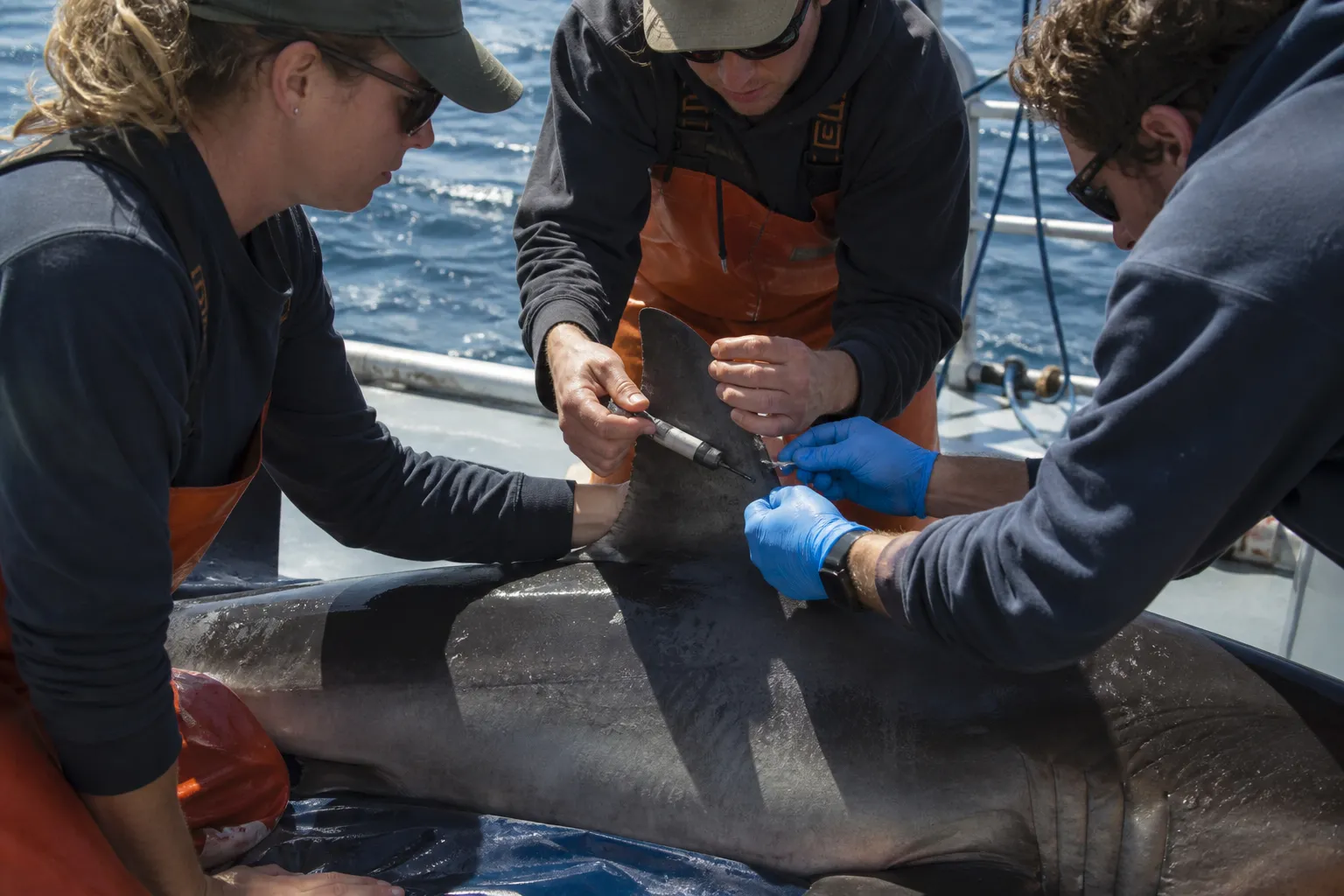
Researchers at the University of Delaware are testing the use of sharks as mobile sensor platforms to collect data on ocean conditions for more accurate forecasting of hurricane intensity off the U.S. East Coast. France 24 reported this, citing Reuters.
Small electronic CTD tags are attached to the sharks’ dorsal fins. They measure the water’s electrical conductivity—which is closely linked to salinity—as well as temperature and depth as the sharks move and dive. When a shark rises to the surface, the tag can transmit the collected data to a network of satellite receivers.
The study’s lead researcher, Professor Aaron Carlisle of the University of Delaware’s School of Marine Science and Policy, explained that the heat content of the upper mixed layer of the ocean is particularly important for assessing a hurricane’s potential intensity. According to him, this part of the water column largely determines the intensity of hurricanes, since a warmer mixed layer contains more heat, which fuels the storm.
For more breaking news, follow the UA.News Telegram channel.
Scientists will select species that can collect the most useful data for such analysis and surface frequently enough for satellite data transmission. A preliminary analysis has identified shortfin mako sharks, blue sharks, smooth hammerhead sharks, and juvenile great white sharks as promising candidates for research in the North Atlantic.
According to University of Delaware doctoral student Caroline Wirnitsky, the tagging process begins in early May, when long-distance migratory species approach the coast from their wintering grounds in the more distant parts of the Atlantic. The research vessel heads out 50–65 kilometers from shore, where scientists set baited lines and typically wait two to three hours for a shark to take the bait.
The tagging procedure usually takes less than five minutes. It is conducted under the supervision of an animal welfare organization to minimize the impact on the sharks. The tags are made of materials designed to corrode and fall off over time, and each animal is checked for health before being released. If the project is successful, the data collected could help improve forecasts for hurricanes approaching the U.S. East Coast.


