
Ground fighting in Sudan eases, but drone attacks increase — Asharq Al-Awsat
In Sudan’s North Kordofan state, the intensity of ground fighting has decreased following the army’s advance and the retreat of the Rapid Support Forces (RSF), but the sides are using drones more actively. Limited clashes continue in several directions, while drone strikes are affecting military facilities, cities and civilian infrastructure.
As Asharq Al-Awsat reports, during recent fighting the Sudanese army captured several settlements, strengthened control over Bara and surrounding areas, and secured the export road. The military also opened a supply route from Omdurman through the White Nile and North Kordofan states to El Obeid. The RSF withdrew north and northwest.
Situation on the fronts
According to the publication’s sources, the army’s advance west of El Obeid stopped near Umm Sumayma. A counterattack forced the military to retreat to the outskirts of El Obeid, and no new large-scale attempts to advance in this area were reported. Activists also said that the army withdrew from areas near Sodari and Mazroub after its defensive lines were stretched across several neighboring towns. The RSF returned to the strategic city of Mazroub, which they had left during the army’s broader offensive.
In Blue Nile state, the army retained its positions. Sources supporting the army claim that its forces repelled RSF attacks, inflicting losses in personnel and equipment. The RSF and their allies, according to the publication, still control Kurmuk and Geissan. Direct ground clashes there have also eased, although both sides continue to use drones and artillery.
More current news is available on the UA.News Telegram channel Telegram.
Strikes on cities and civilian facilities
On September 24, the Sudanese army said its air defenses had shot down a long-range FH-95 drone, which it described as hostile. This came after a series of intensive drone attacks on military facilities in El Obeid. Residents of North Kordofan reported an increase in RSF drone attacks on cities controlled by the government.
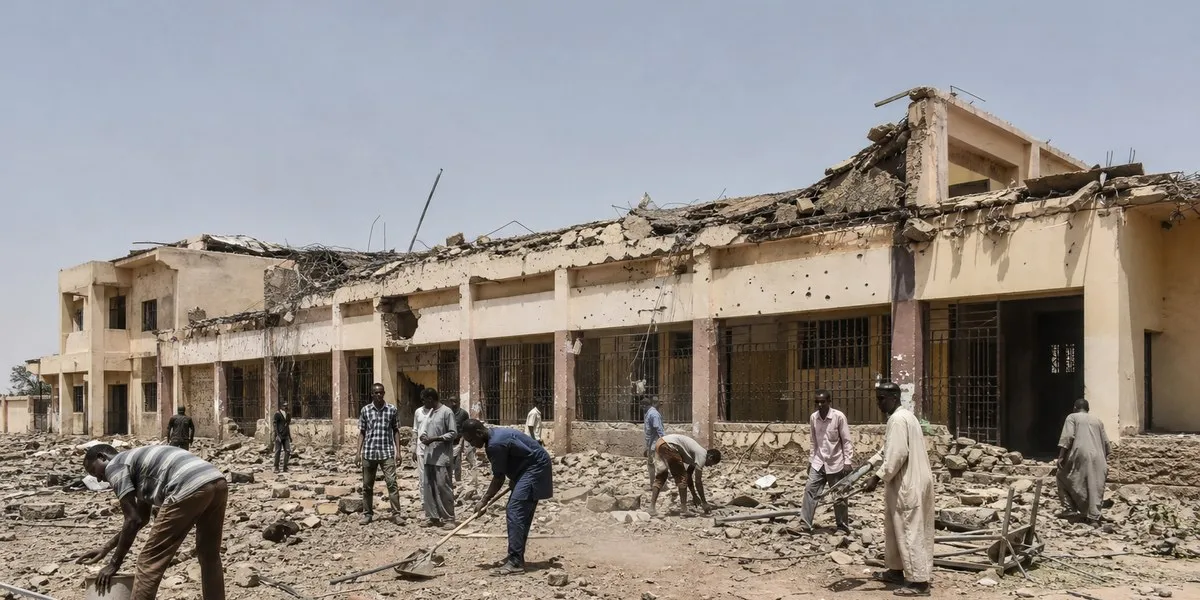
On September 8, a drone struck a crowded courtroom in Umm Rawabi in North Kordofan. The independent volunteer human rights group Emergency Lawyers reported about ten people killed and dozens wounded. The courthouse building sustained significant damage.
The following day, a drone attacked the College of Development and Technological Sciences in El Obeid. According to the institution’s dean, Abdelaziz al-Sheikh, a security guard was killed and eight classrooms sustained significant damage. The UN says that more than 1,000 civilians were killed in drone attacks by both sides in the first half of the year.




