
Statues of Emperor Hadrian and Empress Sabina restored in Turkey
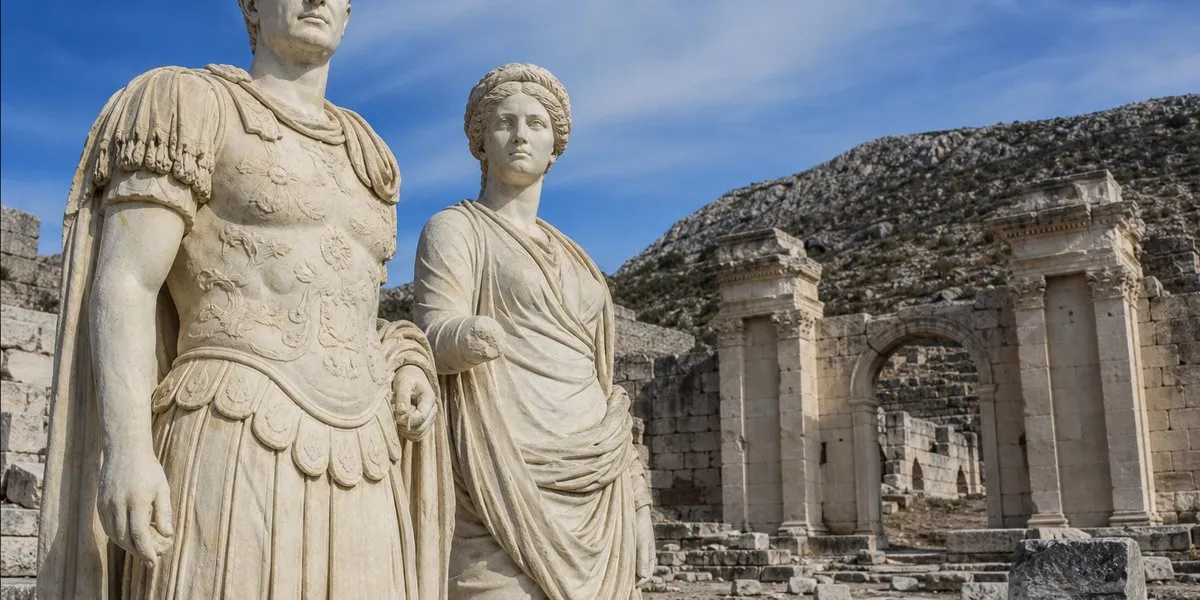
In the ancient city of Kibyra in southwestern Turkey, archaeologists have restored nearly 2,000-year-old marble statues of Roman Emperor Hadrian and his wife, Empress Sabina. Turkey’s Council of Higher Education reported this in late August, The Jerusalem Post writes.
Finds near the monumental gate
The statues were discovered during excavations of the Monumental City Gate, one of Kibyra’s key structures. The work is being carried out by a team from Burdur Mehmet Akif Ersoy University. Both sculptures were among four statues found at the excavation site.
After restoration, Hadrian’s statue stands approximately 2.14 meters tall. It was made of high-quality marble from the Afyon-İscehisar area. The head of excavations at Kibyra, Professor Şükrü Özüdoğru, noted that the portrait features confirm that the statue depicts Hadrian, and that the find itself is a rare example of an image of this emperor in Anatolia.
The statues may have been created around 130 AD
Archaeologists estimate that the sculptures may have been created around 130 AD, during Hadrian’s reign. Özüdoğru suggested that they may have been commissioned ahead of the emperor’s visit to the region, as this practice was widespread in the Roman period.
More current news is available on the UA.News Telegram channel Telegram.
Hadrian was depicted in military attire, with figures of a lion and an eagle carved on his armor. Sabina’s statue is of the same height, but has been preserved less well: archaeologists hope to find the missing fragments during further excavations.
Another statue of an emperor in armor, about 1.86 meters tall, was also found near the gate, along with a female sculpture whose upper and lower parts were discovered separately, as well as a 30-centimeter head of a male statue. According to Özüdoğru, the statues likely stood in the upper part of the gate and shattered after falling during the earthquake of 417.
In total, 20 statue fragments, including arms, legs and feet, were discovered in Kibyra. After restoration is completed, the sculptures are planned to be transferred to the Burdur Museum for display.


