
Russian universities are compiling lists of scholars who are disloyal to Putin
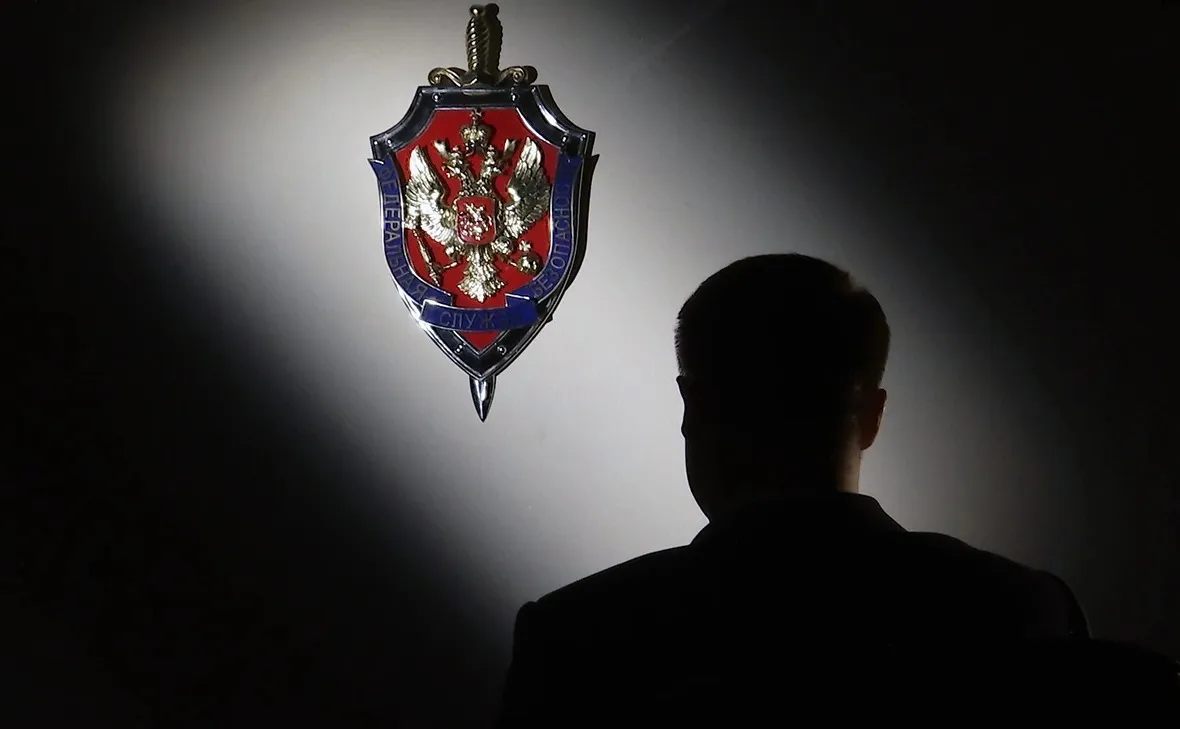
At Russian universities and research institutes, pressure is mounting on faculty members and researchers who have spoken out against the war or the government. According to the publication T-invariant, staff members are being summoned for interviews with the FSB, and some of them are not having their contracts renewed after being placed on unofficial lists of “unreliable” individuals. According to journalists, the highest number of such cases is being reported in St. Petersburg.
Russian universities have once again stepped up checks on the political loyalty of faculty and researchers. This is reported by T-invariant, which spoke with several former and current employees of Russian universities and research institutions. According to journalists, some institutions maintain unofficial lists of employees considered “unreliable.” People on such lists may be summoned for interviews with FSB officers or simply have their employment contracts terminated.
According to T-invariant, a particularly large number of such cases are linked to Saint Petersburg State University. Several former SPbSU employees told the publication that their supervisors directly linked their dismissal or the refusal to renew their contracts to their inclusion on the internal list.
Reasons why academics might be added to the list
One reason for persecution is signing an anti-war letter. This refers to an appeal by Russian scientists against Russia’s full-scale invasion of Ukraine, which was signed in 2022 by more than 8,500 scientists from around the world. In 2026, Russian security services once again began taking an interest in some of the signatories. According to T-invariant, employees are being summoned for interviews and questioned about their attitudes toward the war—both now and in 2022.
One scientist from the Urals region told reporters that he was summoned by an FSB officer assigned to the university. According to him, during the conversation, he was asked how he felt about the war in 2022 and how he feels about it now. “They had seven people from various universities in the city on their list; I saw a list on the table with their last names and places of work,” he told T-invariant.
An employee at one of the Siberian research institutes shared a similar story. According to her, her supervisor informed her that a request had come in from Moscow, after which an FSB officer arrived at the institute. The woman was questioned about where she had obtained the link to the anti-war letter, to whom she had sent it, and where she had posted information about it. According to the publication’s source, another colleague of hers was summoned for questioning that very same day.
At St. Petersburg State University, they refer to it as the “traffic light”
Separately, T-invariant describes the situation at St. Petersburg State University. There, according to the publication’s sources, the internal employee screening system is unofficially referred to as the “traffic light.” Employees are allegedly categorized by their level of “reliability”—into so-called yellow or red lists. Being placed on these lists can influence decisions regarding contract renewal. One employee of the IT faculty at St. Petersburg State University told T-invariant that she was unable to renew her contracts at two St. Petersburg universities where she had been working simultaneously.
According to her, her supervisor was told that the reason was her inclusion on an internal list of “unreliable” individuals. The woman believes that one of the reasons could have been her registration on the “Smart Voting” website in 2021. At the same time, she does not rule out other reasons. She signed an anti-war petition and supported human rights and civic initiatives. “This is an internal system that is unofficially referred to at the university as the ‘traffic light’: there, employees are divided into yellow and red lists,” she told the publication.
How to Get Off the List
One former SPbU employee told T-invariant that he was offered a way to “rectify” the situation and be removed from such a list. According to him, the options included making a donation to the “Defenders of the Fatherland” fund or working as a lecturer for the “Knowledge” society. The person was also allegedly required to withdraw his signature from an anti-war letter.
The researcher refused to comply with these conditions. After that, his contract was not renewed, and he was left without a job at the university. “I’m not even trying to look for a job at universities right now—it’s unrealistic. I’ve decided to take a break, look around, and wait it out,” he told T-invariant.
These investigations are taking place not only in St. Petersburg
According to the publication, similar cases have occurred at other educational institutions in St. Petersburg. In particular, a source told T-invariant about refusals to renew contracts at the Higher School of Economics and the European University. In other words, the problem described by journalists is not limited to a single university. At the same time, the scale of this practice is difficult to assess, since it involves unofficial lists and management decisions that are not always openly explained to employees.
In some cases, people learn the reasons for their dismissal only from their supervisors or colleagues. The T-invariant article does not cite any official document confirming the existence of a single, nationwide “blacklist” of scholars.
The FSB Is Once Again Taking an Interest in the Signatories of the Anti-War Letter
T-invariant notes that problems for Russian scientists who spoke out against the war began shortly after the publication of an anti-war appeal in 2022. At that time, thousands of scientists publicly condemned the Russian invasion of Ukraine. Some of them subsequently faced pressure, threats, and problems at work.
According to the publication, in 2024, FSB officers had already summoned the letter’s signatories en masse for questioning. In 2026, these investigations intensified again. At the same time, some scientists report that they had not encountered any problems for several years after signing the letter. That is why this new wave of attention from the security services came as a surprise to them.
A professor was fired over old publications
Another case mentioned by T-invariant concerns Tatyana Kudryavtseva, a professor at Herzen State Pedagogical University of Russia. In September 2026, it became known that after 30 years on the job, she resigned due to complaints about old Instagram posts. According to Kudryavtseva, the administration showed her two screenshots from her page. One was a photo taken back in 2020, and the other was a post from 2021.
The professor stated that she was informed of possible disciplinary and legal consequences. After that, she submitted her resignation. “I’m going to miss all of this. And I’m very sad that someone’s desire to curry favor and someone else’s unwillingness to understand the situation led to me being practically kicked out of my alma mater,” Kudryavtseva wrote.
Pressure Becomes Part of Academic Life
According to the stories described by T-invariant, pressure on Russian scholars can take various forms. Some are summoned for interviews with the security services, others are investigated through university administration, and for some, their contracts are simply not renewed. The grounds for such actions can include public anti-war statements, signing a relevant letter, participating in human rights projects, or even past actions that had no consequences at the time they were committed.
It is particularly telling that some of the cases described involve people who continued to work at their universities for years after signing an anti-war petition. Now, however, those past public actions have once again become a pretext for investigations. At the same time, most of the stories cited are based on accounts from T-invariant’s sources. Their claims regarding internal lists and the reasons behind personnel decisions cannot always be independently verified. However, the publication cites several similar stories from various educational institutions that describe a similar mechanism of pressure. This is reported by T-invariant.
Vladimir Putin, the president of the Russian Federation—an aggressor state—called on Russians to participate in the State Duma elections, linking voter turnout to support for the war against Ukraine. In a televised address before the vote, he stated that voters’ choice must demonstrate support for the Russian military and the unity of the population.


