
Scientists have observed the rapid collapse of a glacier in Antarctica
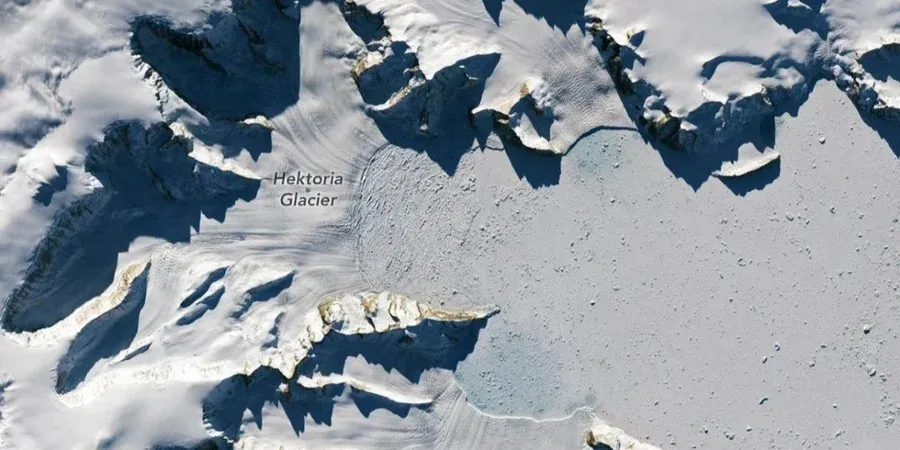
The Hector Glacier in Antarctica has experienced an extremely rapid retreat, which scientists are already calling one of the most dramatic in modern observational history, as it lost tens of kilometers of ice cover in just one year. Researchers attribute this to the destruction of natural “barriers” that previously restrained the movement of ice, and the increasing influence of the ocean. Such processes could serve as a serious warning sign for other major glacial systems around the world.
The Hector Glacier in Antarctica has undergone rapid collapse right before scientists’ eyes, marking one of the fastest instances of ice loss in the history of glaciological observations; between January 2022 and March 2023 alone, it retreated by approximately 25 kilometers.
Particularly striking was the episode when, in just two months, the glacier’s edge retreated nearly 8 kilometers inland—a process that modern science views as an almost uncontrollable loss of the ice mass that previously rested on the seafloor. Scientists, analyzing satellite images and remote sensing data, concluded that the glacier was extremely vulnerable due to its structure, as it begins on land but extends into the sea, forming a floating “ice tongue” that maintains the balance of the entire system.
The situation began to deteriorate as early as 2002 following the collapse of the Larsen B ice shelf, which had long served as a natural “buffer” and restrained the movement of Hectoria and neighboring glaciers; however, after its disappearance, the processes of melting and thinning began to accelerate.
In 2011, it briefly seemed that stability was returning when sea ice and ice shelves partially supported the ice “tongue,” but by January 2022, strong ocean waves had destroyed this protection, and the glacier was effectively left without support.
It was then that a rapid collapse began, which researchers describe as a process of “buoyancy-driven calving,” where ice that loses its support on the seafloor begins to rise under the force of the water and break into large fragments.
Lead author Naomi Oschwat of the University of Innsbruck notes that such processes could pose a global risk, as if this dynamic were to affect larger Antarctic glaciers, it could accelerate the rise in global sea levels. “Due to warming, more and more glaciers are losing their floating tongues and becoming much less stable,” the researchers explain, noting that similar processes are already being observed in Greenland and Alaska.
Scientists are now relying on the new NISAR and SWOT satellite missions, which will allow for more accurate tracking of changes in the ice sheet and a better understanding of how quickly glaciers can transform under conditions of global warming.


